2026 Best Automation Industry Trends You Need to Know?
The automation industry is witnessing transformative changes as we approach 2026. According to a recent report by MarketsandMarkets, the global automation market is expected to reach over $200 billion by 2026, growing at a CAGR of 9.5%. This growth highlights the increasing reliance on automation technologies across various sectors, from manufacturing to healthcare.
Emerging technologies like AI and IoT are reshaping the landscape. A McKinsey report indicates that 70% of companies plan to implement AI in their operations by 2025. This trend signifies a shift towards smarter processes, yet it comes with challenges. Many businesses struggle with integration and employee training. Their dedication to automation must include a strategy for upskilling workers.
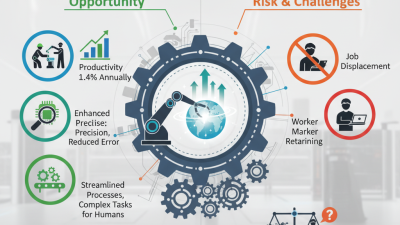
As industries adapt, ethics in automation become critical. The potential for job displacement raises questions about the future of work. It's crucial for stakeholders to consider the human impact of these advancements. The automation industry is at a crossroads of opportunity and responsibility, demanding thoughtful approaches to technology adoption.
Emerging Technologies in Automation for 2026
Emerging technologies are reshaping the automation landscape for 2026. According to a recent report by Deloitte, 70% of organizations plan to increase their investment in automation. This shift is driven by the need for greater efficiency and flexibility. Specifically, robotic process automation (RPA) is poised for growth. RPA can reduce operational costs by up to 30%, allowing businesses to allocate resources more effectively.
Artificial intelligence (AI) is another pivotal technology. AI enhances predictive analytics and decision-making processes. A study by McKinsey indicates that companies utilizing AI could see a boost in productivity by up to 40%. However, the implementation of AI is not without challenges. Organizations must address data privacy issues and ensure ethical AI usage. These hurdles require careful consideration and strategic planning.
Finally, the Internet of Things (IoT) plays a critical role in automation trends. IoT devices can streamline operations and improve monitoring capabilities. The market for IoT in automation is expected to reach $1 trillion by 2026. Yet, reliance on interconnected devices also raises cybersecurity concerns. Companies must invest in robust security protocols to safeguard their networks. Balancing innovation with security remains a pressing issue that needs attention.
2026 Best Automation Industry Trends You Need to Know
| Trend |
Description |
Impact |
Emerging Technology |
Estimated Adoption Rate (%) |
| AI-Driven Automation |
Utilization of artificial intelligence to enhance automated processes for increased efficiency. |
High efficiency and reduced operational costs. |
Machine Learning, Neural Networks |
75% |
| Robotic Process Automation (RPA) |
Using software robots to automate routine and repetitive tasks. |
Increased efficiency and scalability of business processes. |
Digital Workers |
68% |
| Edge Computing |
Moving data processing closer to the source of data collection for real-time analysis. |
Faster decision making and reduced bandwidth usage. |
IoT Devices |
80% |
| Advanced Analytics |
Using predictive analytics to inform business decisions automatically. |
Enhanced decision making with a focus on data-driven strategies. |
Big Data, Cloud Computing |
70% |
| Human-Robot Collaboration |
Systematic integration of robots that enhance human capabilities. |
Improved productivity and job satisfaction. |
Cobots |
65% |
Impact of Artificial Intelligence on Automation Trends
The impact of artificial intelligence on automation is profound. AI technologies are redefining how industries operate. Companies now leverage AI-driven analytics to improve efficiency. This data-driven approach allows for better decision-making in real-time operations. Automation powered by AI can streamline complex processes, reducing the potential for human error.
Many organizations are experimenting with AI to enhance their automation capabilities. For instance, AI can help in predictive maintenance, identifying when equipment is likely to fail. This proactive approach can save substantial costs and minimize downtime. However, the integration of AI is not without challenges. Companies often struggle with skill gaps. Workers may need retraining to adapt to new systems. This creates tension as employees fear job loss due to automation.
Moreover, reliance on AI can sometimes lead to over-automation, where human oversight is diminished. This could result in unintended consequences, as algorithms may not always make the best choices. Rethinking the balance between AI and human input is crucial. Ensuring accountability in automated systems could enhance trust and effectiveness. As firms navigate these complexities, continuous reflection on the role of AI in automation will be essential for long-term success.
Sustainable Practices in the Automation Industry
Sustainable practices are becoming essential in the automation industry. As technology advances, companies are seeking ways to reduce their carbon footprint. Energy-efficient machinery is one way to achieve this. These machines consume less energy during operation. By optimizing automation processes, manufacturers can minimize waste.
Embracing renewable energy is another vital step. Solar panels and wind turbines are being integrated into production facilities. This shift not only lowers emissions but also cuts operational costs. Many organizations are struggling to implement these technologies effectively. The initial investment can be daunting, and not all companies see immediate benefits.
Recycling and reusing materials are overlooked areas. Many manufacturers discard components that could be refurbished. Exploring circular economy practices can lead to significant resource savings. However, it requires a cultural change across the workforce. Resistance to change can hinder progress. Addressing these challenges is crucial for sustainable growth.
Integration of IoT in Automation Solutions
The integration of IoT in automation solutions is transforming industries. IoT devices collect real-time data, enhancing decision-making processes. For example, sensors in a manufacturing facility can monitor equipment health. This aids in predicting failures before they happen, reducing downtime.
However, implementing IoT systems isn’t without challenges. Data security remains a significant concern for many organizations. Vulnerabilities in IoT devices can lead to breaches. Companies must prioritize cybersecurity when adopting these technologies.
Moreover, interoperability is a common issue. Different devices often struggle to communicate effectively. This can hinder the efficiency of automated processes. Organizations need to focus on creating standardized protocols to ensure seamless integration. A thoughtful approach will lead to improved automation outcomes over time.
2026 Best Automation Industry Trends: Integration of IoT in Automation Solutions
Future Skill Sets Required in the Automation Workforce
The automation industry is evolving rapidly, creating a demand for specialized skill sets. Workers now need to grasp both technical and soft skills. Familiarity with artificial intelligence, machine learning, and programming is crucial. However, traditional education may not fully prepare individuals for these tasks. Many experts argue that adaptive learning will play a pivotal role in bridging the skills gap.
Moreover, with automation, interpersonal and collaboration skills are becoming more valuable. Employees must work alongside intelligent systems, facilitating smooth interactions. An understanding of data interpretation and analytics is also essential. The ability to analyze trends and make informed decisions cannot be overlooked. Yet, some may find it challenging to adapt to this evolving landscape.
As the industry shifts, continuous learning will be paramount. Workers need to embrace lifelong learning. Engaging in hands-on projects can help build practical experience. However, not everyone is ready to upskill. Reflecting on personal development and seeking mentorship is also vital. Self-motivation and resilience are becoming essential traits in this transformation.