
China Best Power Inductors for Global Buyers?

Global buyers need more than a low quotation when choosing China Power Inductors. They need stable performance, clear documentation, and a supplier that communicates honestly. In practical sourcing, a component may look suitable on paper but fail during temperature cycling, vibration testing, or high-current operation. This is why experienced purchasing teams compare inductance tolerance, rated current, saturation current, DCR, shielding structure, and operating temperature. Small details matter. A 10°C temperature difference can change a design decision.

China has a broad manufacturing base for Power Inductors, serving automotive electronics, industrial controls, renewable energy systems, telecommunications, and consumer devices. Reliable manufacturers usually provide traceable raw materials, automated winding or molding processes, inspection records, and samples from regular production lines. Buyers should request test conditions, not only attractive performance numbers. Datasheets can be incomplete. That deserves attention. Independent verification may include impedance testing, thermal measurement, solderability checks, and long-duration load evaluation. Supplier audits also reveal practical issues, such as inconsistent labeling, weak packaging, or limited engineering support.

This guide examines how global buyers can evaluate Chinese Power Inductors with greater confidence. It considers product quality, customization, factory capability, lead times, certifications, communication, and total purchasing risk. Price remains important, but it should not replace evidence. Even experienced buyers can overlook changes between samples and mass production. A careful review process reduces that possibility. The strongest supplier is not always the largest or cheapest. It is the one that can repeatedly deliver the required component, explain its limitations, and respond responsibly when a problem appears.
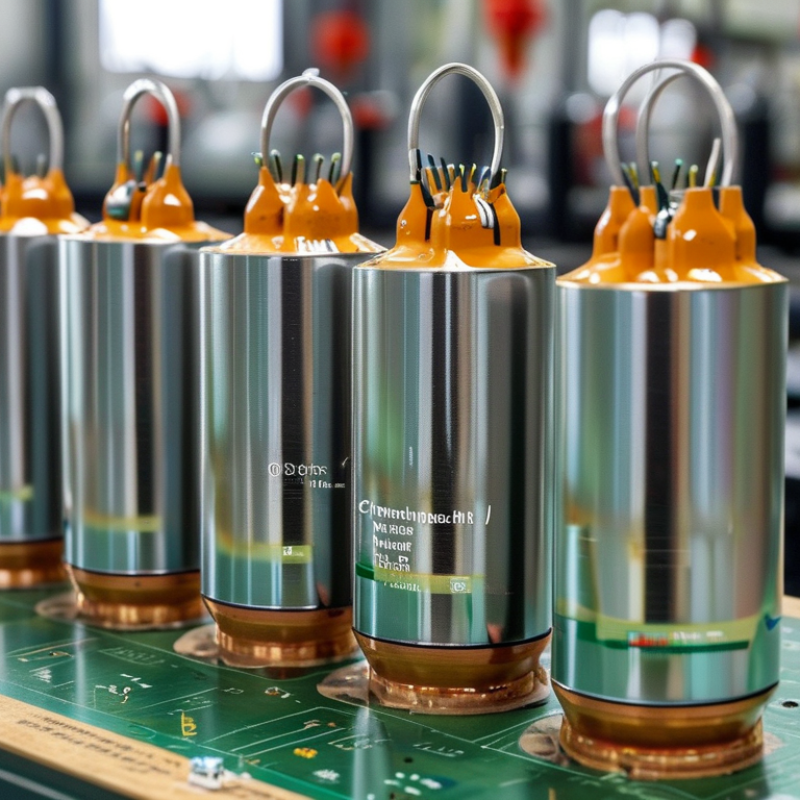
China Best Power Inductors for Global Buyers?

What Are Power Inductors and Why Do They Matter?

Power inductors are passive components that store electrical energy in a magnetic field. They resist sudden changes in current. This makes them essential in switching power supplies, voltage regulators, battery systems, and motor controls. A small component can protect a much larger circuit.

Their importance becomes clear under real operating conditions. When a converter switches rapidly, the inductor smooths current and reduces voltage ripple. Its saturation current shows when the magnetic core can no longer store energy efficiently. Direct-current resistance affects heat, efficiency, and battery life. A part that looks suitable on paper may still run too hot inside a compact enclosure.

Global buyers should examine inductance tolerance, rated current, saturation behavior, temperature rise, shielding, and mechanical dimensions. Ask for test methods, inspection records, and samples from the intended production lot. Check performance at the actual switching frequency, not only at a nominal laboratory condition. That detail matters.

In manufacturing evaluations, thermal testing often reveals more than a catalog table. Engineers may compare winding temperature after continuous operation at 25°C and at elevated ambient temperatures. Acoustic noise and solder-joint strength also deserve attention. A datasheet is not the whole truth. I have seen designs fail because engineers focused on inductance while overlooking airflow and board copper area. Specifications can be correct, yet incomplete. Reliable sourcing depends on traceable materials, consistent process control, and honest communication when a component needs redesign.

How to Classify Power Inductors for Different Applications

Choosing the right power inductor starts with the application, not the catalog headline. WSTS reported global semiconductor sales of $626.9 billion in 2024, showing how widely power conversion is expanding. Yet a higher inductance value does not automatically mean better performance.

For compact consumer chargers, shielded molded inductors can reduce magnetic leakage near sensitive circuits. Select them by inductance, rated current, saturation current, DCR, and temperature rise. For automotive converters, vibration resistance and a broad operating temperature range matter more than tiny size. The IEA’s Global EV Outlook 2024 expected electric car sales to exceed 17 million that year, increasing demand for robust inductors in onboard chargers and battery systems. Industrial power supplies usually need high saturation current and stable performance during long operating cycles. Telecom equipment often favors low-loss designs at higher switching frequencies.

The classification can be practical. Wire-wound types suit high current and lower frequency conversion. Multilayer types fit compact, moderate-power circuits. Shielded structures help control electromagnetic interference, while unshielded parts may reduce cost and improve airflow. Check the actual ripple current. Datasheet ratings often assume ideal cooling, which rarely exists inside a crowded enclosure. I have found that a component passing bench tests can still run hot after cable routing changes. That detail is easy to miss. Classification should therefore combine electrical stress, thermal conditions, mechanical space, and compliance requirements, rather than relying on inductance alone.

China Best Power Inductors for Global Buyers? - How to Classify Power Inductors for Different Applications

Application Typical Circuit or Function Common Switching Frequency Typical Inductance Range Typical Rated Current Range Typical DCR Range Recommended Inductor Construction Key Selection Criteria
Point-of-Load DC-DC Converter Buck converter for processors, FPGAs, networking equipment, and industrial control boards 200 kHz–2 MHz 0.10–10 µH 5–100 A 0.2–15 mΩ Shielded molded or composite-core power inductor with a low-profile surface-mount package Select the inductance from ripple-current requirements. Verify saturation current at the actual operating temperature and check thermal rise under continuous load.
Automotive 12 V and 48 V Power Conversion Voltage regulation, infotainment, body electronics, lighting, and battery-management subsystems 100 kHz–1 MHz 1–100 µH 3–60 A 1–40 mΩ Automotive-qualified shielded power inductor with a robust molded or ferrite-core structure Consider the full temperature range, vibration, humidity, load-dump-related conditions, AEC-Q qualification where required, and stable inductance under DC bias.
Battery Charger and Energy-Storage Converter Charge regulation, bidirectional DC-DC conversion, and battery current smoothing 20–500 kHz 10–500 µH 5–150 A 0.5–25 mΩ Large-core ferrite, powdered-iron, or distributed-gap inductor; coupled inductors may be used in selected topologies Prioritize energy-storage capability, low copper loss, adequate saturation margin, and insulation performance for the system voltage.
AC-DC Power-Factor-Correction Stage Boost PFC stage used in power supplies, servers, lighting, and industrial equipment 40–250 kHz 100 µH–2 mH 1–20 A 10–300 mΩ Gapped ferrite-core or powdered-iron power inductor with an appropriate insulation system Evaluate peak current, core loss at the switching waveform, audible noise, temperature rise, and creepage or clearance requirements.
Output Filter for Industrial Power Supplies LC or pi filter for reducing switching ripple on DC output rails 50–500 kHz 10–1,000 µH 1–30 A 5–200 mΩ Shielded ferrite-core or iron-powder-core inductor selected for low EMI and sufficient current capability Check ripple-current heating, impedance over frequency, core saturation, and interaction with the output capacitor and control loop.
LED Driver Buck, boost, or buck-boost current regulator for commercial, architectural, and automotive lighting 100 kHz–2 MHz 4.7–470 µH 0.3–15 A 10–500 mΩ Shielded or semi-shielded surface-mount power inductor with low acoustic noise Match inductance to LED ripple-current limits and driver control requirements. Check peak current, thermal performance, and electromagnetic compatibility.
Telecommunications and Networking Equipment Multi-phase VRM, intermediate-bus converter, and high-current voltage regulation 300 kHz–2 MHz 0.10–4.7 µH 10–120 A 0.1–8 mΩ Low-profile molded inductor or integrated inductor designed for high-current density Focus on low DCR, low AC loss, high current density, thermal spreading, magnetic shielding, and compatibility with multi-phase controllers.
Consumer Electronics and Portable Devices Compact buck, boost, and power-management circuits in handheld and battery-powered products 600 kHz–4 MHz 0.47–22 µH 0.5–8 A 15–300 mΩ Miniature shielded multilayer or molded surface-mount power inductor Balance package height, inductance tolerance, efficiency, acoustic noise, electromagnetic shielding, and transient-load performance.
Motor Drive and Motion Control DC-link filtering, phase-current smoothing, EMI filtering, and auxiliary converter stages 10–100 kHz 10 µH–10 mH 2–100 A 1–150 mΩ Large ferrite, powdered-iron, nanocrystalline, or laminated-core inductor depending on current and frequency Assess peak and RMS current separately, mechanical strength, vibration, audible noise, insulation, and thermal behavior in the enclosure.
EMI and Common-Mode Filtering Suppression of conducted differential-mode or common-mode noise on power input and output lines 150 kHz–30 MHz noise range 1 µH–10 mH 0.5–30 A 10 mΩ–2 Ω Ferrite-bead array, differential-mode choke, or common-mode choke with suitable winding configuration Select by impedance versus frequency, insertion loss, leakage inductance, safety insulation, rated current, and permissible common-mode or differential-mode voltage.
Renewable-Energy Inverter DC-link conversion, boost stage, grid-tied inverter filtering, and energy transfer 5–100 kHz 20 µH–5 mH 5–300 A 0.2–50 mΩ High-power gapped ferrite, powdered-iron, nanocrystalline, or laminated-core inductor Verify insulation system, thermal class, short-circuit withstand capability, core loss, cooling method, acoustic noise, and long-term reliability.
General Industrial Automation Control power supplies, PLC systems, sensors, actuators, and industrial communication equipment 100 kHz–1 MHz 1–1,000 µH 1–40 A 2–250 mΩ Shielded ferrite-core or molded power inductor with a rugged surface-mount or through-hole package Consider continuous operation, elevated ambient temperature, surge current, vibration, EMC performance, tolerance, and availability across the product life cycle.

Which Materials and Designs Define Inductor Performance?

China Best Power Inductors for Global Buyers?

Ferrite and powdered-iron cores define much of an inductor’s behavior. Ferrite usually offers low magnetic loss at high frequencies. Powdered iron handles higher energy storage before saturation. The choice changes heat, size, and efficiency. A 2024 report from Grand View Research estimated the global power inductor market at over USD 3 billion. It also identified automotive electronics and power management as major growth areas. These applications demand stable inductance under current, not just attractive catalog values.

Design details matter in real circuits. A shielded structure reduces magnetic leakage near sensors and communication lines. Thicker copper lowers direct-current resistance, but increases cost and winding space. Engineers should check saturation current, temperature rise, impedance, and inductance tolerance together. IEC 62024-2 provides measurement guidance for surface-mounted power inductors. Still, laboratory data may not represent a tightly packed vehicle module. That gap deserves attention. I have seen small thermal assumptions create large reliability problems.

Tips: Compare performance at the actual switching frequency and temperature. Ask for test curves, not one headline number. Review core material, winding layout, and rated current. A 2023 Yole Group analysis reported continuing growth in power electronics for electrified vehicles, where compact magnetic components face severe thermal stress. Buyers should also verify lot consistency and aging results. The cheapest part can become expensive after redesign. That is not always obvious.

How to Evaluate Chinese Power Inductor Manufacturers

Choosing China’s best power inductor manufacturer requires more than comparing unit prices. A practical evaluation starts with the datasheet. Check inductance tolerance, saturation current, rated current, DC resistance, and temperature rise. These figures must match your converter’s real operating conditions. Ask for curves at different frequencies and temperatures. Numbers matter. A low DCR value may look attractive, yet poor thermal performance can weaken efficiency in a compact enclosure.

Factory experience should be visible in the production process. Review winding equipment, core assembly, soldering controls, and automated inspection. Request sample parts from the intended production line, not only laboratory prototypes. Measure them independently when possible. Verify material certificates, calibration records, and batch traceability. Certifications should be current and relevant to the target market. A certificate alone proves little if its scope excludes the actual factory or product family.

Reliability also depends on communication. A capable supplier should explain design limits without hiding uncomfortable data. Discuss minimum order quantities, tooling ownership, lead times, change notifications, and failure analysis procedures. Ask how they handle cracked cores, rising resistance, or inconsistent inductance. Some evaluations become too focused on polished presentations. That is a mistake. I would keep written records for every technical promise, because memory becomes unreliable after several revisions. Samples can pass. Mass production can still drift. Independent validation before approval remains worth the extra time.

What Global Buyers Should Check Before Placing an Order

When global buyers compare power inductors, the datasheet is only the starting point. Check inductance, tolerance, rated current, saturation current, and DCR under defined test conditions. A 10 µH part can behave differently at 25°C and 125°C. Ask for test methods, not only headline values. Review the core material, winding structure, shielding, and package dimensions against your board. Measure samples in your own circuit. This catches unpleasant surprises.

Tips: Request recent inspection reports, material declarations, traceable lot numbers, and production samples. Confirm whether current ratings use temperature-rise or saturation limits. Clarify packaging, moisture protection, lead time, minimum order quantity, and change-notification procedures. A reliable supplier should explain failure data clearly. Vague answers deserve a pause.

Before ordering, test electrical, thermal, and mechanical performance under real load profiles. Include startup current, ripple, vibration, and repeated temperature changes. Compare at least two qualified sources when continuity matters. In practical evaluations, small tolerance differences can create audible noise or unstable regulation. That result is easy to overlook. Do not treat a perfect sample as proof of consistent production. Approve the supplier only after reviewing capability evidence, corrective-action records, and sampling communication.

China Best Power Inductors for Global Buyers? What Global Buyers Should Check Before Placing an Order

Representative non-brand reference points showing how inductance, continuous current, and saturation current typically trade off in shielded power inductors.

Before ordering, verify the supplier’s datasheet for inductance tolerance, saturation-current definition, temperature rise, DC resistance, operating temperature, insulation requirements, RoHS/REACH compliance, samples, and production test reports. Values shown are representative engineering reference points, not guaranteed specifications for every part.

Article Source:

Login