
China Top 10 Padlock Lockout Manufacturers for Global Buyers

Choosing a dependable Padlock Lockout manufacturer requires more than comparing prices and product photos. Global buyers need suppliers that understand workplace safety, industrial maintenance, and practical procurement risks. This guide introduces China’s top ten manufacturers for international buyers seeking consistent quality, clear communication, and dependable delivery.

The selection considers manufacturing experience, material control, product testing, customization, export capability, and customer support. Important details include shackle strength, body materials, key-retention options, color visibility, and resistance to oil, dust, and outdoor exposure. A well-made lockout padlock should remain recognizable beside electrical panels, valve stations, and maintenance toolboxes. Details matter.

Factory audits, sample reviews, quality certificates, and production records can reveal more than a polished catalog. Buyers should also examine packaging, labeling, lead times, spare-key policies, and after-sales responses. These small checks often prevent larger purchasing problems. Still, no ranking can represent every buyer’s needs. A manufacturer suitable for a large utility project may not fit a small distributor requiring flexible batches.

This overview aims to provide a practical starting point, not an unquestionable verdict. Product specifications may change, and supplier performance can vary between orders. Responsible buyers should request current samples, verify certifications independently, and confirm requirements with qualified safety professionals. The manufacturers discussed here are evaluated through a balanced view of capability, reliability, application knowledge, and international service. Some information may need further verification. That is worth acknowledging.
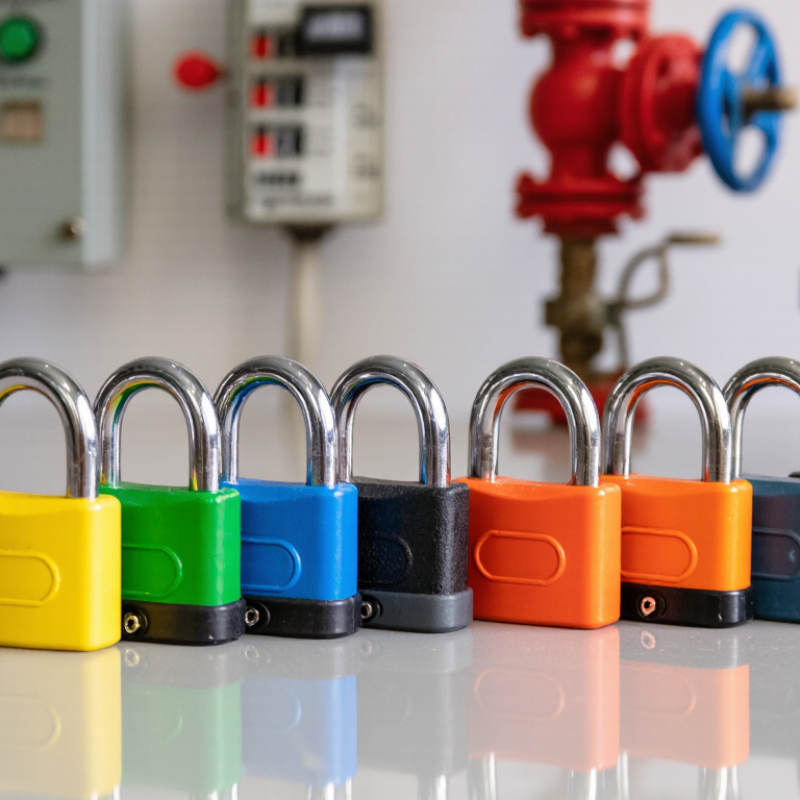
China Top 10 Padlock Lockout Manufacturers for Global Buyers

What Is a Padlock Lockout Device and Why Does It Matter?

A padlock lockout device is a physical barrier used to isolate hazardous energy during maintenance. It prevents a switch, breaker, or valve from being operated accidentally. Common forms include breaker clips, valve covers, hasps, and lockable cable devices. Each accepts a personal padlock and usually a warning tag. The device is not decoration. It must fit the energy-control point securely.

The U.S. Occupational Safety and Health Administration estimates that lockout/tagout procedures prevent about 120 deaths and 50,000 injuries annually. These figures show why selection matters for global buyers. A small mismatch can leave a valve partly movable or a breaker exposed. In practical inspections, fit, material strength, visibility, and temperature resistance deserve equal attention. The U.S. OSHA 29 CFR 1910.147 standard also requires documented procedures, training, and periodic inspections.

ANSI/ASSP Z244.1 emphasizes controlling hazardous energy through reliable isolation methods. However, a catalogue photograph cannot prove field performance. Buyers should request dimensional drawings, material data, test records, and application limits from manufacturers. For example, a narrow breaker lockout may suit one panel but fail on another design. This is where product evaluation becomes less convenient, and more honest. Workers also need enough space to apply their locks without touching energized components. A device that technically fits may still be difficult to use safely.

How to Evaluate China’s Top 10 Padlock Lockout Manufacturers

Choosing China’s top 10 padlock lockout manufacturers requires more than comparing prices. Examine factory experience, production capacity, and quality controls. Ask how long the manufacturer has produced lockout devices. Request photos of assembly lines, material certificates, and recent inspection records. A reliable supplier should explain shackle materials, body strength, key control, and color consistency clearly. Test samples in dusty workshops and cold storage areas. A polished catalog can still hide weak hinges or uneven locking.

Tips: Compare at least three samples. Check dimensions with a ruler. Test repeated opening and closing. Ask for batch traceability, packaging details, and realistic lead times. Confirm whether drawings and labels can be customized. Keep written records of every answer.

Communication also reveals manufacturing discipline. Evaluate response speed, technical accuracy, and willingness to discuss defects. Strong manufacturers identify possible failures before production begins. They should provide a clear corrective-action process when samples fail. Export experience matters, but documentation must match the actual goods. Review inspection reports, carton markings, and shipping records carefully. No factory is perfect. I would treat vague promises as a warning, even when the quotation looks attractive. A second sample may change the decision. Reliable partnerships grow from evidence, not confident sales language.

Company Profiles: Products, Capabilities, and Manufacturing Strengths

China Top 10 Padlock Lockout Manufacturers for Global Buyers

Company Profiles: Products, Capabilities, and Manufacturing Strengths

A credible top-ten comparison should examine more than unit price. The ILO’s 2023 report estimates nearly three million work-related deaths annually. That figure makes lockout equipment a serious procurement category. Leading Chinese manufacturers typically offer nylon or aluminum padlocks, steel shackles, safety tags, hasps, and complete lockout kits. Their profiles differ in molding capacity, metal processing, key-control systems, and customization speed.

Some factories run automated injection molding lines and CNC machining centers. Others depend heavily on manual assembly. The difference appears in shackle alignment, key rotation, and batch consistency. Strong suppliers test corrosion resistance, tensile strength, and repeated locking cycles. They also provide serial numbers, color coding, laser marking, and inspection records. Useful evidence includes ISO 9001 certification, material reports, sample approval records, and clear production lead times.

The U.S. Bureau of Labor Statistics recorded 5,283 fatal work injuries in 2023. Lockout products cannot solve every hazard, but poor hardware can weaken an established procedure. Buyers should inspect sample bodies closely. Check whether the keyway feels smooth. Test the shackle after repeated use. Ask how rejected parts are controlled. One weakness remains: some supplier profiles describe equipment broadly, without publishing test methods or failure rates. That gap deserves attention. A factory tour, video inspection, and independent sampling can reveal more than polished brochures.

China Top 10 Padlock Lockout Manufacturers for Global Buyers - Company Profiles: Products, Capabilities, and Manufacturing Strengths

Anonymized comparative profile of China-based manufacturers serving industrial lockout/tagout markets

Note: Company identities and brand information are intentionally omitted. Production ranges, materials, customization options, and lead times are representative industry data and should be verified directly with each supplier before purchase.
Profile Primary Product Scope Main Materials & Finishes Manufacturing Capabilities Customization Strength Indicative MOQ Indicative Lead Time Quality & Testing Focus Best Fit for Global Buyers
01 Safety padlocks, keyed-alike padlocks, keyed-different padlocks, and group lockout accessories Anodized aluminum bodies, nylon bodies, hardened steel shackles, PVC identification labels Die casting, CNC finishing, injection molding, automatic assembly, key cutting High; color matching, laser marking, logo application, keying systems, packaging design 100–500 units 20–35 working days Shackle pull testing, corrosion checks, dimensional inspection, key-operation testing Industrial distributors and multi-site safety programs
02 Electrical lockout padlocks, compact safety locks, circuit-breaker lockout kits Non-conductive nylon, reinforced polymer, stainless steel or plated steel shackles Plastic injection molding, mold development, assembly-line inspection, pad printing Medium to high; compact formats, warning labels, custom colors, kit configuration 200–1,000 units 15–30 working days Insulation-related material checks, fit testing, cycle testing, visual inspection Electrical maintenance suppliers and OEM safety-kit buyers
03 Heavy-duty steel safety padlocks, outdoor lockout locks, weather-resistant models Powder-coated steel, stainless steel, brass components, weather-resistant polymer covers Metal stamping, machining, welding, powder coating, corrosion-resistant assembly Medium; shackle length, body coating, engraving, packaging, master-key options 100–500 units 25–45 working days Tensile strength, corrosion resistance, locking-cycle durability, outdoor exposure checks Utilities, construction, energy, and outdoor maintenance operations
04 Personal safety padlocks, employee identification locks, lockout station components Nylon or ABS bodies, steel shackles, stainless steel springs, laminated labels High-volume injection molding, automated labeling, assembly, packaging High; employee color coding, multilingual labels, barcode or serial-number marking 500–2,000 units 15–25 working days Color consistency, label adhesion, key uniqueness, assembly and packaging audits Large factories requiring standardized employee lock identification
05 Brass and stainless-steel lockout padlocks for chemical, marine, and process industries Brass, 304 or 316 stainless steel, nylon insulation components, protective coatings CNC machining, precision drilling, polishing, passivation, assembly Medium; material grade, body dimensions, keying arrangement, engraving 100–300 units 30–50 working days Material verification, salt-spray testing, dimensional control, functional testing Harsh-environment applications and corrosion-sensitive facilities
06 Integrated lockout/tagout kits containing padlocks, tags, hasps, and carrying cases Aluminum or nylon padlocks, steel hasps, laminated tags, molded or fabric cases Multi-component sourcing, kitting, printing, inspection, export packaging Very high; kit contents, languages, color systems, inserts, case layout 100–500 kits 25–40 working days Component completeness, print accuracy, barcode inspection, final kit audit Distributors seeking private-label or ready-to-deploy safety kits
07 Compact padlocks for valves, electrical panels, machinery, and confined work areas Lightweight nylon, aluminum, plated steel, stainless steel shackles Precision molding, small-part machining, die assembly, custom packaging High; miniature dimensions, short shackles, custom markings, application-specific kits 200–1,000 units 20–35 working days Fit and clearance testing, cycle durability, shackle alignment, dimensional inspection Machine builders and maintenance teams with restricted installation space
08 High-security lockout padlocks, restricted-key systems, and master-keyed programs Machined brass or aluminum bodies, hardened steel shackles, stainless steel cylinders Lock-cylinder machining, key duplication control, CNC finishing, controlled assembly High; restricted key profiles, master-key hierarchy, serialized records, engraving 100–300 units 30–60 working days Key duplication control, cylinder performance, pull resistance, record traceability Critical infrastructure and organizations needing controlled access
09 OEM and private-label padlocks for safety distributors and industrial catalogues Aluminum, nylon, steel, brass, stainless steel, and customer-selected finishes Tooling development, injection molding, machining, assembly, private-label packaging Very high; product design adaptation, packaging, labels, colors, documentation 500–5,000 units 30–60 working days Pre-production samples, first-article inspection, batch sampling, packaging approval Importers, distributors, and companies building proprietary product lines
10 Broad lockout portfolio including padlocks, hasps, tags, stations, and valve lockout devices Nylon, ABS, aluminum, steel, stainless steel, PVC, and laminated polyester Integrated molding, metal fabrication, printing, assembly, warehouse kitting High; complete program configuration, multilingual documentation, custom kits 100–1,000 units 25–45 working days Incoming-material checks, in-process inspection, product function tests, final audit Global buyers seeking one supplier for complete lockout/tagout programs

Key Comparison Factors for Global Buyers

When comparing China’s top padlock lockout manufacturers, global buyers should examine more than unit price. OSHA estimates that effective lockout/tagout procedures prevent about 120 fatalities and 50,000 injuries each year. That figure makes material quality a safety decision, not a purchasing detail.

Check body material, shackle hardness, corrosion resistance, and key control. Nylon and reinforced polymer bodies can reduce electrical-conductivity risks, while stainless steel shackles suit humid factories.

Ask for salt-spray results, dimensional records, and batch inspection reports. ANSI/ASSP Z244.1 provides useful guidance for hazardous-energy control, but a certificate alone proves little. Request test conditions and sample results.

Lead time matters during maintenance shutdowns. Confirm monthly capacity, mold ownership, packaging strength, and replacement-key procedures. A supplier offering one million pieces may still struggle with a small customized order.

Be careful with low quotations. They can hide weak plating, inconsistent keying, or unstable color batches. I have found that physical samples often reveal more than polished catalogs.

Still, samples are not enough; production consistency needs third-party inspection or documented statistical controls. Global buyers should also compare minimum order quantities, export experience, technical English, warranty terms, and traceability from raw material to shipment.

Some comparisons remain imperfect, because factories may report testing differently. That uncertainty deserves a clear question, not a generous assumption.

How to Select the Right Chinese Manufacturer for Your Needs

Choosing among China’s top padlock lockout manufacturers requires more than comparing catalog prices. Define your application clearly: electrical isolation, maintenance areas, outdoor cabinets, or warehouse equipment. Check the required shackle diameter, body material, key control, color options, and temperature resistance. A lock that looks suitable may fail when gloves, dust, or repeated use enter the picture.

Ask each manufacturer for samples, technical drawings, inspection records, and a production timeline. Test the samples with your actual tags, hasps, and lockout points. Examine key smoothness, shackle alignment, label durability, and resistance to corrosion. Small defects matter. A loose shackle can slow a maintenance team and weaken confidence in the whole system. Request evidence of quality control, including incoming material checks and final function testing. Factory photographs help, but an independent audit gives stronger evidence.

Communication also deserves careful review. A reliable supplier should answer technical questions directly, explain tolerances, and report delays before shipment. Confirm packaging details, spare-part support, payment terms, and export documentation in writing. Do not choose only by the lowest quotation. A cheaper lock may bring inconsistent batches, unclear replacement support, or expensive rework. That said, a high price is not proof of superior manufacturing. Compare verified performance instead. One practical weakness is that many buyers inspect samples but neglect the second production batch. Repeat inspections can reveal changes in plastic color, engraving depth, or key matching. Select the manufacturer that remains transparent when your questions become inconvenient.

Login