
What Is a China Stamping Press and How Does It Work?

A China Stamping Press is an industrial machine that shapes sheet metal through controlled force. It works with a matched die and punch. The press may blank, bend, pierce, or draw metal into a precise form. Each operation begins with a material choice, die design, and suitable press capacity.

Professor Taylan Altan, a widely cited metal-forming authority, has said, “The die is the heart of the stamping process.” This observation remains practical on a busy factory floor. A strong frame cannot correct a poorly designed die. The machine must also match the sheet thickness, part geometry, stroke length, and production speed. Mechanical presses offer fast, repeatable strokes. Hydraulic models provide adjustable force and deeper drawing control. Servo presses can vary motion and reduce unnecessary energy use.

Inside a typical China Stamping Press, a motor drives a flywheel or hydraulic system. The slide then moves the punch toward the die. The metal is held, formed, and released within a measured cycle. Sensors monitor position, pressure, lubrication, and feeding accuracy. Operators inspect edges, wrinkles, cracks, and dimensional changes.

Small differences matter. Tool wear can change a clean edge into a rough one. Excessive force may damage both the sheet and the die. A perfect production cycle is not guaranteed. Engineers must review trial results and improve settings carefully. This article explains the machine, its working sequence, major components, and practical selection considerations. It also examines why safe operation and disciplined maintenance determine long-term performance.
What Is a China Stamping Press and How Does It Work?

Definition and Core Purpose of a China Stamping Press

What Is a China Stamping Press and How Does It Work?

A China stamping press is a metal-forming machine manufactured in China. Its core purpose is to shape sheet metal through controlled pressure. The machine itself is not defined by origin alone. Its frame, drive system, controls, and tooling determine its performance.

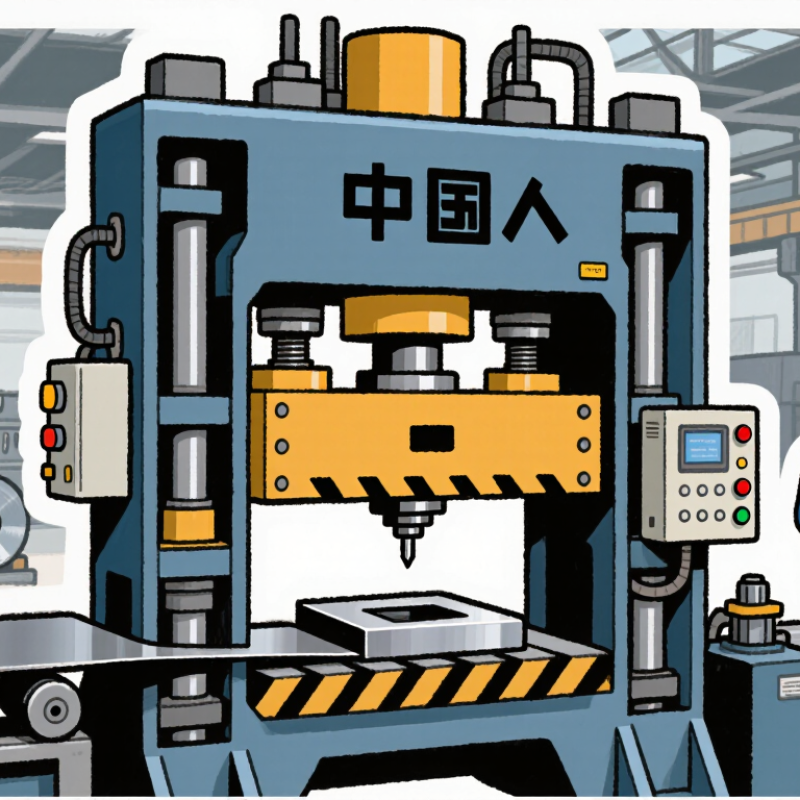
A press usually includes a motor, flywheel, slide, die, and worktable. The slide moves the upper die toward the lower die. Metal sits between both sections and changes shape during the stroke. Depending on the tooling, the operation may blank, bend, pierce, or draw the material. Press capacity, stroke length, and shut height must match the material and die design. A wrong match can cause rough edges, unstable feeding, or premature tool wear. In practice, production is less tidy than a diagram suggests.

Tips: Check the rated tonnage before selecting a press. Inspect the die alignment and sheet position each shift. Keep hands away from the closing area. Use documented maintenance records and verify emergency controls regularly. These habits support safer, more consistent operation, although they cannot replace trained supervision.

What Is a China Stamping Press and How Does It Work?

A China stamping press is industrial equipment that forms sheet metal by applying controlled force through a die. The press capacity required depends on the material, thickness, part size, and forming operation.

The chart shows representative nominal force capacities commonly used for different stamping press configurations. Mechanical presses are often selected for high-speed blanking and forming, while hydraulic presses provide adjustable force and longer dwell time for deep-drawing operations. Actual specifications vary by machine design and application.

Main Components and Their Functions

What Is a China Stamping Press and How Does It Work?

Main Components and Their Functions

A stamping press converts mechanical or hydraulic force into controlled sheet-metal movement. Its frame supports the load, while the slide moves the upper die vertically. The bolster plate holds the lower die and transfers pressure into the machine bed. The drive system may include a motor, flywheel, crankshaft, clutch, and brake. Hydraulic presses use cylinders instead of a crank mechanism. Each arrangement affects speed, force, and forming depth.

The die performs the actual cutting, bending, or drawing. Guide posts keep its upper and lower sections aligned. A feeder advances the metal strip at a measured pitch, while sensors check position, pressure, and stroke timing. The control system coordinates these signals and can stop production when readings exceed set limits. World Steel Association’s World Steel in Figures 2024 reports approximately 1.89 billion tonnes of crude steel production in 2023. That volume shows why dependable forming equipment matters across global manufacturing. Yet a larger press is not automatically better. Tool design and material behavior can matter more.

Tips: Check the rated force, stroke length, shut height, and working speed together. Inspect guides and brake response during scheduled maintenance. Real production rarely stays ideal. Material thickness can vary, and lubrication may be inconsistent. A practical setup should allow adjustment, not merely follow a catalog number. The U.S. Department of Energy’s Superior Energy Performance guidance also emphasizes monitoring motor-driven equipment, because inefficient operation can quietly increase production costs. Track energy use per finished part. Small deviations often reveal alignment or feeding problems before visible defects appear.

How the Stamping Process Works Step by Step

A China stamping press converts sheet metal into repeatable parts through controlled force. The machine may use a mechanical crank or hydraulic cylinder. Press capacity must match the material, thickness, and die design. A 2024 Grand View Research report estimated the global metal stamping market at about USD 217 billion in 2023. That scale reflects demand for consistent production, not simply cheaper machinery.

The process begins with a coil placed on a decoiler. Rollers straighten the strip and feed it into the die at a measured length. The press then lowers the upper die. Cutting edges create the blank, while forming sections bend or draw it into shape. Piercing tools may create holes during the same stroke. Scrap exits through the lower die. Small details matter. Feed errors can shift holes by fractions of a millimeter. Excessive speed may also cause cracks, burrs, or wrinkles.

Sensors check feed position, press force, and die alignment during production. Operators inspect the first pieces with gauges, calipers, or coordinate measuring equipment. The International Federation of Robotics recorded 541,302 industrial robot installations worldwide in 2023, showing why automated loading and inspection are expanding. Still, automation cannot correct poor die clearance. A practical review should examine trial parts, maintenance records, material certificates, and measured tolerances. The process appears simple from outside. It is not.

Common Types and Industrial Applications

A China stamping press is a machine that shapes sheet metal between a punch and die. Its working principle is simple, but production results depend on tooling accuracy, material behavior, and operator experience. Mechanical presses use a flywheel and crankshaft for fast, repeatable strokes. Hydraulic presses generate force through fluid pressure, making them suitable for deep drawing and thicker sheets. Servo presses offer adjustable slide motion, which can reduce forming defects, although they usually require higher investment and stronger maintenance skills.

Presses are also classified by die arrangement. Progressive dies perform several operations as a metal strip moves through multiple stations. They suit high-volume parts such as terminals, brackets, and appliance components. Transfer presses move larger blanks between separate dies, supporting automotive panels and structural parts. Single-stage presses remain useful for flexible, lower-volume work. They are slower, but sometimes easier to adjust.

Industrial demand is substantial. World Steel Association data reported about 1.89 billion tonnes of crude steel production worldwide in 2023. Much of that material enters stamped automotive, appliance, construction, and electrical products. The International Energy Agency reported over 14 million electric cars sold globally in 2023, increasing demand for lightweight body panels and battery enclosures. In practice, aluminum forming may reduce vehicle weight, but springback can be difficult to control. That detail is easy to underestimate. Process trials, die compensation, and regular inspection remain essential.

What Is a China Stamping Press and How Does It Work? – Common Types and Industrial Applications
Press Type How It Works Typical Capacity Typical Speed Typical Stroke Common Stamping Operations Industrial Applications Main Advantages Typical Limitations
Mechanical Press A motor drives a flywheel and crankshaft. The crank mechanism converts rotary motion into the reciprocating movement of the slide. Approximately 20–1,000 metric tons, depending on the frame and configuration. Approximately 30–300 strokes per minute; high-speed models may operate faster for small parts. Approximately 25–300 mm. Blanking, piercing, bending, coining, embossing, and shallow drawing. Automotive brackets, appliance panels, electrical terminals, hardware parts, and progressive-die components. High production speed, repeatable motion, good energy efficiency during continuous production, and low cost per part at high volume. Force and energy are greatest near the bottom of the stroke, so it is less flexible for very deep drawing and variable forming operations.
Hydraulic Press Hydraulic cylinders use pressurized fluid to move the slide and apply force throughout the stroke. Approximately 50–2,000 metric tons or more for large forming systems. Approximately 5–60 strokes per minute, depending on the material, forming depth, and cycle requirements. Approximately 100–800 mm. Deep drawing, stretching, forming, flanging, straightening, and compression molding. Deep-drawn tanks, cookware, vehicle body panels, large structural parts, composite components, and heavy sheet-metal products. Adjustable pressure and speed, full force throughout the stroke, long stroke capability, and strong control over deep-forming processes. Generally slower than mechanical presses and may require more maintenance for hydraulic seals, valves, pumps, and fluid systems.
Servo Mechanical Press Servo motors drive the slide directly through a mechanical transmission, allowing programmable slide motion and speed profiles. Approximately 30–1,000 metric tons. Approximately 20–150 strokes per minute, with speed varying during different portions of the stroke. Approximately 50–300 mm. Progressive stamping, precision blanking, forming, drawing, embossing, and multiple-stage operations. Automotive safety components, precision electrical parts, complex appliance components, and high-value sheet-metal products. Programmable motion, reduced impact during forming, improved control of material flow, lower noise, and potential material savings. Higher purchase cost and greater control-system complexity than conventional mechanical presses.
Pneumatic Press Compressed air drives a pneumatic cylinder to move the ram or slide through a relatively short working stroke. Typically below 30 metric tons for light-duty applications. Approximately 20–200 strokes per minute, depending on cylinder size and control system. Approximately 10–150 mm. Light blanking, piercing, riveting, crimping, marking, bending, and assembly pressing. Small electrical parts, labels, light hardware, connectors, packaging components, and laboratory or maintenance work. Simple operation, compact design, relatively low initial cost, and easy integration into automated workstations. Limited force and lower stiffness make it unsuitable for heavy-gauge materials and large deep-drawing operations.
Gap-Frame Press A C-shaped frame provides access from three sides, while the slide moves vertically over the die area. Commonly approximately 10–500 metric tons. Approximately 30–250 strokes per minute, depending on press size and application. Approximately 50–250 mm. Piercing, blanking, bending, forming, and short-run or progressive-die stamping. General metalworking, brackets, small panels, electrical enclosures, and maintenance production. Excellent die accessibility, convenient loading and unloading, and flexible use for many part sizes. Frame deflection can be higher than on a straight-side press, which may limit accuracy and die life at high loads.
Straight-Side Press A rigid four-column or straight-side frame guides the slide with high stiffness and supports large dies and high forming loads. Commonly approximately 100–2,500 metric tons or more for heavy-duty systems. Approximately 10–100 strokes per minute, depending on tonnage, stroke, and operation. Approximately 100–600 mm. Large blanking, progressive stamping, transfer stamping, deep forming, and heavy-duty bending. Automotive structural parts, large appliance panels, industrial equipment components, and heavy sheet-metal products. High rigidity, good die alignment, stable production quality, and suitability for large dies and high loads. Higher installation cost, larger floor-space requirements, and more complex die handling compared with smaller gap-frame presses.
Note: Capacity, speed, and stroke values are typical industry ranges rather than fixed specifications. Actual performance depends on press design, die construction, material grade, sheet thickness, feeding method, and the required forming operation.

Safety, Maintenance, and Performance Considerations

What Is a China Stamping Press and How Does It Work?

A China stamping press forms sheet metal between a punch and die. Its motor stores energy in a flywheel. A clutch then transfers power to the crankshaft, moving the slide vertically. The die controls the final shape. It sounds simple. It is not.

Safety must begin before production. Operators should verify guards, two-hand controls, emergency stops, and die alignment. OSHA’s FY2023 enforcement data placed machine guarding among its ten most frequently cited standards, with over 5,000 citations. That figure shows a recurring weakness, not a rare accident. ISO 12100 recommends identifying crushing, shearing, and unexpected-start hazards during machine design. Lockout procedures remain essential during die changes and repairs. Rushing one adjustment can defeat several safeguards.

Maintenance directly affects performance. Inspect clutch response, brake stopping distance, lubrication points, belts, fasteners, and electrical cabinets. Record vibration, abnormal noise, and slide parallelism. The U.S. Department of Energy notes that poorly maintained compressed-air systems can waste significant energy, often exceeding 20% in industrial facilities. Although a stamping press is not an air compressor, the lesson applies: small losses accumulate. Press accuracy also depends on clean dies and stable material feeding. Production teams sometimes trust rated tonnage too much. That is a mistake. Actual performance depends on stroke length, speed, die condition, lubrication, and operator judgment. A practical maintenance log may reveal problems that specifications hide.

Login