How to Choose the Best Automatic Robot for Your Needs?
Choosing the right automatic robot can be daunting. As technology advances, options grow. Finding the best fit for your needs is essential. Expert Roberta Yang states, "Every task requires a unique robotic solution." This highlights how diverse the automatic robot market is.
Consider your specific needs. Are you looking for a robot for cleaning, security, or logistics? Each function may require different features and capabilities. For example, a home cleaning robot should have strong navigation skills. On the other hand, a warehouse robot needs good load capacity.
It's easy to be overwhelmed by choices. Some robots may look appealing but lack the necessary functionality. User reviews can help guide your decision, but be wary of too-good-to-be-true claims. Take time to evaluate and reflect on what suits you best. The right automatic robot should enhance your life, not complicate it further.
Understanding Your Cleaning Needs and Environment
Understanding your cleaning needs is crucial when choosing an automatic robot. Consider the layout of your home. An open space will allow the robot to navigate easily. However, if you have many obstacles, like furniture or stairs, the robot's sensors must be effective. The more detailed the floor plan, the better the robot can perform its tasks.
Different surfaces require different approaches. Carpets may need more suction power, while hard floors might benefit from mopping functions. Consider how dirty your environment gets. A household with pets or children may need a more robust robot. Think about battery life, too. Longer cleaning sessions may be necessary for larger areas. Reflect on your specific cleaning habits. Do you run the vacuum daily or weekly? Your schedule will influence the robot's value.
Also, think about noise levels. Some robots are designed to operate quietly. This can be important in a household with young children or if you work from home. Remember that while features are essential, not all will suit your needs. A robot may have great tech but fail in execution. Analyze your expectations and focus on what will truly simplify your life.
How to Choose the Best Automatic Robot for Your Needs?
Identifying Key Features in Automatic Robots
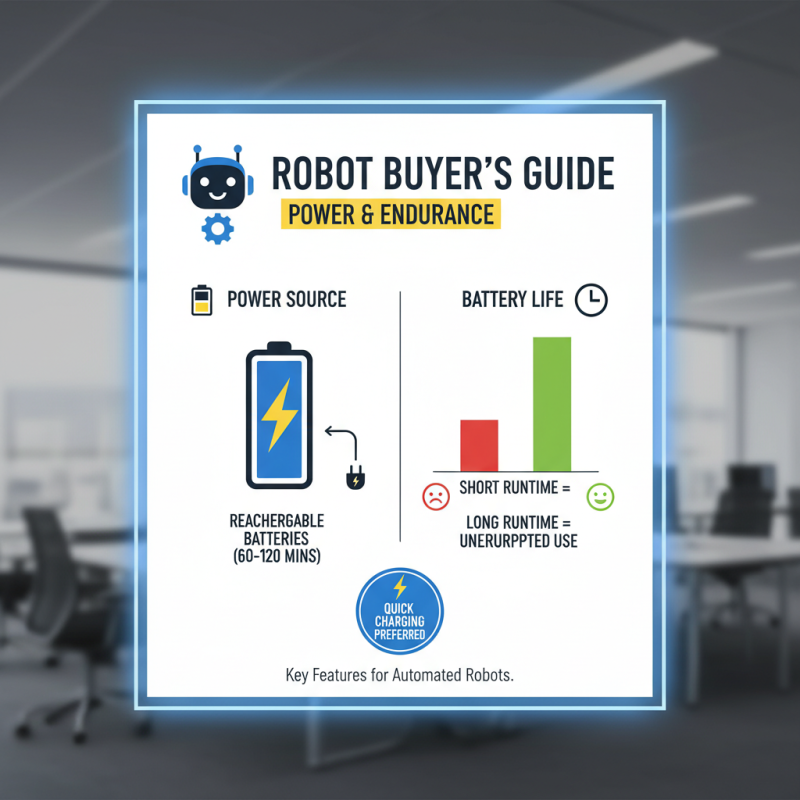
When choosing an automatic robot, certain key features can make a significant difference. The power source is crucial. Most robots rely on rechargeable batteries, which can last between 60 to 120 minutes. Checking the battery life is essential. A short battery duration may require frequent recharging, disrupting use. In many cases, models that offer quick charging are preferable.
Navigation capability is another important aspect. Robots utilize various technologies, including LIDAR and sensors, for mapping areas. Survey data shows that robots with advanced navigation can increase efficiency by up to 30%. However, not all robots excel in complex environments. Those that struggle may miss spots, leaving areas dirty or unserviced.
Finally, consider the software compatibility. Many robots require specific applications for operation. A report indicates that a high percentage of users face challenges with outdated software. Regular updates are necessary for optimal performance. Users should be prepared for issues and potentially learning curves. Balancing these features with personal needs can lead to a more effective choice.
Comparing Different Types of Automatic Robots
When choosing an automatic robot, it's vital to understand the different types available. There are service robots, industrial robots, and domestic robots. Each type serves unique purposes. Service robots assist in tasks like cleaning and delivery. Industrial robots help in manufacturing and precision tasks. Meanwhile, domestic robots simplify daily chores.
Consider the size of the area the robot will work in. A compact robot may be ideal for small spaces while larger ones may cover expansive areas. Think about the features you need. Do you want a robot that can map your home? Or one that can adapt to different surfaces? These distinctions can greatly impact your experience.
Tips: Always check user reviews. They can provide real-world insights. If possible, try before you buy. This can help assess usability. Remember, the latest model isn't always the best fit for you. Sometimes, older models may offer enough features for your needs without complexity. Consider your lifestyle carefully.
How to Choose the Best Automatic Robot for Your Needs? - Comparing Different Types of Automatic Robots
| Robot Type |
Best For |
Features |
Price Range |
| Vacuum Robot |
Home Cleaning |
Automatic scheduling, sensors, Wi-Fi connectivity |
$200 - $1,000 |
| Mopping Robot |
Home Cleaning |
Wet and dry mopping, automatic water dispensing |
$250 - $800 |
| Lawn Mowing Robot |
Lawn Maintenance |
Terrain navigation, weather sensors, programmable schedules |
$600 - $3,500 |
| Pool Cleaning Robot |
Pool Maintenance |
Scrubbing, filtering, remote control |
$300 - $1,500 |
| Educational Robot |
Learning and Development |
Programming, robotics kits, interactive learning |
$100 - $500 |
Evaluating Budget and Long-term Cost Considerations
When selecting an automatic robot, budget is key. Consider the initial cost of purchase. Some options may seem affordable but have higher maintenance costs. Research potential repairs and part replacements. Make sure to ask about warranty coverage, as it can greatly impact long-term expenses. A robot with a low upfront cost could lead to future spending that exceeds your budget.
Long-term costs also include energy efficiency. Some robots consume more power than others. Look for energy ratings and reviews on performance. Additionally, evaluate the software updates that might be needed. These can require subscription fees or additional costs over time. A robot that appears cheap today could end up being a heavy financial burden later.
Consider your specific needs. A robot that excels in one area might not be versatile enough for others. This could lead to additional purchases down the line. Reflect on what features you really need. It’s easy to be swayed by flashy advertisements or promises. Prioritize function over style to ensure your choice remains budget-friendly in the long run.
Reading Reviews and User Feedback for Informed Choices
When selecting the best automatic robot for your needs, user feedback is essential. Reviews provide real-life insights. They help you assess the robot's performance and reliability. Look for detailed reports on how these devices handle various tasks. Users often highlight problems you might not consider. Pay attention to issues like battery life and cleaning efficiency.
Many robots may be effective, but some users report dissatisfaction. For example, a robot may fail on uneven surfaces. Another might struggle with pet hair. These challenges change how well they perform in real homes. Explore customer experiences to avoid potential pitfalls. Sometimes, people overlook simple but critical features.
Reading user reviews allows you to compare different models. It reveals strengths and weaknesses that specs may not show. A robot could sound perfect on paper. Yet, if users report frequent malfunctions, reconsider. Take time to reflect on what others say. Their experiences can save you time and money.