How to Choose the Best 3D Golf Mat in 2026?
Choosing the right Golf Mat 3d in 2026 is about more than finding a textured surface. The mat should provide realistic lies, stay stable during swings, and hold up to repeated practice. A convincing 3D profile may look impressive, but appearance alone cannot confirm how it performs. Small details matter.
Golf legend and course designer Jack Nicklaus is often quoted as saying, “The more I practice, the luckier I get.” His words concern practice, not golf mats specifically, but they capture why the surface beneath each shot deserves attention. A mat that hides poor contact can teach the wrong lesson. One with a firm, secure base and varied turf heights may offer more useful feedback, though results depend on the golfer and setup.
Look closely at the hitting layer, backing, drainage, and available lie options. Check whether the mat shifts on concrete, how its edges meet the ground, and whether the surface suits your clubs. If possible, test it with real balls and several swing types. Feel the difference.
This guide will compare construction, realism, durability, and value, while noting where product claims need careful checking. No mat can perfectly reproduce every course condition. That is worth remembering. A little skepticism helps, especially when bold promises outnumber clear specifications. The best choice is the one that fits your practice space, gives honest feedback, and remains dependable over time.
What Defines a 3D Golf Mat and How Does It Work?
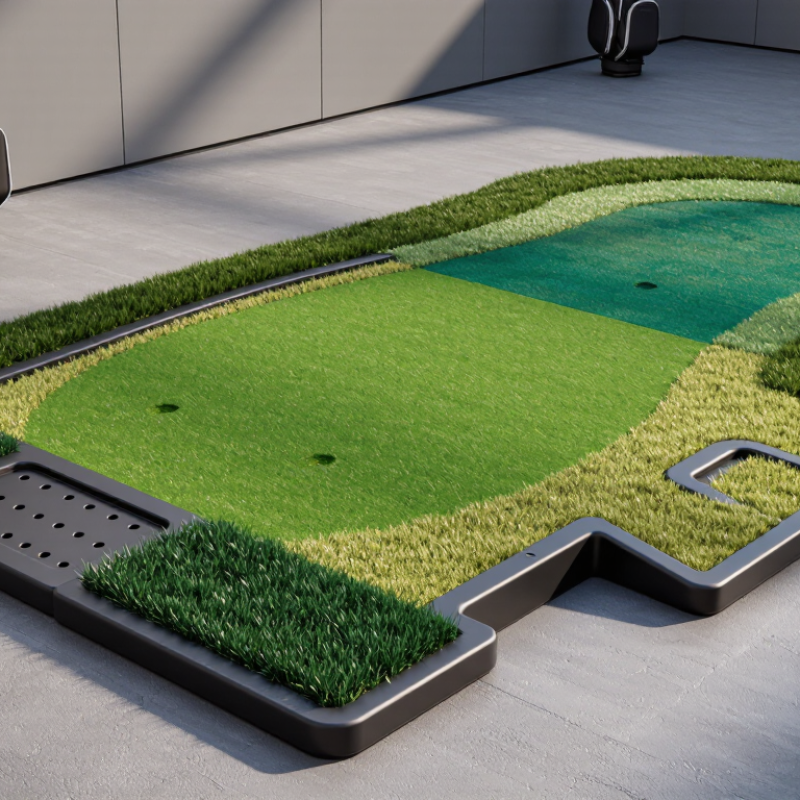
A 3D golf mat uses layers and varied surface heights to imitate more than one flat fairway lie. Its top may combine short, dense turf with longer fibers that hold the ball slightly above or below the stance area. Beneath that, a resilient backing helps absorb impact and keep the mat stable. The “3D” label usually describes this textured construction, not a digital or moving surface. Check the actual fiber depth and base, not just the name.
It works by changing how the club meets the ball. On a tight section, the ball sits low, so clean contact matters. Longer turf can resemble light rough and may slow the clubhead if fibers catch the face. Small differences matter. A stable base also limits sliding during a swing, while a cushioned layer can soften repeated impact. It cannot reproduce natural soil exactly, though. That distinction is easy to overlook.
When evaluating one, inspect whether the ball stays level and whether the surface springs back after pressure. Brush the turf with your hand; uneven patches or loose fibers may affect the lie. A mat that feels forgiving underfoot can still give misleading feedback if it lets the club bounce. I would treat claims of realistic practice as a starting point, not proof. Real grass varies with moisture, wear, and grain, and a mat cannot capture every condition.
Which Practice Needs Should Guide Your Mat Choice?
Choose a mat around the shots you actually practise, not the longest feature list. For full swings, seek a stable hitting area that allows the club to enter the turf without a harsh rebound. Iron players should check whether the surface handles both shallow and steep strikes; a rigid mat may hide poor contact. For tee shots, make sure the tee fits and reaches your preferred height. Small detail. It matters.
Your practice mix matters. The National Golf Foundation’s 2024 U.S. participation data counted 26.6 million on-course golfers and 18.4 million off-course-only participants in 2023. These figures show the scale of golf played away from courses, but do not measure home-mat use. Treat them as context, not proof that one design suits every golfer. For chips, prioritize a useful target area and predictable roll. For driver practice, look for enough stance room and a base that stays in place.
If possible, test the mat with several clubs. Check for movement, visible wear, and how the surface feels underfoot. A three-dimensional surface may look realistic, but appearance alone cannot confirm comfortable impact or useful feedback. Check the backing and thickness, too. There is no perfect feel for everyone. I would question claims that a mat can fix a swing by itself; it can expose patterns, but video review or coaching may still help.
How Do Turf, Base, and Layer Design Affect Performance?
A 3D golf mat’s turf changes how the club meets the ball. Short, dense fibers usually offer a firmer strike, while longer fibers can cushion the club and support shots from a raised lie. Neither feel is automatically better. Match the surface to your practice goals, then check whether the ball sits naturally rather than sinking between fibers. Feel the difference.
The base affects stability and feedback. A heavy, well-gripping base is less likely to shift during a full swing, especially on smooth concrete. A very soft base may feel comfortable, but it can mute ground contact and make strikes harder to judge. I would not assume thicker means better; that shortcut is tempting, and often wrong. Press the mat at several points and look for uneven compression.
Layer design connects turf to base, so it can influence shock absorption, durability, and how the mat lies after repeated use. A resilient middle layer may soften impact without making the surface feel spongy. Check stitched or bonded edges, since separation can create a trip hazard or an inconsistent stance. If possible, hit a few shots with different clubs and inspect the mat afterward. Small shifts matter. A test indoors may not reveal how the surface behaves on damp grass or uneven ground.
How Should You Compare Size, Stability, and Durability?
A 3D golf mat should fit your whole practice movement, not just the hitting strip. Measure your stance, clubhead path, and the space needed for a full swing. A narrow mat can feel fine during short chips, then crowd your feet with a driver. The National Golf Foundation’s 2024 participation report counted 26.6 million U.S. on-course golfers in 2023, reflecting broad demand for practice options. That figure does not prescribe mat dimensions; your room and swing do.
Check stability on the surface where you will actually practice. Place the mat on concrete or flooring, take several swings, and inspect whether its edges creep or curl. A heavy mat may stay put, but weight alone is not proof of grip. Look for a flat, non-slip base and even support beneath the stance area. Small shifts matter.
Durability depends on the turf, backing, seams, and tee insert—not just a thick appearance. Ask how the surface was tested and whether replacement tees are available. ASTM D3884 describes an abrasion-testing method for fabrics, but abrasion results do not predict years of golf swings. That distinction matters. I would also check for loose fibers and compressed spots after repeated sessions; product specifications rarely capture every home setup.
How to Choose the Best 3D Golf Mat in 2026
Compare the mat’s footprint with your available practice space. The areas below are calculated from the example dimensions shown; they are sizing examples, not product ratings.
Stability: Check that the mat has a non-slip base and stays flat on your intended surface. Durability: Compare turf construction, backing, and care or warranty information; these vary by product.
What Safety, Care, and Value Factors Matter in 2026?
In 2026, safety starts with a mat that stays flat during a full swing, not one that merely looks thick.
Check the base for grip and choose a footprint that suits your stance, club length, and swing path. Keep it on a level, dry surface, with clear space around the golfer and no loose balls underfoot. Small details matter. Before practice, inspect for curled edges, loose turf, split seams, or a shifting hitting insert. Worn areas can alter how the club meets the surface, so repair or replace damaged sections rather than ignoring them. That can be inconvenient.
Care affects long-term value. Brush away grit and grass after sessions, and let damp fibers dry fully before storing the mat. Avoid harsh cleaners unless the care instructions allow them; some surfaces can become slick or degrade. Compare mats by construction, replaceable parts, and warranty terms, not price alone. A low-cost mat may work for occasional swings but wear quickly with frequent use. A higher price is no guarantee of better practice, either. Check whether the hitting area feels consistent under different clubs, and consider the space available at home. Value depends on actual use, and that is easy to misjudge.