

What Is a Circuit Breaker Box and How Does It Work?
What Is a Circuit Breaker Box and How Does It Work? This question matters whenever a home loses power, a light flickers, or a warm electrical smell appears near the wall. A Circuit Breakers Box, commonly called an electrical panel, distributes electricity from the utility service to separate household circuits. Inside, each breaker monitors current flowing through a wire. When the current becomes dangerously high, the breaker trips and opens the circuit. Power stops before excessive heat can damage insulation or start a fire.
Mike Holt, a respected electrical educator, emphasizes a practical safety principle: “A circuit breaker is a safety device, not a disconnecting device.” That distinction is easy to overlook. A tripped breaker may indicate an overloaded circuit, a short circuit, or a failing appliance. Resetting it repeatedly is not a repair. It can hide a deeper problem.
Behind the metal cover, you may see neat rows of black switches, colored labels, and thicker service cables. The panel’s layout tells a story about how a building uses power. Kitchen outlets often share heavy loads. Bedrooms usually demand less. However, labels can fade, panels can be modified, and older wiring may not match modern expectations. That uncertainty deserves respect. Do not remove the cover or touch exposed components unless you are qualified. A licensed electrician can test the circuit, identify the fault, and confirm whether the Circuit Breakers Box remains suitable for safe service. Sometimes, the simplest explanation is wrong.
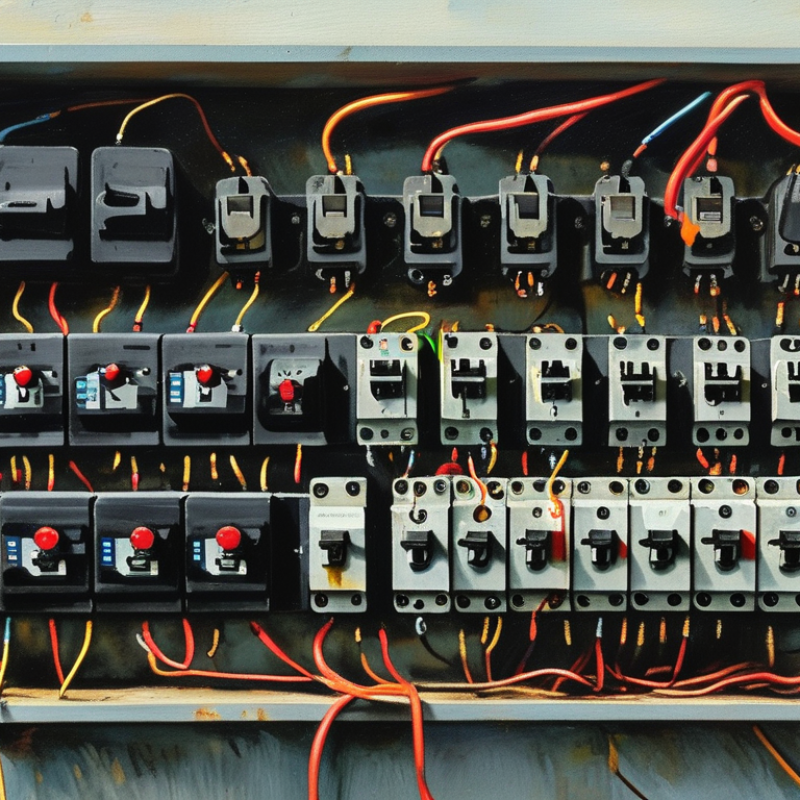
What a Circuit Breaker Box Is and Where It Fits in an Electrical System
A circuit breaker box is the distribution point between the utility supply and a building’s branch circuits. It usually sits near the service entrance, although the main disconnect may be installed elsewhere. Power enters through service conductors and reaches the main breaker. From there, bus bars feed smaller breakers. These breakers supply lighting, receptacles, heating equipment, and dedicated appliances.
The panel also contains neutral and grounding connections. Their arrangement depends on the system’s service configuration. A breaker monitors current on its circuit. If current exceeds its rating, an internal mechanism trips and opens the circuit. It trips quickly. That action limits overheating in conductors.
A breaker box is not a magic safety wall. It cannot correct every loose connection, damaged cable, or incorrect repair. Specialized protection may also be required for arc faults or ground faults. The U.S. Fire Administration’s Residential Building Electrical Fires report for 2014–2016 estimated 26,100 electrical-malfunction fires annually. Those fires caused about 280 deaths, 1,125 injuries, and $1.1 billion in property loss. These figures show why panel labeling, correct breaker sizing, and periodic inspection matter. A field inspection should check heat discoloration, buzzing, corrosion, and repeated tripping. Some warning signs are easy to miss. Any work inside the panel should follow applicable electrical codes and be performed by a qualified professional.
What Is a Circuit Breaker Box and How Does It Work? — What a Circuit Breaker Box Is and Where It Fits in an Electrical System
| System Component | Primary Function | How It Fits into the Electrical System |
|---|---|---|
| Circuit Breaker Box | Encloses and organizes overcurrent protection devices | The box, also called a distribution panel or electrical panel, receives electrical power and divides it into protected branch circuits that supply lighting, receptacles, appliances, and other loads. |
| Service Entrance Conductors | Deliver incoming electrical power | These conductors carry electricity from the utility service equipment or another upstream disconnect to the panel. Their size and configuration depend on the approved service rating and local electrical requirements. |
| Main Disconnect or Main Breaker | Disconnects power to the panel and downstream circuits | A panel may contain a main breaker, or the main disconnect may be installed in separate service equipment. The disconnect provides a way to shut off power to the panel's distribution circuits. |
| Bus Bars | Distribute electrical power to individual breakers | Bus bars are energized metal conductors inside the panel. Circuit breakers connect to them and draw power for their assigned branch circuits. |
| Branch-Circuit Breakers | Protect individual circuits from excessive current | Each breaker is sized for its circuit conductors and intended load. It opens the circuit when current exceeds its rated limit for a sufficient period, helping reduce the risk of conductor overheating. |
| Single-Pole Breaker | Protects many standard branch circuits | A single-pole breaker commonly supplies a circuit connected to one ungrounded conductor. In typical North American residential systems, these circuits are often approximately 120 volts, subject to local system design. |
| Double-Pole Breaker | Supplies and protects higher-voltage or larger loads | A double-pole breaker connects across two bus-bar poles and normally disconnects both ungrounded conductors together. It is commonly used for loads such as electric water heaters, ranges, or heating equipment when permitted by the system design. |
| Neutral Bar | Provides a termination point for grounded circuit conductors | The neutral conductor carries return current from many line-to-neutral loads. In service equipment, neutral and grounding functions are bonded; in downstream panels, they are generally kept separate as required by the installation rules. |
| Grounding Bar | Connects equipment grounding conductors | The grounding bar provides connection points for grounding conductors that help carry fault current back to the source so the protective device can operate during a ground fault. |
| Equipment Grounding Conductors | Provide a low-resistance path during faults | These conductors connect non-current-carrying metal parts to the grounding system. They normally carry no current, but they help clear faults by directing fault current to the source. |
| Grounding Electrode Conductor | Connects the electrical system to the grounding electrode system | Where required, this conductor connects the service grounding point to electrodes such as grounding electrodes installed in or around the building. It supports system grounding and electrical safety. |
| Arc-Fault Circuit Interrupter | Helps detect hazardous arcing conditions | An arc-fault protective device monitors circuit current for patterns associated with dangerous arcing. Its use is required in various locations by many modern electrical codes, depending on the jurisdiction and application. |
| Ground-Fault Circuit Interrupter | Helps protect people from electric shock | A ground-fault protective device compares current leaving and returning on the circuit. If it detects an imbalance that may indicate current flowing through an unintended path, it can disconnect the circuit rapidly. |
| Panel Enclosure and Cover | Protects people from energized internal parts | The enclosure contains the conductors and protective devices, while the cover helps prevent accidental contact. The panel should remain closed, accessible, and free from moisture or physical damage. |
| Panel Rating | Defines the maximum permitted current and system characteristics | A panel has a marked rating for factors such as maximum amperage, voltage, wiring system, and compatible protective devices. The service rating must be suitable for the calculated electrical load and installed conductors. |
| Breaker Tripping | Interrupts abnormal current conditions | A breaker may trip because of an overload, short circuit, ground fault, or arc-fault condition, depending on the protective device. Repeated trips indicate a problem that should be investigated rather than bypassed. |
| Electrical Load Path | Describes how power travels through the installation | Power generally flows from the utility or supply source to the service disconnect, through the panel bus bars and circuit breakers, then along branch-circuit conductors to connected equipment and back through the appropriate return and grounding paths. |
| Safety and Maintenance | Supports reliable operation and reduces electrical hazards | Only qualified personnel should work inside an energized panel. Before electrical work, the correct disconnecting means must be identified, and local regulations, permits, and inspection requirements should be followed. |
Note: Electrical configurations, protection requirements, conductor sizes, and panel locations vary by building type and jurisdiction. Work inside a circuit breaker box should be performed by a qualified electrical professional.