
10 Essential Tips for Effective Tool Change Robot Operations

As industries increasingly embrace automation, the tool change robot emerges as a critical component in manufacturing efficiency. According to a report by the International Federation of Robotics, the adoption of robotics in manufacturing is projected to exceed 3.5 million units globally by 2025. Tool change robots, known for their precision and speed, play a vital role in enhancing productivity and minimizing downtime.

However, effective operations with these robots require careful planning and execution. A study by MarketsandMarkets found that optimizing robotic operations can reduce production costs by up to 20%. This underscores the importance of using best practices for tool change robots. Despite notable advancements, many facilities still face challenges, such as integration issues and inadequate training for staff.

Understanding these complexities is vital for manufacturers. Effective tool change robot operations not only reduce costs but also improve product quality. The road to one hundred percent efficiency is often fraught with obstacles that require ongoing evaluation and reflection. Adjusting strategies based on real-world experiences can lead to continuous improvements in automation processes.

10 Essential Tips for Effective Tool Change Robot Operations

Understanding the Role of Tool Change Robots in Automation

Tool change robots play a crucial role in automation. They streamline processes, improving efficiency and reducing downtime. These robots can quickly change tools based on the task at hand. This flexibility allows factories to adapt to varying production demands. However, managing transitions between tools requires careful planning. The programming of these robots must be precise to avoid costly mistakes.

In many cases, companies overlook the importance of calibrating the robots regularly. Neglecting this can lead to misalignment and operational inefficiencies. Additionally, personnel training is essential. Staff must understand how to operate these robots effectively. There remains room for improvement in communication between human operators and robotic systems. Successful integration hinges on how well teams adapt to these technologies.

Real-world examples show that even small errors can lead to significant delays. Identifying these risks is vital. Companies should invest time in regular assessments of their robotic systems. Engaging with experts can provide fresh insights. Balancing technology and human expertise creates a robust automation strategy. Recognizing the limitations of current systems is also important. The evolution of tool change robots will continue, and staying informed is key.
Key Factors to Consider Before Implementing Tool Change Robots

Implementing tool change robots can significantly enhance manufacturing efficiency. However, careful consideration of key factors is essential for successful integration. First, assess the workspace. Ensure there is ample space for the robot to operate safely. Lack of space can lead to accidents or inefficiencies.

Next, consider the compatibility of tools. Not all tools work seamlessly with every robot. Test various tools to confirm their effectiveness. It's also crucial to think about the training of your staff. Operators should understand the technology behind the robots. Familiarity can prevent costly mistakes.

Effective tool change operations rely on proper programming. Ensure the robot's software is user-friendly. Regular updates can help maintain performance. Monitoring the robots during operation is vital. Be prepared to address malfunctions quickly. This proactive approach improves reliability. Overall, careful planning and continuous evaluation make all the difference.

10 Essential Tips for Effective Tool Change Robot Operations - Key Factors to Consider Before Implementing Tool Change Robots

Tip Description Benefit
1. Assess Operational Needs Evaluate the specific requirements of your production line to determine the necessity for tool change robots. Increased alignment with operational goals.
2. Choose the Right Robot Type Select a robot that matches the weight and complexity of the tools being handled. Optimal performance and efficiency.
3. Implement Safety Measures Ensure all safety protocols are in place to protect human operators and equipment. Reduced risk of accidents and downtime.
4. Train Personnel Provide comprehensive training for staff on operating and maintaining tool change robots. Increased competence and efficiency.
5. Optimize Tool Accessibility Design the workspace to allow easy access to tools for rapid changes. Improved turnaround time for operations.
6. Regular Maintenance Schedule routine inspections and upkeep for robots to ensure longevity. Enhanced reliability and performance.
7. Monitor Performance Metrics Implement a system to track efficiency, speed, and error rates. Data-driven decisions for continuous improvement.
8. Establish Protocols for Tool Change Create clear guidelines for when and how to initiate a tool change. Standardized operations minimize confusion.
9. Evaluate ROI Conduct a cost-benefit analysis to measure the financial impact of tools changes. Justify investments in automation.
10. Stay Current with Technology Keep abreast of advancements in robotics and automation tools. Leverage innovation for competitive advantage.

Step-by-Step Guidelines for Efficient Tool Change Procedures

Efficient tool change procedures are crucial in robotics. The time spent on tool changes can significantly impact productivity. Research indicates that optimizing these procedures can reduce downtime by up to 30%.

Start by ensuring all tools are properly labeled and organized. This avoids confusion and saves valuable time. Next, consider implementing standard operating procedures (SOPs) for tool changes. SOPs help maintain consistency and minimize errors. A study showed that 45% of operations saw improved efficiency after adopting SOPs.

Training staff regularly is another key aspect. Regular drills reinforce the processes and keep skills sharp. The failure to train can lead to costly mistakes and increased downtime. In fact, 25% of robotic failures are attributed to human error during tool changes. Continuous improvement is the goal. Evaluating each tool change for potential enhancements can lead to new insights. The path to efficiency is ongoing and requires reflection.

Tool Change Efficiency Analysis

Common Challenges in Tool Change Operations and How to Overcome Them

10 Essential Tips for Effective Tool Change Robot Operations

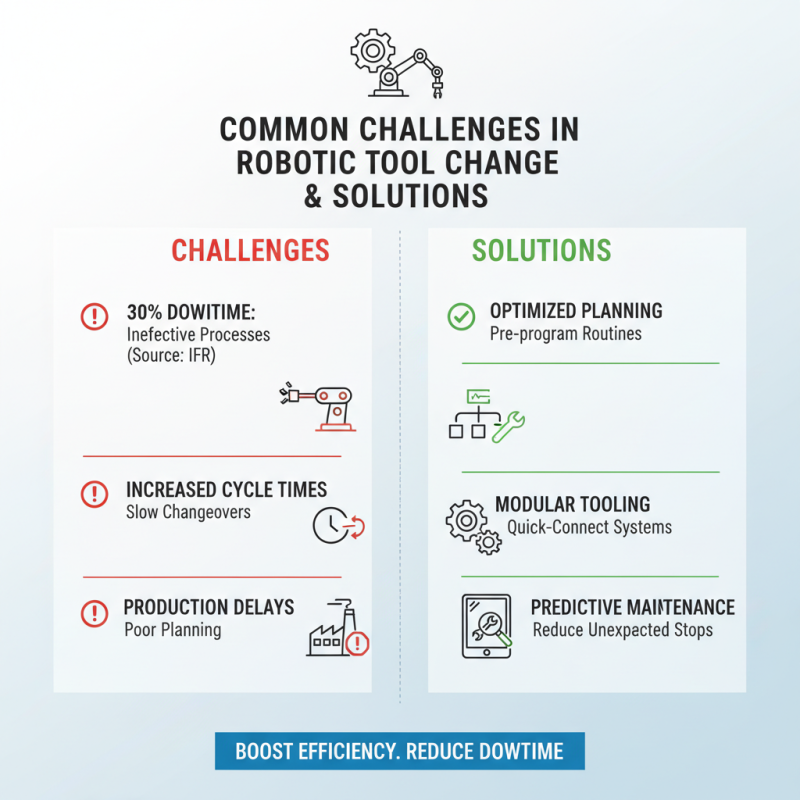
Tool change operations in robotic automation often face significant challenges. A recent report by the International Federation of Robotics highlights that nearly 30% of robot downtime is linked to ineffective tool change processes. Poorly planned changeovers can lead to increased cycle times and production delays, affecting overall efficiency.

One common issue is the misalignment between the robot and the tool. This problem often arises from improper calibration. The calibration frequency should be determined based on production demands, yet many facilities overlook this, resulting in frequent errors. Regular audits can help identify calibration discrepancies.

Another challenge is the lack of standardization in tool designs across different manufacturing processes. Many operations use custom tools that vary in size and weight. This increases the complexity of tool changes. A study indicated that organizations implementing standardized tools saw a 40% reduction in changeover time. Process evaluation and integration of standard tools could alleviate these inefficiencies. Adjustment and reflection on these practices are essential for optimal operations.

Maintenance Best Practices for Ensuring Optimal Robot Performance

10 Essential Tips for Effective Tool Change Robot Operations

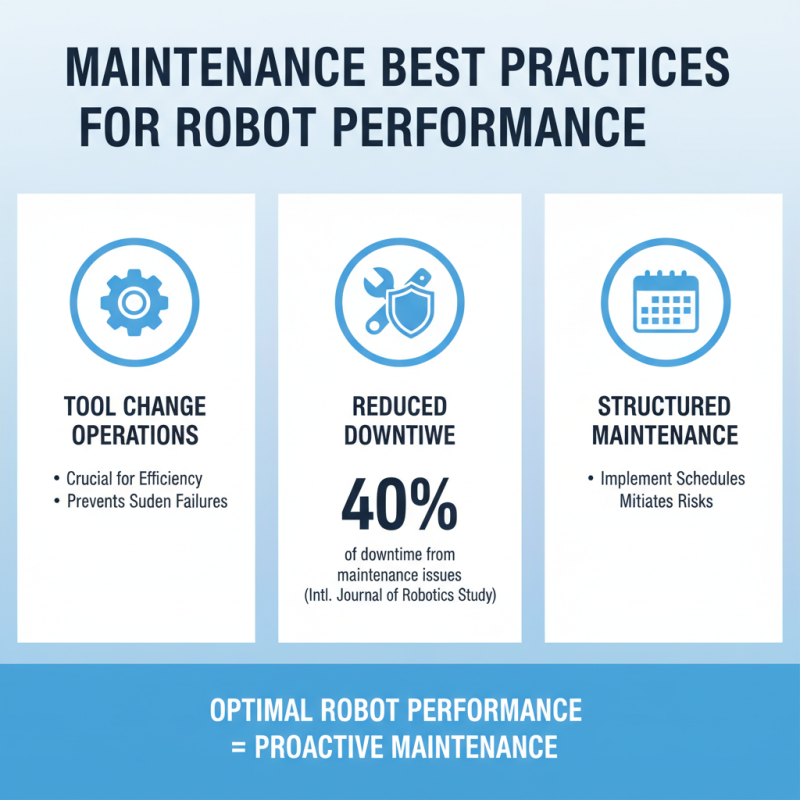
Maintaining robots for tool change operations is crucial for efficiency. Regular inspections prevent sudden failures. A study from the International Journal of Robotics highlights that 40% of downtime stems from maintenance issues. Implementing a structured maintenance schedule can reduce these risks significantly.

Operational performance relies heavily on lubrication and calibration. Robots need proper lubrication to function smoothly. A lack of it can lead to wear and tear. It's recommended to inspect lubrication systems monthly. Also, routine calibration ensures precision. Research indicates that improperly calibrated robots can reduce production quality by up to 30%. This reality emphasizes the importance of adherence to maintenance schedules.

Training operators on maintenance practices enhances robot longevity. Knowledge gaps can lead to errors. Reports suggest that training can improve robot reliability by 20%. Regular training sessions not only educate staff but encourage a culture of continuous improvement. Without such dedication, the risk of operational challenges remains high.

Login