In the fast-evolving world of automation, optimizing a robot cell's efficiency is critical. Renowned expert Dr. John Smith, a leader in robotics at Tech Innovations, emphasizes, “Efficiency in a robot cell transforms production lines.” This statement underscores the importance of precision and productivity in robotic systems.
Robot cells are integral to modern manufacturing. They combine various technologies to achieve optimal performance. However, many organizations still face challenges in maximizing their robot cell's output. Common obstacles include poor layout, ineffective programming, and lack of worker training. These areas often lead to wasted time and resources, highlighting the need for effective strategies.
Consider the impact of a well-designed robot cell. It can enhance production rates and reduce costs significantly. Yet, failing to address inefficiencies can result in missed opportunities. Companies must continually assess their processes. Each adjustment brings the potential for improvement. Not every step will yield immediate results, but reflection on these efforts is essential for long-term success.
Robot cell efficiency is crucial for optimizing production. A well-designed robot cell can significantly enhance workflow and minimize downtime. Investing time in understanding efficiency can lead to better resource utilization and increased output. It’s about more than just machines; it’s about the entire system's synergy.
One key tip is to analyze your current layout. Is there unnecessary movement? Streamlining tasks can save time. Consider implementing automated inspections. This reduces errors and increases consistency. Another point is to regularly review robot programming. Outdated instructions can lead to inefficiencies. Small tweaks can yield big results.
Training staff effectively is vital. Employees must understand the importance of cell efficiency. They should know how to troubleshoot minor issues. Empower your team to suggest improvements. Often, they notice problems that management overlooks. Continuous feedback loops can drive upgrades and adjustments. Remember, even minor changes can enhance overall performance.
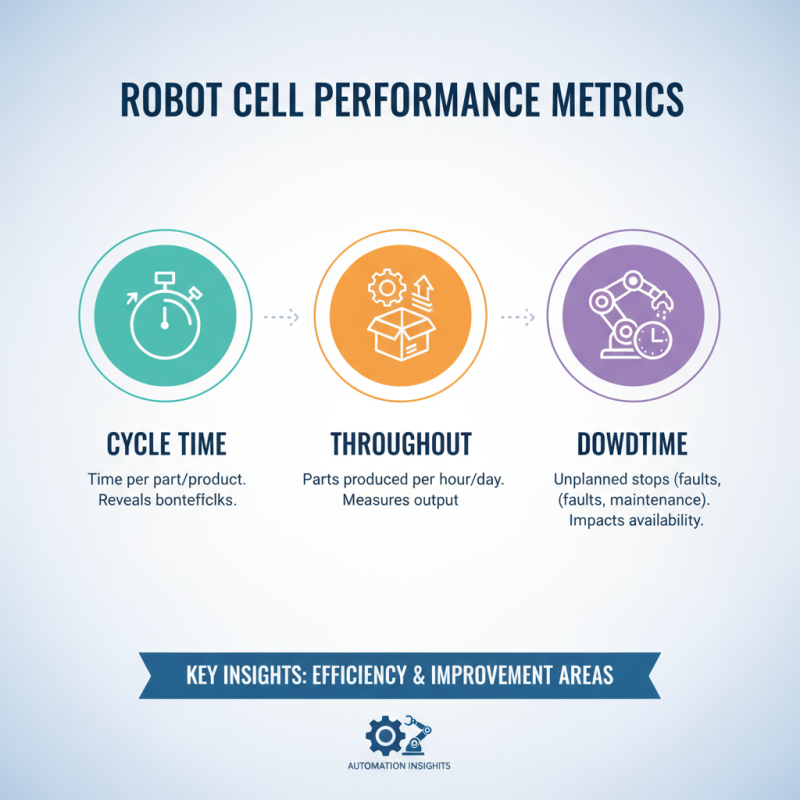
Evaluating the performance of a robot cell requires identifying key metrics. These metrics help gauge efficiency and highlight areas needing improvement. Common metrics include cycle time, throughput, and downtime. Measuring these can provide insights into operational efficiency. For instance, understanding cycle time can reveal bottlenecks.
Another crucial metric is Overall Equipment Effectiveness (OEE). OEE combines availability, performance, and quality. It helps see the bigger picture of productivity. If OEE is low, it may indicate issues in the system. Regular monitoring can help pinpoint reasons for inefficiencies.
Regular data analysis is essential. Without it, companies might miss opportunities for improvement. It’s important to set benchmarks and track them. Metrics need to evolve as technology advances. Relying solely on one metric may lead to incomplete assessments. Sometimes, what seems efficient could hide deeper problems.
When optimizing robot cell efficiency, effective layout and design strategies are crucial. A well-planned layout minimizes travel time and reduces bottlenecks. For instance, the use of U-shaped cells can shorten cycle times by up to 30%, according to industry research. This configuration allows for easier access to multiple machines, enhancing productivity.
Space utilization also matters significantly. An inefficient layout can waste up to 20% of valuable floor space, leading to higher operational costs. It’s essential to consider the movement patterns of robots and materials. Clear pathways should encourage quick access to workstations. However, many facilities overlook this, resulting in unnecessary delays.
Regular assessments of the layout are necessary. This process can reveal inefficiencies that may have developed over time. While a design may initially seem optimal, changes in production demands may expose new challenges. Ensuring flexibility in design can help address these evolving needs. Continuous improvement should be a guiding principle in cell design.
| Tip No. | Strategy | Description | Benefit |
|---|---|---|---|
| 1 | Layout Optimization | Arrange equipment and workstations to minimize movement. | Reduces cycle time. |
| 2 | Cell Design | Incorporate flexible and modular designs for adaptability. | Enhances productivity and scalability. |
| 3 | Task Prioritization | Identify and prioritize critical tasks for robots. | Improves task execution efficiency. |
| 4 | Maintenance Scheduling | Implement regular maintenance checks to prevent downtime. | Increases system reliability. |
| 5 | Training Programs | Provide training for operators and technicians on equipment use. | Enhances operational performance. |
| 6 | Data Monitoring | Utilize sensors and data analytics to monitor performance. | Facilitates informed decision-making. |
| 7 | Error Reduction Techniques | Implement checks to minimize errors in operations. | Boosts overall efficiency. |
| 8 | Energy Management | Integrate energy-efficient technologies. | Reduces operational costs. |
| 9 | Collaboration Between Robots | Enable robots to work together on tasks. | Improves throughput. |
| 10 | Feedback Systems | Implement feedback loops to assess performance. | Allows for continuous improvements. |
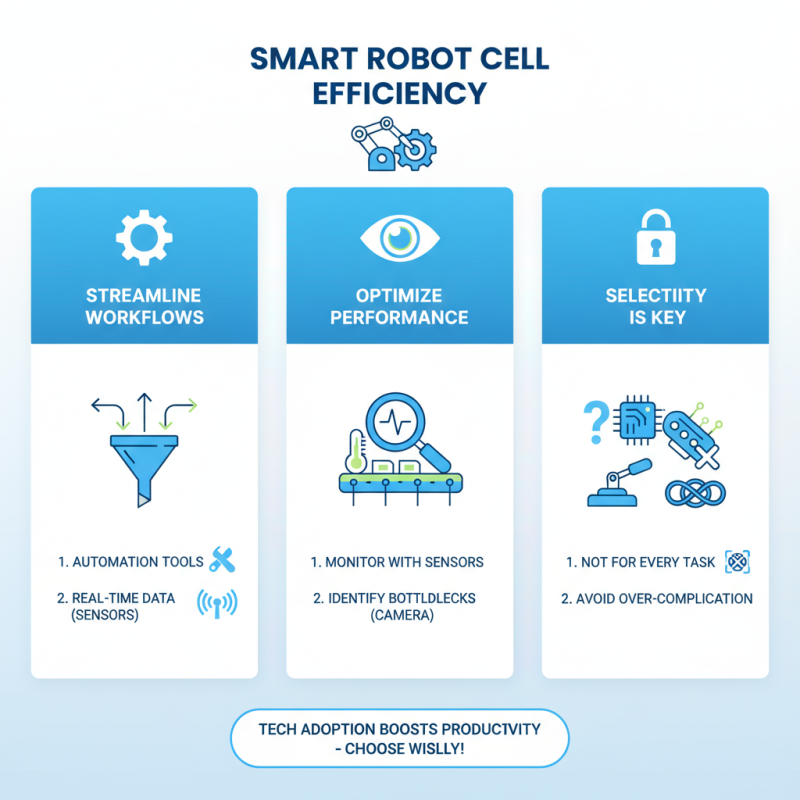
Integrating advanced technology can significantly enhance robot cell efficiency. Start by adopting automation tools that streamline workflows. Utilizing sensors improves real-time data collection, helping you monitor performance closely. High-speed cameras can provide insights into operation bottlenecks. But, not all technology fits every application. Sometimes, the newest tools can complicate simple processes.
Consider the use of machine learning algorithms. They can predict failures before they happen. However, implementing them requires a solid data foundation. Without accurate data, feedback loops may lead to erroneous conclusions. This facet often challenges teams who rush into adopting trendy tech without a solid strategy. It’s essential to step back occasionally and evaluate what truly drives efficiency in your specific context.
Connecting different tools is vital for a seamless workflow. Over-reliance on one system can create vulnerabilities. Ensure compatibility so that they operate effectively together. Regularly ask your team for feedback on these systems. They offer valuable insights into what works and what doesn't. District teams may have different needs, and their experiences can highlight areas for improvement.
Training staff for optimal interaction with robot systems is crucial for enhancing overall efficiency. Employees should understand robot functionality clearly. This knowledge fosters confidence during operation. Regular workshops can create interactive learning experiences. These sessions should include hands-on practices. Employees who engage directly with robots will master the systems more effectively.
Creating a feedback loop is essential. Staff should feel free to express concerns or ideas. Sometimes, they may find flaws in the current setup. Ignoring these issues can lead to decreased performance. Regular assessments also identify knowledge gaps. By addressing these gaps, overall productivity improves. Moreover, insights from employees can lead to innovative solutions.
Continuous training is vital. Technology evolves rapidly, and staff training must keep pace. Simulation exercises can help staff practice without pressure. These scenarios build familiarity with potential issues. Staff should not fear mistakes; they are valuable learning opportunities. By promoting an environment of growth, companies optimize their interaction with robotic systems.