Top Resources to Learn Robotics for Beginners and Enthusiasts?
Entering the world of robotics can be both exciting and overwhelming. Many aspiring engineers and tech enthusiasts wish to learn robotics. However, the abundance of resources can make it challenging to know where to start. The good news is that there are numerous platforms catering to beginners and seasoned hobbyists alike.
When you decide to learn robotics, you need the right tools and guidance. Websites, online courses, and books can offer invaluable insights. Hands-on practice is essential, so project kits or DIY tasks are great ways to apply your knowledge. Remember, the journey to mastering robotics is filled with trial and error. It's common to face challenges along the way. Such experiences often lead to deeper understanding and creativity.
Remember, learning robotics isn’t just about building machines. It’s about problem-solving, collaboration, and thinking critically. Embrace the imperfections in your journey, and don’t hesitate to explore various resources. Let your curiosity lead you. As you engage with the material, you'll discover unique paths that resonate with your interests and ambitions.

Essential Concepts in Robotics for Beginners
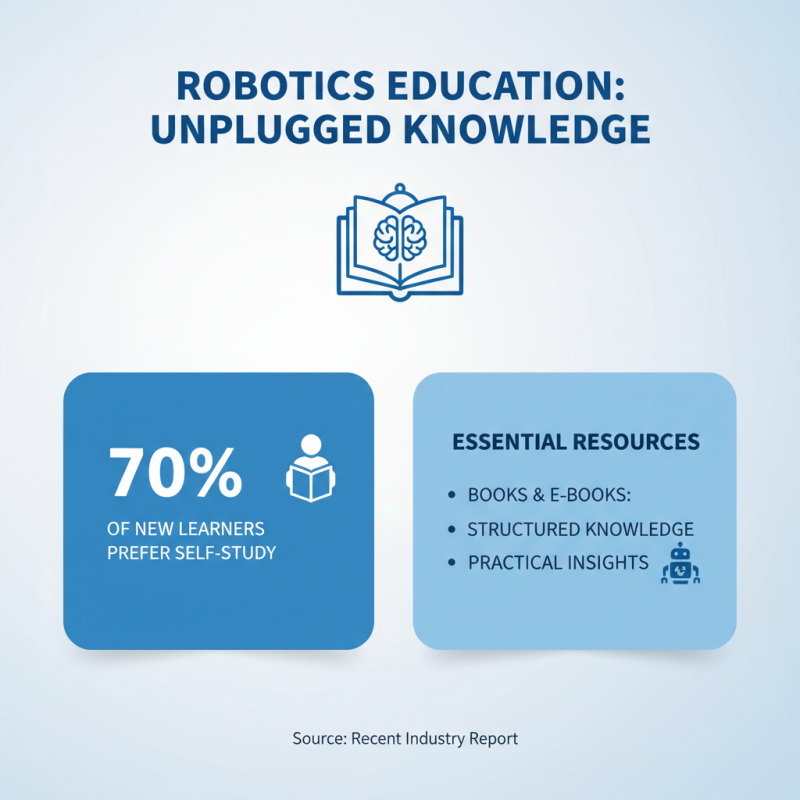
Robotics is an exciting field for beginners and enthusiasts alike. Understanding the essential concepts is the first step towards mastery. Robotics integrates multiple disciplines, including mechanics, electronics, and programming. A recent report shows that the global robotics market is expected to reach $200 billion by 2025. This growth hints at the rising demand for skilled professionals in the industry.
Beginners should focus on foundational topics like sensors, actuators, and control systems. Sensors gather data from the environment. They play a crucial role in robot decision-making. Actuators are responsible for movement, converting electrical energy into mechanical motion. Control systems help in coordinating these components for seamless operation.
Practical experience is equally important. Many beginners make the mistake of focusing solely on theory. Hands-on projects deepen understanding. According to industry surveys, 75% of learners improve their skills through real-world applications. Engaging with communities and participating in competitions fosters motivation. As robotics evolves, it's vital to stay curious. Embrace challenges. Reflect on mistakes. Growth comes from navigating the complexities of robotic systems.
Free Online Courses and Tutorials for Learning Robotics
Learning robotics can seem daunting at first. However, free online courses and tutorials can make it accessible. Many platforms offer detailed modules covering basic concepts. Start with introductory courses that explain key terms and principles. Watching videos can provide visual insights that text alone may not.
Tips: Engage with online communities. They often provide additional resources and support. Join forums or social media groups dedicated to robotics. Sharing your progress can motivate you to stay on track.
Practice is essential. Follow along with coding exercises and projects available online. Experiment with simulations to see how robots behave in different scenarios. Don't hesitate to revisit topics that seem complex. This iterative process helps solidify your understanding.
Also, don’t overlook hands-on projects. They can help connect theory with practice. You might face challenges, but troubleshooting is part of the learning curve. Embrace mistakes as opportunities for growth. This resilience will serve you well as you advance in your robotics journey.
Top Resources to Learn Robotics for Beginners and Enthusiasts
| Resource |
Type |
Level |
Duration |
Cost |
| Introduction to Robotics |
Online Course |
Beginner |
6 weeks |
Free |
| Robotics for Beginners |
Video Tutorial |
Beginner |
2 hours |
Free |
| Robotics: Basics and Beyond |
Webinar |
Intermediate |
1 hour |
Free |
| Creating a Simple Robot |
Online Course |
Beginner |
4 weeks |
Free |
| Introduction to ROS (Robot Operating System) |
Online Course |
Intermediate |
8 weeks |
Free |
Hands-On Projects and Kits to Practice Robotics Skills
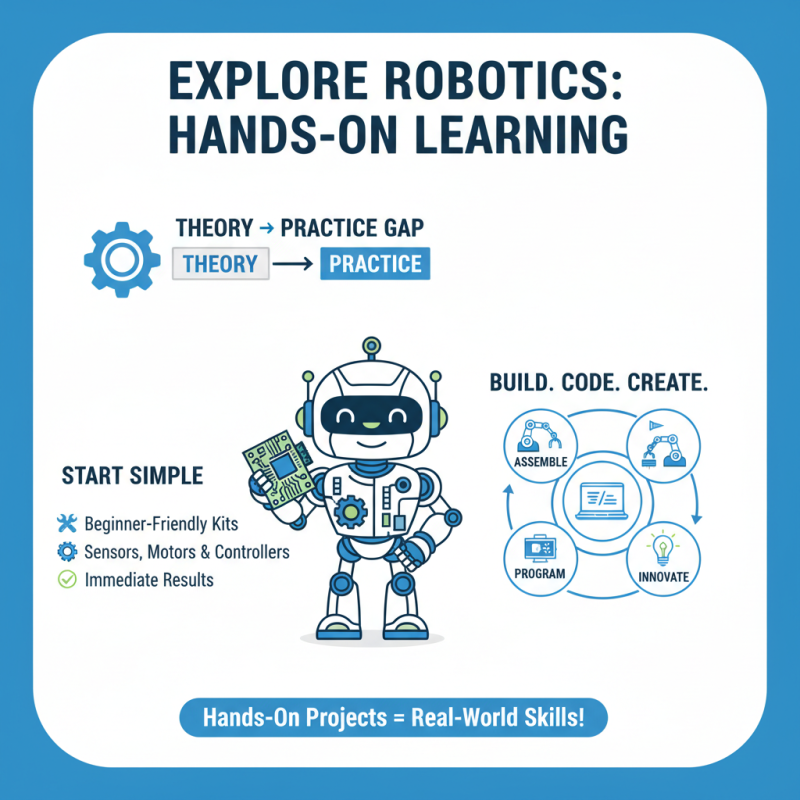
Exploring robotics requires hands-on experience. Engaging with projects and kits can bridge the theory-practice gap. Many beginners start with simple robot kits. These kits often include sensors, motors, and controllers. Assembling a simple robot can be rewarding. You get to see immediate results from your efforts.
Projects can vary in complexity. A straightforward project might involve building a line-following robot. This project teaches basic programming and sensor integration. However, challenges arise. For instance, the robot may not follow the line as expected. This is an opportunity for adjustment and learning. Troubleshooting becomes part of the fun.
As you grow more confident, consider tackling more complex projects. Perhaps try building a robotic arm or a drone. These require deeper knowledge of mechanics and coding. Each error along the way is a learning experience. It’s not just about the end product. The journey of building and debugging enhances skills. Embracing imperfections will make the process even more valuable.
Online Communities and Forums for Robotics Enthusiasts
Online communities and forums for robotics enthusiasts have become invaluable. They offer a space for sharing projects, ideas, and coding tips. According to recent surveys, over 65% of robotics enthusiasts utilize online forums to resolve technical challenges. Engaging with peers can enhance learning and boost confidence in robotics.
Many groups focus on specific areas, such as robotics programming or DIY projects. Some have thousands of members. This creates diverse opportunities for learning. For instance, a group devoted to beginner robotics often shares step-by-step guides. However, not all advice is accurate. Newcomers should verify information before acting on it.
In addition to forums, social media communities thrive. They host discussions and foster collaboration. Data shows that 70% of participants found social platforms helpful for networking. Yet, the rapid pace can be overwhelming for some. It's easy to feel lost among the posts. Finding a balance between consuming information and engaging in meaningful dialogue is crucial.