
China has become a major sourcing base for heavy duty magnet clips. Its manufacturers serve retail, office, industrial, packaging, and display applications. Yet factory selection requires more than comparing online prices.
This guide examines China’s top 10 heavy duty magnet clip manufacturers through practical purchasing criteria. These include magnetic holding strength, clip durability, coating quality, corrosion resistance, and production consistency. A reliable supplier should explain magnet grade, steel thickness, surface treatment, and load testing methods. Product samples also matter. A clip may hold firmly on a clean steel cabinet but perform poorly on painted or uneven surfaces.
The keyword “Magnet Clipsheavy Duty” may appear in search results, but technical accuracy remains more important than keyword placement. Buyers should confirm dimensions, magnet polarity, temperature limits, packaging details, and inspection standards before ordering. Factory audits, clear communication, and documented quality control can reduce avoidable risks.
Small details often reveal manufacturing experience. Check the hinge movement. Examine sharp edges. Test the clip after repeated opening cycles. Ask whether production uses automated magnet placement or manual assembly. Both methods can work, but consistency must be demonstrated.
No ranking is permanently perfect. Supplier capabilities change with equipment, staff, materials, and export experience. This overview therefore offers a practical starting point, not a final purchasing decision. Independent samples and current factory verification remain essential before placing a large order.
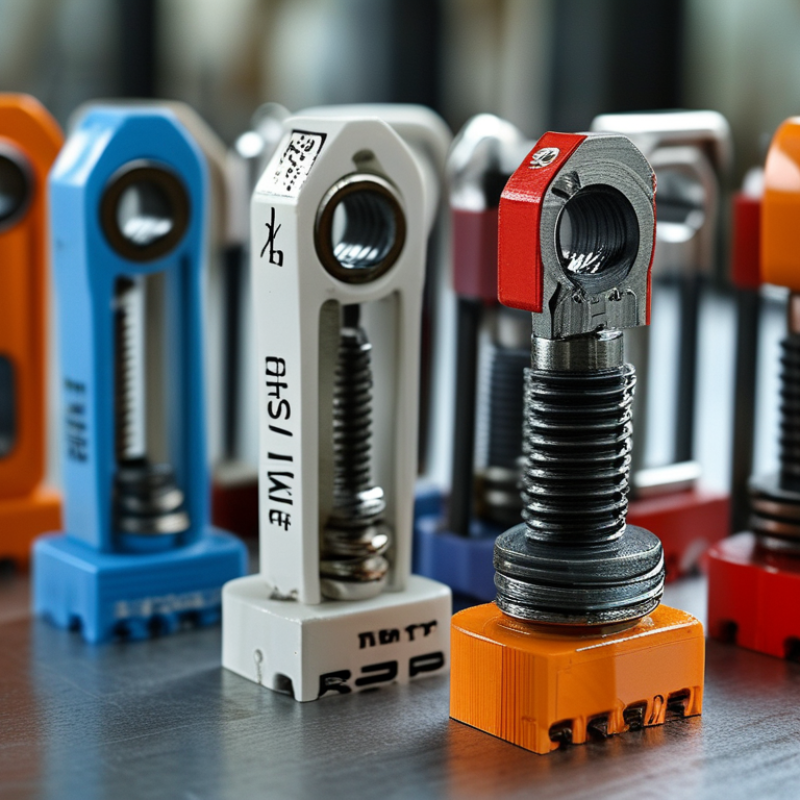
China’s Top 10 Heavy-Duty Magnet Clip Manufacturers should be compared by tested pull force, not appearance. Pull force depends on magnet grade, contact area, steel thickness, surface coating, and air gap. A 0.5 mm gap can reduce holding force sharply. Real workshop dust, paint, and uneven steel make the loss worse.
Technical test reports should identify fixture design, steel grade, loading direction, and uncertainty. ASTM E4 supports verification of force-measuring systems, while ISO/IEC 17025 strengthens laboratory reliability.
An illustrative report may show 180 N on clean steel, but only 92 N through a 1 mm coating. That difference matters.
A safe working load is not the maximum pull value. Engineers commonly apply a safety factor of 2 to 3 for static handling, then reduce it further for vibration, impact, peeling, or overhead use.
ASME B30.20 and EN 13155 should be reviewed when an attachment approaches lifting-equipment duty.
For selection, divide tested pull force by the chosen safety factor. A 300 N result with a factor of three gives a 100 N working limit, before dynamic effects.
The calculation looks simple. Field conditions are not. Some product sheets omit sideways load data, which is a serious weakness.
I would request independent test records, corrosion information, cycle testing, and failure photographs before ranking any manufacturer. A shiny clip can still slip. That’s the uncomfortable part.
China’s top ten heavy-duty magnet clip manufacturers should be compared by magnetic performance, not catalog claims alone. NdFeB grades commonly provide 1.0–1.45 T remanence, but this value describes the magnet material. It does not equal the clip’s actual holding force. Steel thickness, air gaps, coating quality, and contact alignment can reduce performance sharply.
The IEA’s Global Critical Minerals Outlook 2024 estimates magnet rare-earth demand at about 91 kilotons in 2023, rising to roughly 123 kilotons by 2030 under its stated outlook. This growth increases the need for traceable grades and stable production controls. Standard temperature ratings often range from 80°C to 220°C, using higher-temperature categories for industrial applications. However, a 220°C rating does not guarantee full force at 220°C. Thermal cycling, adhesive aging, and corrosion may still cause failure.
Test the clips under realistic conditions. Use the intended steel plate, measure pull force after 24 hours, and repeat testing after heat exposure. One overlooked detail. A thick coating can improve corrosion resistance while increasing the working gap. Manufacturers should provide grade certificates, surface-treatment details, dimensional tolerances, and batch-level test records. I would also question rankings based only on export volume. Engineering support and honest failure data matter more. Sources: IEA Global Critical Minerals Outlook 2024; U.S. Department of Energy, Critical Materials Assessment 2023.
| Profile | Typical NdFeB Grade | Remanence, Br | Maximum Working Temperature | Typical Magnet Form | Common Coating | Clip Body Material | Typical Heavy-Duty Use | Key Procurement Check |
|---|---|---|---|---|---|---|---|---|
| Profile 01 | N35 | 1.17–1.21 T | 80°C | Disc or block | Ni-Cu-Ni | Stainless steel or carbon steel | Indoor signage, cable routing, light tooling | Confirm pull force at the specified air gap |
| Profile 02 | N38 | 1.22–1.26 T | 80°C | Block with steel backing | Ni-Cu-Ni | Powder-coated steel | Warehouse labels and removable fixtures | Check backing-plate thickness and flatness |
| Profile 03 | N40 | 1.26–1.29 T | 80°C | Pot magnet | Ni-Cu-Ni or epoxy | Steel clip with formed return | Heavy document holders and display hardware | Verify corrosion protection for humid environments |
| Profile 04 | N42 | 1.29–1.32 T | 80°C | Countersunk block or disc | Ni-Cu-Ni | Stainless steel | Industrial panels and reusable mounting clips | Review fastener torque and magnet seating |
| Profile 05 | N45 | 1.32–1.37 T | 80°C | Shallow pot magnet | Ni-Cu-Ni | Cold-rolled steel | Tool holders and high-load organization systems | Request a force-versus-air-gap test curve |
| Profile 06 | N48 | 1.37–1.40 T | 80°C | Deep pot or channel assembly | Ni-Cu-Ni or zinc plating | Steel with protective coating | Heavy signage and removable equipment brackets | Check shear-load resistance, not only axial pull |
| Profile 07 | N50 | 1.40–1.43 T | 80°C | Multi-pole pot magnet | Ni-Cu-Ni | Stainless steel or plated steel | High-holding-force clips for indoor industrial use | Confirm demagnetization margin during assembly |
| Profile 08 | N52 | 1.43–1.48 T | 80°C | Compact pot or block magnet | Ni-Cu-Ni | Steel clip with mechanical retention | Maximum force in a compact indoor clip design | Use a safety factor for shock, vibration, and peeling |
| Profile 09 | N42SH | 1.29–1.32 T | 150°C | High-temperature pot magnet | High-temperature epoxy or Ni-Cu-Ni | Stainless steel | Near-motor fixtures and warm industrial enclosures | Validate temperature cycling and adhesive retention |
| Profile 10 | N35EH / N38UH | 1.17–1.29 T | 200–220°C | Shielded pot or custom block assembly | High-temperature coating or nickel plating | High-temperature stainless steel | Ovens, heat-treatment equipment, and engine compartments | Require a certified temperature rating and irreversible-loss data |
A credible top-ten list should begin with documented performance, not catalog claims. ASTM A977/A977M evaluates magnetic properties of high-coercivity permanent magnet materials. It does not certify a finished clip. Buyers should request test conditions, coercivity, remanence, and pull-force results for the assembled product. A 10-kilogram claim means little without steel thickness, contact area, and test direction. Small details matter.
Quality systems provide another filter. The ISO Survey 2022 reported 1,265,216 ISO 9001 certificates worldwide, showing broad adoption but not automatic product quality. For each manufacturer, check the certificate scope, audit validity, batch records, and corrective-action history. RoHS evidence should address restricted substances, including lead, mercury, cadmium, hexavalent chromium, and specified phthalates. REACH documentation should include current SVHC screening and supplier declarations. ECHA’s 2023 enforcement project inspected 2,407 products and reported an 18% non-compliance rate. That figure is not clip-specific, but it deserves attention.
A practical audit includes XRF screening, coating inspection, salt-spray data, and repeated pull tests. Ask for samples from different production lots. Test after surface scratches and temperature exposure. Some suppliers provide polished certificates but weak traceability. That is an uncomfortable gap. ASTM alignment can also be misunderstood when only the magnet material was tested. The strongest candidates connect laboratory results with the actual clip, packaging, and production batch. Procurement teams should record every document version before ranking manufacturers.
China’s top 10 heavy duty magnet clip manufacturers should be compared by evidence, not catalog claims. Their product ranges usually include neodymium clip magnets, rubber-coated magnetic hooks, steel-backed holders, and custom assemblies. Capacity should show monthly output, magnet grade, clip load rating, and batch consistency. The International Energy Agency’s Global Critical Minerals Outlook 2024 highlights China’s dominant role in refined rare-earth supply. This supports strong material access, but it does not guarantee reliable clip quality.
A serious supplier should provide ISO 9001 records, material test reports, coating specifications, and pull-force results. IAF CertSearch can help verify certification details. Export reach is better measured through shipment history, destination coverage, packaging standards, and customs documentation. UN Comtrade classifies many permanent magnets under HS 8505, while magnetic clips may appear under broader product codes. This makes trade comparisons imperfect. That limitation deserves attention.
Tip: Request a sample batch, not one piece. Test it on painted steel, stainless steel, and uneven surfaces. Ask for capacity evidence, such as production photographs, equipment lists, and monthly inspection records. A practical top-10 review should also compare lead times, carton protection, corrosion testing, and response speed. USGS Mineral Commodity Summaries 2024 reported China’s large rare-earth mining output, yet recycled content and supply continuity remain important purchasing questions. Some factory claims still need independent verification.
A credible top-ten comparison should examine more than catalog photos. Pull force must be tested on a clean, flat steel plate. Coating thickness, air gaps, and clip angle can change results. In supplier evaluations, I request measured pull force, magnet grade, steel thickness, and test method. Some factories quote theoretical force. That figure may disappoint during actual installation.
MOQ often ranges from 100 to 1,000 pieces for standard clips. Custom colors, packaging, or tooling can raise it sharply. Standard orders may ship within 7 to 15 days. Custom production often needs 20 to 35 days. Ask whether the lead time includes inspection and export preparation. Delays frequently begin there. Unit cost may range from $0.10 to $0.80, depending on magnet size, coating, clip material, and order volume. The lowest quote is not always the strongest value.
Warranty terms deserve careful reading. A 12-month warranty is common, while stronger suppliers may offer 18 or 24 months. Confirm coverage for reduced magnetism, rust, broken clips, and adhesive failure. I also recommend testing samples after heat, humidity, and repeated opening cycles. My own comparison has one weakness: supplier claims can change after negotiation. Therefore, recent samples and written specifications matter more than a polished sales sheet. A practical buyer should record test results, rejected pieces, response time, and final landed cost.