
Top 10 Thermoforming Machine Manufacturers Worldwide

Choosing the right Thermoforming Machine manufacturer can shape production quality, operating costs, and long-term reliability. This guide reviews ten established companies serving global markets. Their equipment supports food trays, medical packaging, consumer products, and automotive components.

The comparison considers forming accuracy, heating control, cycle stability, energy efficiency, automation, and material flexibility. It also examines tooling support, operator training, spare-parts access, and after-sales service. A machine may look impressive in a showroom, yet perform differently beside a busy production line. Real value often appears in details, such as evenly heated sheet zones, clean trimming, and consistent cycle times during an overnight shift.

Experience matters here. Manufacturers with extensive field installations usually understand practical problems, including warped parts, changing material thickness, and unexpected maintenance delays. Technical specifications still require careful verification. Published claims do not always reveal total ownership costs or local service quality.

This ranking is not absolute. Buyer priorities vary.

Some factories need high-speed packaging lines. Others prefer flexible systems for short production runs. Regional support, workforce skills, factory space, and compliance requirements can change the final decision. Public information may also be incomplete, which deserves honest acknowledgment. Therefore, this overview combines manufacturer reputation, technical capability, application experience, and available evidence. Readers should confirm current specifications directly before investing. A factory visit or sample trial may reveal more than a polished brochure.
Top 10 Thermoforming Machine Manufacturers Worldwide

Thermoforming Machines: Definition, Types, and Operating Principles

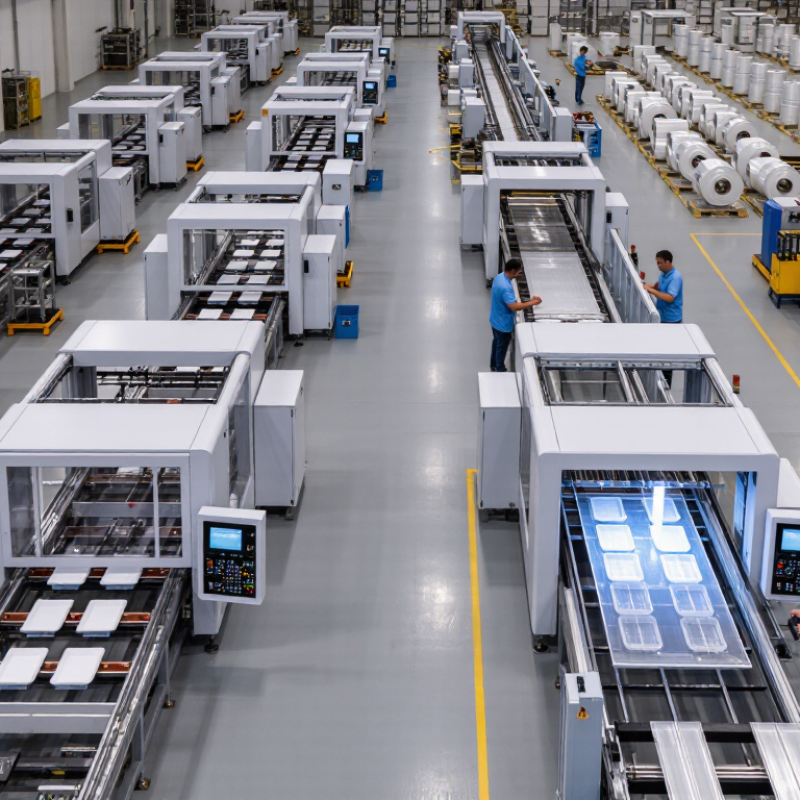
Thermoforming machines heat plastic sheet until it becomes flexible, then shape it over or into a mould. The process usually uses vacuum, compressed air, or both. A cooling stage fixes the final geometry. In production, operators watch sheet temperature, plug movement, pressure, and cycle time closely. Small errors can create thin corners, webbing, or uneven wall thickness.

The main types include vacuum, pressure, twin-sheet, and roll-fed thermoforming machines. Vacuum systems suit trays and simple packaging. Pressure forming adds air pressure for sharper details and cleaner surfaces. Twin-sheet equipment joins two formed parts, often creating hollow structures. Roll-fed machines support continuous, high-volume production, while sheet-fed machines offer greater flexibility for thicker or lower-volume parts. According to Grand View Research, the global thermoforming market was valued at over USD 15 billion in 2023, showing the scale of demand for formed plastic products. Market figures vary, however, because analysts define the sector differently.

A typical cycle starts when infrared heaters soften the sheet. The softened material enters the mould, and vacuum removes trapped air through small vents. Pressure then improves detail reproduction. After cooling, a trimming station removes the flange. According to the Society of Plastics Engineers, process control strongly affects gauge uniformity and scrap rates. That point is easy to underestimate. Real factory lines are less tidy than diagrams. Material moisture, mould temperature, and imperfect trimming can still reduce consistency, even when the machine settings look correct.

Thermoforming Machines: Materials, Types, and Operating Principles

Typical sheet-heating temperature ranges used in thermoforming applications

Thermoforming machines heat thermoplastic sheets until they become soft and formable, then shape them over a mold using vacuum, compressed air, mechanical plug assistance, or a combination of these methods. The temperature ranges shown are typical processing windows and may vary according to sheet thickness, grade, mold design, heating method, and machine configuration.

Key Criteria for Ranking Global Thermoforming Machine Manufacturers

Top 10 Thermoforming Machine Manufacturers Worldwide

Ranking global thermoforming machine manufacturers requires more than comparing sales figures. Real-world performance matters. A reliable evaluation examines forming speed, heating consistency, material compatibility, and control accuracy. Machines should produce stable parts across long production runs, not only during showroom demonstrations.

Experience also deserves careful attention. Manufacturers with proven installations often understand difficult materials, uneven plant conditions, and operator training needs. Technical expertise appears in mold support, energy management, automation options, and documented testing methods. Authority comes from transparent certifications, measurable case data, and independent customer references. Reliability includes spare-parts availability, service response times, software updates, and clear warranty terms. One weakness remains: public rankings may favor visible companies while overlooking smaller specialists with stronger regional support.

Tips: Request sample parts, maintenance schedules, noise data, and actual cycle-time records. Ask whether testing used your material and mold design. Check service coverage before judging the purchase price. A lower initial cost can become expensive when heating elements fail or operators lack training. Sustainability should also influence the ranking. Review energy consumption, recyclable material handling, scrap reduction, and machine lifespan. These details reveal more than polished brochures. A fair comparison should record both strengths and limitations. No manufacturer performs perfectly in every factory.

Top 10 Thermoforming Machine Manufacturers Worldwide - Key Criteria for Ranking Global Thermoforming Machine Manufacturers

Rank Ranking Criterion What Should Be Evaluated Measurable Indicators Suggested Weight Recommended Evidence
1 Forming Performance Ability to produce consistent parts across different polymers, sheet gauges, mold geometries, and production speeds. Forming area; maximum draw depth; sheet thickness range; production cycle time; part consistency. 18% Technical datasheets, sample trials, acceptance-test results, and verified customer applications.
2 Machine Flexibility Suitability for food packaging, medical products, industrial components, trays, cups, and other thermoformed applications. Compatible materials; mold-change method; tool interchangeability; in-line or off-line configuration options. 13% Application portfolio, machine configuration list, mold-change documentation, and production demonstrations.
3 Automation and Process Control Level of automation used to control heating, forming, trimming, stacking, inspection, and production data. Recipe management; servo axes; sensor feedback; automatic nesting; vision inspection; data connectivity. 12% Control-system specifications, software demonstrations, integration records, and factory acceptance tests.
4 Energy Efficiency Reduction of energy consumption while maintaining heating uniformity, forming quality, and required output. Installed power; measured energy consumption per cycle or part; heater zoning; insulation; heat recovery. 10% Independent energy measurements under defined operating conditions and documented machine specifications.
5 Build Quality and Reliability Mechanical durability, thermal stability, component quality, and reliable operation in continuous industrial production. Frame construction; component traceability; preventive-maintenance intervals; uptime records; warranty terms. 12% Quality-control procedures, warranty conditions, maintenance schedules, and verified operating references.
6 Safety and Regulatory Compliance Compliance with applicable machinery, electrical, guarding, emergency-stop, and workplace-safety requirements. Risk assessment; guarding; interlocks; emergency stops; electrical documentation; conformity marking where applicable. 10% Declarations of conformity, risk assessments, safety-circuit validation, manuals, and inspection records.
7 After-Sales Service Availability of installation, commissioning, operator training, troubleshooting, preventive maintenance, and technical support. Response time; service coverage; remote-support capability; training program; spare-parts logistics. 9% Service-level agreements, support procedures, training records, and spare-parts availability statements.
8 Total Cost of Ownership Overall financial impact throughout the machine lifecycle rather than purchase price alone. Capital cost; tooling cost; energy use; labor requirements; maintenance cost; expected service life. 7% Five-year or ten-year cost model using consistent production assumptions and documented quotations.
9 Sustainability and Material Efficiency Support for recycled, recyclable, or downgauged materials and reduction of process scrap. Trim-loss rate; material yield; scrap-recycling compatibility; lightweighting capability; emissions data. 5% Material trials, yield calculations, recycling-process documentation, and environmental product information.
10 Global Delivery Capability Ability to deliver, install, support, and maintain equipment across multiple regions and regulatory environments. Export experience; local service network; lead time; documentation languages; spare-parts distribution. 4% Delivery records, regional service coverage, logistics procedures, references, and project schedules.
Total Suggested Ranking Weight 100% Use documented and comparable evidence for each criterion.

Evaluation note: The criteria and weightings provide a transparent framework for comparing global thermoforming machine manufacturers without displaying company or brand-specific data.

Profiles of the Top 10 Thermoforming Machine Manufacturers Worldwide

The top ten thermoforming machine manufacturers worldwide differ less by appearance than by engineering priorities. One specializes in high-speed packaging lines, using servo drives and precise plug-assist control. Another focuses on automotive panels, where large forming areas demand rigid frames and stable heating. A third serves medical production with cleanable surfaces, traceable settings, and controlled material handling. These profiles reflect practical factory needs, not just catalog claims.

Several manufacturers build compact machines for laboratories and short production runs. Others develop heavy-duty systems for thick sheets, complex trays, or oversized components. One supplier emphasizes automated trimming and stacking, while another integrates vision inspection and digital production records.

Recycled and multilayer materials also shape current machine design, although performance can vary between batches. That detail is easy to underestimate.

Service capability separates many established manufacturers from low-cost competitors. Experienced teams provide mold trials, temperature mapping, operator training, and remote diagnostics. Reliable suppliers publish cycle data, maintenance intervals, and measurable energy figures. They also explain limitations. No machine suits every polymer, mold geometry, or factory layout. A buyer should test real material before signing. In practice, small weaknesses often appear during changeovers, cleaning, or night shifts. That is where manufacturer experience becomes visible. Some impressive specifications still need closer questioning.

Technology, Applications, and Industry Strengths of Each Manufacturer

Thermoforming Machine Manufacturers Worldwide: Technology, Applications, and Industry Strengths of Each Manufacturer

One manufacturer specializes in servo-driven pressure forming for thin food trays. Its systems reduce material waste and maintain stable cycle times. Another focuses on high-speed roll-fed machines for dairy containers and takeaway packaging. Operators value quick tool changes during short production runs. A third builds vacuum forming lines for refrigerator liners and interior panels. Large heating zones support consistent forming across broad surfaces. A fourth combines plug-assist forming with inline trimming. This design suits medical trays that require clean edges and repeatable dimensions.

A fifth manufacturer develops heavy-gauge equipment for vehicle door panels and luggage shells. Its reinforced frames handle thick sheets without excessive vibration. Another serves construction markets with machines for protective housings and technical covers. Digital temperature mapping improves control around complex corners. A seventh supplier emphasizes modular systems for custom production. Its equipment can add stacking, trimming, or recycling units later. That flexibility helps smaller factories manage uncertain demand, though integration may require skilled technicians.

An eighth manufacturer applies advanced servo motion to high-output cup production. The machines can reach demanding cycle rates, but maintenance planning remains essential. A ninth focuses on laboratory and pharmaceutical packaging, using controlled environments and traceable process data. Reliable documentation supports quality audits and batch verification. The tenth develops compact machines for universities, prototyping centers, and emerging manufacturers. These systems lower the entry barrier, yet their output is naturally limited. In practice, energy use, mold design, operator training, and after-sales support often matter as much as headline speed. I have seen promising machines underperform when tooling was poorly matched. That detail deserves more attention.

How to Compare and Select a Thermoforming Machine Manufacturer

Selecting a thermoforming machine manufacturer requires more than comparing purchase prices. According to Grand View Research, the global thermoforming machine market was valued at about USD 1.3 billion in 2023. Demand is growing steadily, driven by food, medical, and consumer packaging. This growth makes supplier evaluation more important, not easier.

Check forming speed, sheet thickness range, mold-change time, heating control, and energy use. Ask for measured cycle data, not sales estimates. A reliable manufacturer should provide factory acceptance tests, service response times, spare-parts availability, and operator training. PlasticsEurope reports that packaging remains the largest plastics-use sector in Europe, representing roughly 40% of demand. That figure highlights the value of stable output and low material waste. Yet, I have learned that impressive specifications can hide weak after-sales support.

Tips: Request samples using your actual material and mold. Compare rejected parts, trimming quality, and power consumption. Visit an operating installation if possible. Check references from factories with similar cycle times. Also, calculate five-year ownership costs, including maintenance, tooling changes, downtime, and energy. Do not trust every spreadsheet. A supplier may quote maximum speed, while your real production line runs much slower.

Login