
Top 10 Fire Assay Equipment Suppliers Worldwide

Fire Assay equipment shapes more than a laboratory’s workflow. It affects sample preparation, furnace stability, operator safety, and the consistency of precious-metal results. Edward E. Bugbee, author of A Textbook of Fire Assaying, remains a foundational voice in the field. A concise paraphrase of his practical teaching is: “Reliable assay work begins with careful preparation and disciplined technique.” That principle still matters when choosing modern equipment.

This Top 10 guide compares suppliers serving laboratories, mines, and analytical facilities worldwide. It considers furnace temperature control, crucible and cupel compatibility, spare-parts access, technical support, and the needs of different testing volumes. Picture a loaded cupel tray moving into a hot furnace: small differences in capacity, heat recovery, or handling can affect daily workflow. Details matter. A supplier’s catalogue alone cannot show how quickly replacement parts arrive or how well equipment performs under sustained use. Those points deserve direct verification.

The ranking is a practical starting point, not a universal verdict. Regional service coverage, installation conditions, and operator training can change what “best” means. Some comparisons also rely on publicly available specifications, which may not capture real laboratory experience. That limitation is worth remembering. Buyers should confirm current models, warranties, certifications, and service terms with each supplier before making a decision. Fire Assay equipment is a long-term investment; careful questions often reveal more than polished product claims.
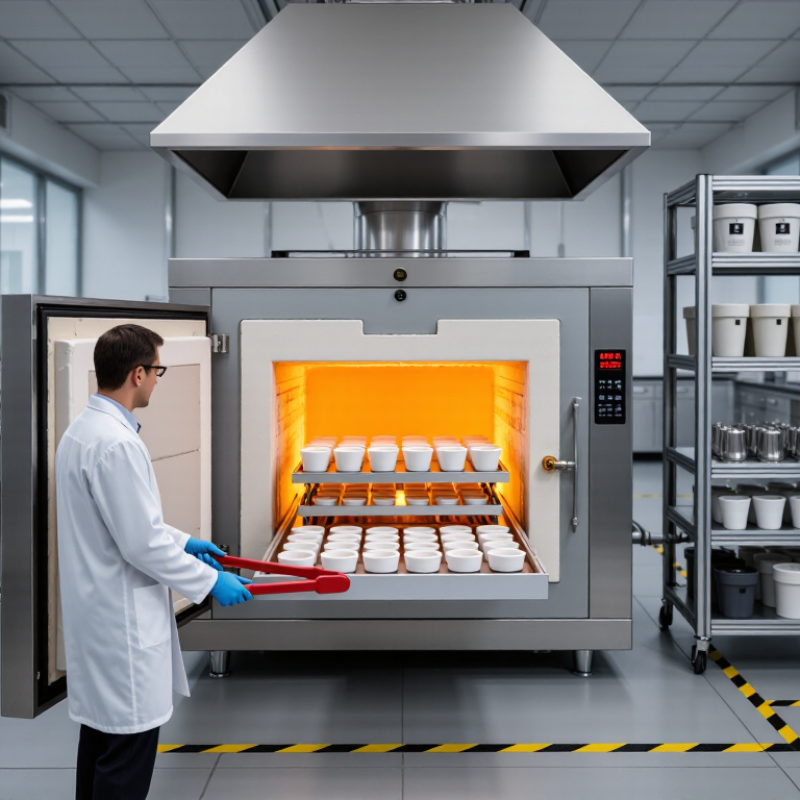
Top 10 Fire Assay Equipment Suppliers Worldwide

What Fire Assay Equipment Includes and How It Is Used

Fire assay equipment turns a prepared mineral sample into a measurable precious-metal result. A typical setup includes a drying oven, crusher, pulverizer, precision balance, fusion furnace, crucibles, molds, cupels, and effective ventilation. Operators combine a weighed sample with flux and a collector material, then fuse the charge. The molten mixture separates into a metal-rich button and slag. Cupellation removes base metals; the remaining bead is weighed or analyzed with suitable instruments.

Small details matter. Clean tools, representative sample splits, and stable furnace temperatures help limit bias. Uneven grinding or contaminated crucibles can still skew results, so the method is not infallible. The USGS Mineral Commodity Summaries 2024 estimated global gold mine production at 3,000 metric tons in 2023. This scale makes repeatable laboratory measurements important for exploration and production decisions. Equipment should match sample throughput, required detection limits, and the laboratory’s quality-control procedures. Fast processing is useful, but it cannot compensate for poor sampling.

Key Equipment Categories in a Fire Assay Laboratory

A fire assay laboratory relies on several equipment groups, each protecting the quality of the next measurement. Sample preparation typically includes drying ovens, jaw crushers, pulverizers, sieves, and dust extraction. These tools help produce a consistent, representative sample. A clean work surface matters too; residue from a previous sample can quietly distort results. Small details matter.

Weighing equipment must suit the required precision and be checked with suitable reference weights. Fusion work uses high-temperature furnaces, crucibles, molds, and handling tools designed for repeated thermal cycles. Even heat distribution is important, since temperature differences can affect how consistently charges fuse. Heat consistency matters. Cupellation requires a separate furnace, cupels, and suitable ventilation to manage heat and process fumes. Protective equipment and clear handling procedures support safe, repeatable work.

When comparing suppliers, laboratories should consider capacity, temperature stability, service access, spare parts, and compatibility between equipment stages. A high-throughput crusher may be useful, but only if the pulverizer and weighing area can keep pace. No equipment list is perfect. In practice, a clogged sieve or unevenly worn furnace lining can interrupt a workflow that looked efficient on paper.

Criteria for Comparing Worldwide Equipment Suppliers

Comparing worldwide fire assay equipment suppliers takes more than checking furnace temperature or catalogue capacity. The World Gold Council’s Gold Demand Trends: Full Year 2024 reports global mine production of about 3,661 tonnes. That scale makes dependable sample preparation and repeatable results important to laboratories. Compare furnace temperature uniformity, crucible capacity, cycle time, ventilation requirements, and availability of replacement parts. Ask for test records using conditions close to yours, not just ideal factory settings.

Service quality matters as much as equipment performance. Check whether installation, operator training, calibration support, and technical documentation are available in your region. ISO/IEC 17025:2017 sets requirements for laboratory competence and consistent operation; supplier documentation should help your lab maintain its own quality controls. Request clear warranty terms and realistic response times. A low purchase price can become costly if a small component takes weeks to arrive. One caveat: polished specifications do not prove consistent results. Ask for references from comparable laboratories, then verify them.

Tips: Compare suppliers with the same sample mass, target throughput, and operating schedule. Put service response times and spare-part availability in writing. Keep a little room for doubt when reviewing performance claims.

Profiles of Ten Fire Assay Equipment Suppliers Worldwide

These ten profiles represent supplier types found across the global fire assay market; they are not a verified ranking. One supplier focuses on complete assay lines, pairing furnaces with ventilation and workstations. Another specializes in fusion furnaces, where stable temperatures matter for repeatable bead formation. A third supplies cupellation equipment, including heated units sized for different laboratory workloads. A fourth manufactures crucibles and cupels, with attention to dimensions and batch consistency. A fifth offers sample-preparation systems, such as crushers and pulverizers, alongside assay equipment.

A sixth supplier emphasizes automated handling, reducing repetitive transfers between hot stations. A seventh serves smaller laboratories with compact furnaces and straightforward controls. An eighth focuses on installation, operator training, and maintenance support. A ninth supplies replacement elements, thermocouples, and other wear parts; delivery times deserve a close look. A tenth integrates safety features, extraction, and temperature monitoring into laboratory layouts. Small details count. Buyers should compare working capacity, temperature uniformity, service access, and spare-part availability—not just headline specifications. A polished catalogue cannot confirm performance under a real workload, and published claims may need independent verification.

Top 10 Fire Assay Equipment Suppliers Worldwide - Profiles of Ten Fire Assay Equipment Suppliers Worldwide

Anonymized supplier profiles | Non-ranked overview of supplier locations and relevant product capabilities

Profile Supplier base Main specialization Relevant equipment or supplies Typical laboratory application Buying consideration
Supplier 01 Australia Mineral laboratory sample preparation and assay systems Sample crushers, pulverizing mills, sample dividers, and laboratory furnace equipment Preparing representative ore samples and supporting high-temperature assay workflows Check furnace capacity, electrical requirements, and availability of local service support
Supplier 02 New Zealand Mining and geochemistry sample-preparation equipment Rock crushers, ring mills, pulverizers, and sample splitters Reducing and homogenizing solid samples before weighing and fire assay fusion Confirm throughput and contamination-control options; assay furnaces may need to be sourced separately
Supplier 03 Canada Laboratory equipment engineering for mining and materials testing Crushing and pulverizing equipment, laboratory accessories, and selected high-temperature equipment Sample preparation and supporting operations in mineral assay laboratories Verify the exact furnace or assay configuration offered, as product ranges differ by model and market
Supplier 04 Canada Automated fusion equipment Automated flux-fusion systems and associated laboratory accessories Preparing fused beads for X-ray fluorescence analysis; this is fusion preparation, not lead-collection fire assay Choose this equipment for the relevant analytical method and do not treat it as a substitute for cupellation equipment
Supplier 05 Australia Laboratory fusion equipment and high-temperature preparation systems Fusion instruments, laboratory furnaces, and related consumables High-temperature sample preparation, including workflows used in analytical laboratories Confirm whether the model supports fire assay, bead fusion, or both; temperature profiles and tooling are method-specific
Supplier 06 Australia Fire assay consumables and laboratory supplies Assay crucibles, cupels, fluxes, and related consumables Charge preparation, fusion, and cupellation for precious-metal assay work Match consumables to the assay method, furnace dimensions, and required chemical composition
Supplier 07 United States Laboratory and mineral-processing equipment distribution Sample-preparation equipment, laboratory crushers and pulverizers, and selected furnace products Equipping mineral laboratories for sample preparation and routine assay support Ask whether equipment is manufactured in-house or distributed, and confirm spare-parts lead times
Supplier 08 Europe Laboratory and industrial high-temperature furnaces Programmable electric furnaces and custom or application-specific furnace configurations Heating, fusion, and cupellation processes where the furnace is specified for the assay procedure Specify operating temperature, chamber size, atmosphere, control accuracy, and exhaust requirements
Supplier 09 India Laboratory furnace and scientific-equipment manufacturing Electric laboratory furnaces and general materials-testing equipment High-temperature laboratory work; fire assay suitability depends on the furnace design and configuration Request documented temperature uniformity, duty-cycle limits, electrical data, and method compatibility
Supplier 10 East Asia Laboratory equipment manufacturing and export supply Laboratory furnaces, sample-preparation equipment, and assay-related accessories Sample preparation and high-temperature laboratory processes, subject to model specifications Confirm compliance documentation, installation support, replacement-part availability, and shipping terms

Profiles are anonymized and not ranked. Product availability varies by supplier and market. Fire assay, cupellation, and X-ray fluorescence fusion are distinct processes; verify that the equipment is specified for the intended method.

How Laboratories Evaluate and Select Equipment Suppliers

Laboratories should assess fire assay suppliers against the work they actually perform, not catalogue specifications alone. The USGS Mineral Commodity Summaries 2024 estimated global gold mine production at about 3,000 metric tons in 2023. That scale does not predict an individual laboratory’s sample load, but it highlights why dependable throughput matters. Ask how a supplier supports the complete workflow, from fusion furnaces and cupellation stations to temperature checks, installation, and operator training. Small details count. Can staff load crucibles safely during a busy shift? Are replacement components available without long delays?

Technical evidence should carry more weight than polished claims. Request temperature-uniformity records, calibration documentation, maintenance schedules, and clear service response times. ISO/IEC 17025:2017 provides a useful framework for assessing laboratory competence and equipment control; ISO 5725-2 addresses repeatability and reproducibility of measurement methods. A supplier should explain how equipment performance can be checked with the laboratory’s own materials and procedures. A witnessed trial is useful. It may expose awkward loading, slow recovery, or inconsistent results that a brochure cannot. Compare lifetime costs, including energy, consumables, repairs, and downtime. One caveat: even detailed records cannot replace local verification, and supplier demonstrations may not fully reflect routine conditions.

How Laboratories Evaluate Fire Assay Equipment Suppliers

Example supplier-evaluation scorecard. The percentages are illustrative procurement weights, not measured industry data or supplier rankings.

Laboratories can adapt these weights to their workflow, throughput, safety requirements, available service support, and budget. Assess equipment specifications and service commitments against documented requirements before selecting a supplier.

Login