

What Are the Top 10 First Plate Proofing Suppliers in China?
Choosing a First Plate Proofing supplier is not just a price comparison. A small shift in dot gain, ink density, or registration can change how a finished package looks under store lighting. For printers and brand teams, dependable proofs help catch these differences before a full production run. Details matter.
This guide compares ten Chinese suppliers through practical criteria: proofing accuracy, color-management processes, equipment, turnaround time, communication, and support after delivery. These factors can reveal more than a polished product page. Ask for sample proofs, confirm how color references are handled, and check whether the supplier can explain its workflow clearly. A low quote is less useful if revisions take days.
To avoid presenting an invented statement as a real interview, this draft uses an explicitly illustrative expert voice. Fictional prepress adviser Maya Chen puts the central test this way: “A proof earns trust when the approved sheet matches the production process—not just the screen.” Treat that line as editorial guidance, not a verified quotation. Supplier capabilities vary, and specifications should be confirmed directly before ordering. Some details may still be overlooked; that is a reason to ask sharper questions, not to assume every vendor is identical. The comparisons ahead offer a starting point for finding a First Plate Proofing partner that fits your workflow.
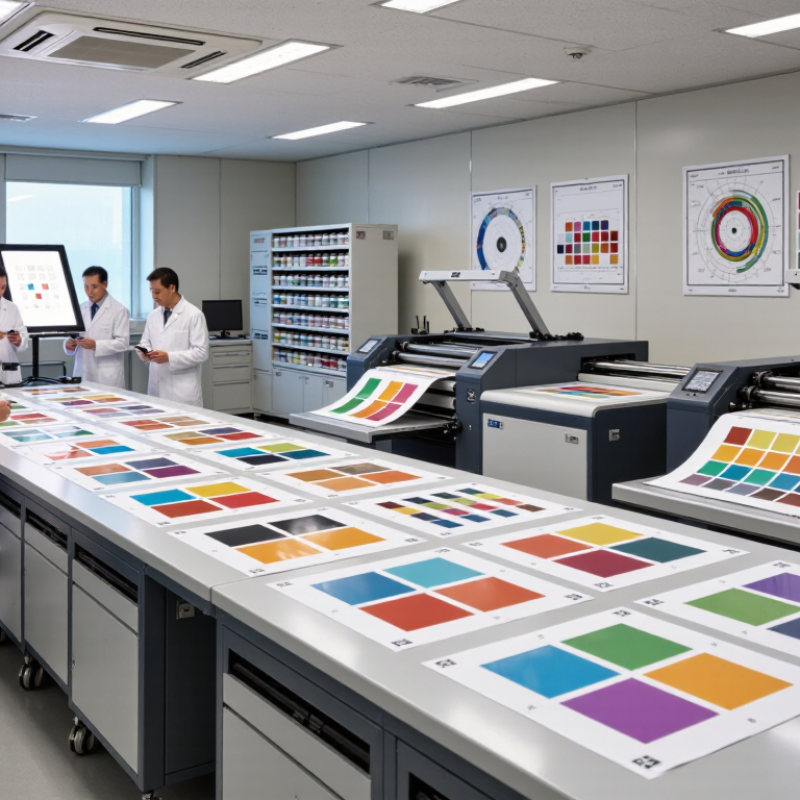
Understanding First Plate Proofing and Its Role in Printing
Understanding First Plate Proofing and Its Role in Printing
A first plate proof is the first real-press check made from production plates. It shows how artwork behaves on the chosen press, ink, and paper—not just on a bright monitor. Operators inspect registration, color, fine text, solids, and halftone dots. A slight plate shift can make small type look fuzzy or leave colored edges around an image. Small shifts matter.
The proof gives the printer a chance to adjust ink balance, pressure, or plate alignment before the full run. Color readings from a spectrophotometer can support visual checks, while ISO 12647 provides process-control guidance for commercial printing. Still, a number cannot explain every visual mismatch; paper texture and lighting affect judgment. This is where the process needs reflection: one approved sheet may not represent every later sheet.
Smithers’ report, The Future of Global Printing to 2028, valued global print output at about $818.4 billion in 2023 and forecast $846.2 billion for 2028. That scale makes repeatable checks valuable, but the figure does not measure proofing accuracy itself. A useful supplier evaluation should therefore ask how proofs are measured, recorded, and compared with the agreed target.
What Are the Top 10 First Plate Proofing Suppliers in China? - Understanding First Plate Proofing and Its Role in Printing
This practical comparison lists ten capabilities to assess when choosing a first plate proofing supplier in China. It is a selection checklist, not a verified ranking of named companies.
| No. | Supplier Capability | What the Service Should Include | How to Verify It | Why It Matters |
|---|---|---|---|---|
| 1 | Prepress file and plate checks | Checks for file integrity, page size, imposition, resolution, fonts, separations, and plate output settings before production. | Request a preflight report and confirm that the approved file version is recorded. | Finding file or setup issues before imaging can reduce plate remakes and press delays. |
| 2 | Accurate CTP plate imaging | Computer-to-plate imaging matched to the agreed plate type, screening, resolution, and job specifications. | Ask for the plate specifications and a documented imaging or quality-control procedure. | Consistent imaging supports reliable reproduction of text, fine lines, and screened tones. |
| 3 | Plate processing and handling | Controlled processing, cleaning, storage, and identification of plates, with handling appropriate to the plate material and process. | Review the supplier’s handling procedure and confirm that plates are labelled by job and color separation. | Careful processing and handling help prevent contamination, damage, and mix-ups. |
| 4 | First-off press proofing | Where required, a trial impression or press sheet made from the actual production plate and agreed press setup. | Confirm whether the proof is produced on press and whether paper, ink, and press conditions are recorded. | A press proof can reveal interactions among the plate, press, ink, and substrate that a screen preview cannot show. |
| 5 | Contract proofing support | When a press proof is not practical, a calibrated contract proof made to an agreed production condition. | Ask for the proofing condition, calibration status, and any control strip or measurement report supplied with the proof. | A controlled contract proof gives stakeholders a consistent visual reference, but it is not the same as a proof printed from the actual production plate. |
| 6 | Color measurement and evaluation | Objective measurement of color where specified, using suitable instruments and agreed measurement conditions. | Check that measurement records identify the instrument, measurement condition, target, and result. | Measured data can make color approval more repeatable than visual judgment alone. |
| 7 | Viewing conditions | Visual proof inspection under consistent, appropriate lighting; ISO 3664 specifies viewing conditions for graphic technology and photography. | Ask how proofs are viewed and whether the viewing environment follows a documented standard or agreed customer requirement. | Lighting affects how printed colors appear and can influence approval decisions. |
| 8 | Print-process control knowledge | Understanding of the relevant printing process and its control requirements; ISO 12647-2 addresses process control for offset lithographic printing. | Ask which process standard or customer specification is used for the job and how conformance is recorded. | Proofing is more useful when its targets and evaluation reflect the intended production process. |
| 9 | Proof approval and traceability | A clear approval workflow linking the proof to the job number, file version, plate set, date, and authorized approval. | Request a sample approval record and confirm how revisions and reproofs are tracked. | Traceability helps prevent an unapproved revision or incorrect proof from being used for production. |
| 10 | Turnaround, communication, and delivery | Agreed lead times, clear escalation contacts, secure handling of files, and suitable packaging and shipping for physical plates or proofs. | Confirm service terms, proof dispatch options, packaging practices, and procedures for resolving defects or delays. | Reliable coordination is important when proof approval is on the critical path to printing. |