
2026 Top Roll Crusher Types Which One Is Best?

Choosing the right crusher can shape product size, operating cost, and maintenance workload. In 2026, buyers still face a practical question: which Roll Crusher type best fits their material and plant? The answer depends less on a machine’s label than on what enters the feed hopper. Rock hardness, moisture, feed size, and required output all matter.

Smooth-roll designs can suit controlled size reduction when a consistent product is important. Toothed rolls may grip larger or more irregular feed, while single-roll and double-roll layouts differ in crushing action and capacity. These are useful starting points, not guarantees. A damp, clay-rich feed can behave very differently from dry, brittle stone. Details count.

This guide compares common roll crusher types and the conditions that influence their performance. It considers particle size, throughput, wear surfaces, adjustment needs, and access for routine inspection. A specification sheet alone may not reveal how a crusher handles fluctuating feed or abrasive material. That deserves a closer look. Where available, test data from representative material can help buyers assess claims against actual requirements. Compare those results with the manufacturer’s operating limits and service guidance. The best choice is the one that fits the whole process, not just the purchase price. Some compromises remain; even a well-matched machine needs thoughtful setup and upkeep.
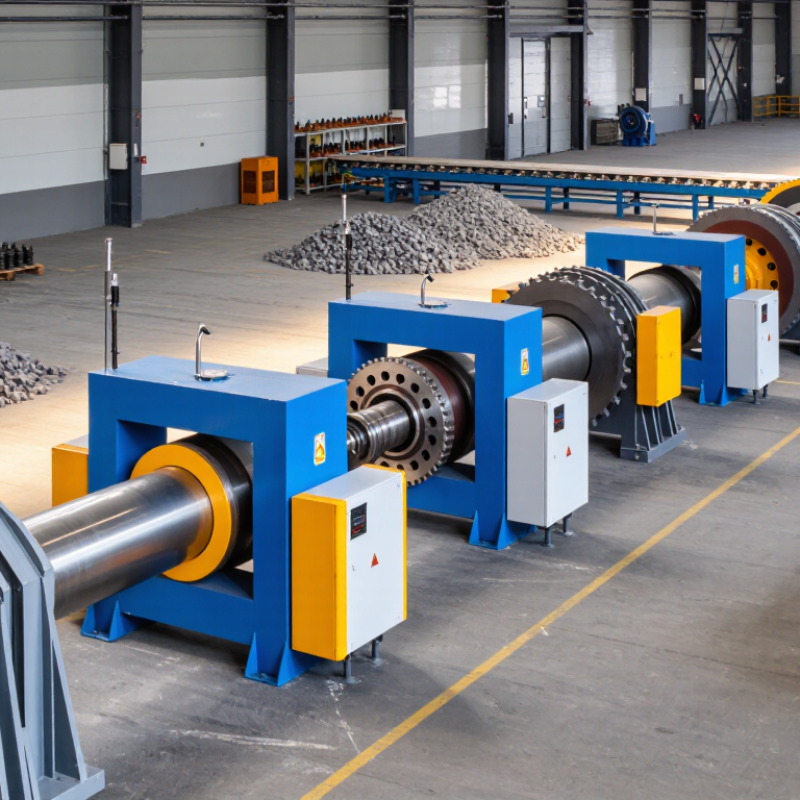
2026 Top Roll Crusher Types Which One Is Best?

What Is a Roll Crusher and How Does It Work?

A roll crusher reduces rock by drawing feed into the narrowing space between rotating rolls. The rolls grip particles and break them through compression; toothed surfaces can add a shearing action. The roll gap largely controls product size, while roll speed, feed hardness, and moisture affect performance. That gap matters.

Smooth-roll machines are often used for more uniform, finer reduction. Toothed rolls can engage larger, irregular lumps, while single-roll designs use a breaker plate instead of a second roll. Highly abrasive material can increase wear, and sticky feed may build up on the surfaces. The best configuration depends on the actual feed, not just its name on a specification sheet.

The U.S. Geological Survey’s Mineral Commodity Summaries 2025 estimated U.S. crushed-stone production at about 1.5 billion tons in 2024. This indicates the scale of aggregate demand, but it does not measure roll-crusher use. For a practical selection, check feed size, moisture, hardness, target product size, and required capacity. A small test with representative material can reveal problems that a catalog comparison misses.

Which Types of Roll Crushers Are Used in 2026?

In 2026, roll crushers are commonly configured as single-roll, double-roll, or multi-roll machines. A single-roll crusher presses material against a breaker plate, making it useful for coarse reduction. Smooth double-roll crushers compress brittle feed into more uniform fragments. Toothed double-roll designs grip and shear larger pieces, often reducing excessive fines in coal and similar materials. Small details matter: tooth shape and roll spacing change the product size.

Four-roll crushers use two successive crushing stages in one machine. They can produce a finer, more controlled product, but they add complexity. The IEA’s Coal 2024 report estimated global coal demand at 8.77 billion tonnes in 2024. That figure describes feed demand, not crusher sales, but it shows why reliable coal sizing remains relevant. Moisture and feed variability still complicate selection.

Match the crusher to the material, target size, and required throughput. Abrasive rock can accelerate roll wear, while wet or sticky feed may pack between the rolls. Not always. A toothed unit can handle coarse coal well, yet may not deliver the clean, consistent sizing a smooth-roll system provides. Pilot testing is useful, though it is sometimes skipped. That can be an expensive shortcut.

How Do Roll Crusher Designs Differ in Performance?

Roll crusher designs differ mainly in roll surface, gap control, and how they handle feed. Smooth rolls apply steady compression, making them suitable for brittle material when a relatively even product is needed. Their limitation is grip: wet or slab-like feed may slip instead of breaking cleanly. Toothed rolls bite into larger pieces and can accept coarser feed, but they may produce a wider range of particle sizes. That trade-off is easy to overlook.

Single-roll machines combine a rotating roll with a fixed breaker plate, while double-roll designs compress material between two rolls. Double-roll units often provide more controlled sizing, especially when the gap is adjustable. In a plant trial, operators can compare the feed and discharge with a simple sieve analysis, then check whether the setting holds as wear develops. Small changes matter. A few millimeters can alter both throughput and product size. Roll speed, moisture, and feed consistency also affect results, so the design alone does not determine performance. For abrasive material, inspect roll wear and bearing temperature regularly. The best choice depends on the target size, feed behavior, and maintenance capacity; a tidy specification sheet cannot answer every operating question.

What Factors Determine the Best Roll Crusher for an Application?

The best roll crusher depends on the feed, not its label. Check the largest feed lump, hardness, abrasiveness, moisture, target product size, and required tonnes per hour. Smooth rolls suit controlled, relatively fine reduction; toothed rolls can grip coarser, more irregular material. A single-stage unit may work for modest reduction, while two stages can offer tighter control. Start with the feed. A clean laboratory sample can mislead if the plant material varies by shift.

The U.S. Geological Survey’s Mineral Commodity Summaries 2025 estimates U.S. crushed-stone production at about 1.4 billion metric tons in 2024. That scale highlights the value of reliable sizing and steady feed, but the report does not prescribe a crusher type. For a real selection, compare expected throughput with the material’s size distribution and moisture, then verify wear life, adjustment range, power demand, and maintenance access. A narrow gap may improve product sizing, yet raise wear or plugging risk. The trade-off is easy to underestimate.

Tips: Run a representative sample, not just the easiest material. Record feed and product sizes, fines, and power use. Ask operators how often they clear buildup; their answer may change the choice.

2026 Top Roll Crusher Types: Which One Is Best?

Compare common roll crusher types against key application factors. Ratings are qualitative suitability scores from 1 (low) to 5 (high), not guaranteed equipment performance.

Smooth rolls are often chosen for controlled sizing of friable materials; toothed rolls suit coarse crushing and can handle some damp, cohesive feeds; HPGRs are commonly considered for energy-efficient comminution of hard, abrasive ores. The best choice depends on feed size, moisture, abrasiveness, target product size, capacity, and test results.

How Do Material and Operating Conditions Guide Crusher Selection?

Choosing a roll crusher starts with the material, not the machine name. Hard, abrasive feed can wear roll surfaces quickly, while brittle material may break cleanly under compression. Smooth rolls suit controlled size reduction on relatively uniform feed. Toothed rolls can grip larger lumps and help with materials that resist slipping. Small details matter.

Moisture changes the decision. Damp, sticky feed may cling to smooth surfaces or bridge around the feed opening. A toothed design may improve grip, but it is not a cure for every blockage. Check the feed’s maximum lump size, expected variation, and fines content. A sample that looks dry in a bucket can behave differently at steady production.

Operating conditions matter just as much. Match the crusher’s capacity to the actual feed rate, and consider the required product size and reduction ratio. A very tight roll gap may create more fines and increase wear; a wider gap may leave oversized pieces. Allow space for inspection and roll adjustment, especially where feed changes by season. Before specifying equipment, test representative material when possible. Test results are useful, but one sample may not capture every shift in moisture or hardness. That uncertainty deserves attention.

2026 Top Roll Crusher Types: Which One Is Best? How Do Material and Operating Conditions Guide Crusher Selection?

Crusher type Typical feed and materials How it reduces material Best suited operating conditions Key advantages Main limitations and selection notes
Single-roll crusher Often used for primary reduction of friable to moderately hard materials, including coal, shale, and some limestone. A rotating roll works against a breaker plate, crushing material mainly by compression and, depending on the design, impact. Suitable where a relatively simple primary crusher is needed and the feed can be broken against a fixed plate. Can accept relatively large feed; comparatively straightforward layout; tooth or pick designs can help engage lumpy feed. Very hard, highly abrasive feed can accelerate wear. Check feed size, breaker-plate arrangement, and the required product size before selection.
Smooth double-roll crusher Commonly used for brittle, relatively uniform feed such as coal, coke, and some minerals or laboratory samples. Two counter-rotating smooth rolls draw material into the gap and reduce it primarily by compression. Best when feed is dry or only slightly damp, reasonably free-flowing, and a controlled product size is important. Adjustable roll gap provides a practical way to control product top size; compression crushing can limit excess fines for suitable feed. Sticky or fibrous material may pack or bridge. Hard, abrasive particles can cause substantial roll wear; a narrow gap does not guarantee a precise size distribution.
Toothed double-roll crusher Often selected for coal, lignite, shale, and other relatively soft or friable materials; tooth design must match the feed. Teeth bite, shear, and pull material through the rolls rather than relying solely on smooth-roll compression. Useful for coarse reduction of lumpy feed, particularly when bite and draw-in are more important than a tightly graded product. Can handle larger lumps than a comparable smooth-roll arrangement; tooth engagement can improve draw-in and reduce the need for extensive pre-sizing. Product may be less uniform than from smooth rolls. Tooth profile, spacing, and wear condition affect performance; highly abrasive feed can wear teeth quickly.
Low-speed mineral sizer Commonly applied to friable materials such as coal and some soft to medium-strength ores, including feed that may be wet or clay-bearing. Two slow-turning toothed shafts use sizing, shearing, and compression actions to break material between the shafts and comb structures. A candidate for primary sizing of variable, lumpy, or damp feed when a low-speed crushing action is preferred. Low shaft speed and open tooth arrangements can help with difficult, irregular feed; modular tooth designs can be selected for different applications. Not a universal solution for hard, highly abrasive rock. Check the material’s abrasiveness, clay behavior, tramp-metal risk, and the required reduction before choosing a sizer.
Four-roll crusher Used for staged reduction of suitable brittle or friable materials, including some coal and mineral applications. Two pairs of rolls reduce material in successive stages within one machine. Consider where two-step reduction and a more compact arrangement are useful and the feed is appropriate for roll crushing. Combines primary and secondary roll-crushing stages in a single assembly; stage gaps can be configured for the process target. More rolls and adjustments add maintenance and setup considerations. Confirm that feed distribution, wear management, and required product sizing suit the arrangement.
Selection guide Choose by testing the actual material and operating conditions—not by crusher type alone. Compare feed size and shape, compressive strength, abrasiveness, moisture and clay content, required product size, throughput, and tolerance for fines. Confirm the proposed roll gap or tooth configuration with application data, and account for wear parts, tramp-material protection, and downstream screening.

Note: Performance and product-size distribution depend on crusher design, feed properties, roll or tooth condition, gap settings, and feed presentation. Application testing is recommended for final selection.

Login