Why Choose an AC Adapter 12V 3A for Global Sourcing?
Why Choose an Ac Adapter 12v 3a for Global Sourcing?
Global sourcing demands more than a matching voltage and a familiar plug. An AC Adapter 12V 3A can deliver stable 36-watt power for routers, LED equipment, small monitors, control panels, and compact industrial devices. Its capacity suits products that need consistent output without excessive electrical stress.
Power-conversion specialist Christophe Basso has said, “The power supply is the heart of any electronic system.” That perspective matters during supplier evaluation. A reliable adapter should support a wide input range, such as 100–240V AC, at 50 or 60Hz. Buyers should also inspect output regulation, ripple performance, polarity, connector dimensions, and cable temperature.
Small details matter.
In practical sourcing work, sample testing often reveals problems hidden by attractive datasheets. A connector may fit loosely. A cable may feel thin near the strain relief. Some units become noticeably warm after several hours at full load. These observations deserve documentation, not assumptions. Suppliers should provide traceable test reports and evidence of relevant safety approvals, including IEC 62368-1 where applicable. Destination-market requirements must still be verified independently.
The best choice balances price, reliability, compliance, packaging, and long-term availability. A low quotation can become expensive after returns, redesigns, or delayed shipments. We should admit one uncertainty: no adapter is universally ideal. Even a well-built AC Adapter 12V 3A requires compatibility testing with the final device, connector, enclosure, and operating environment before global deployment.
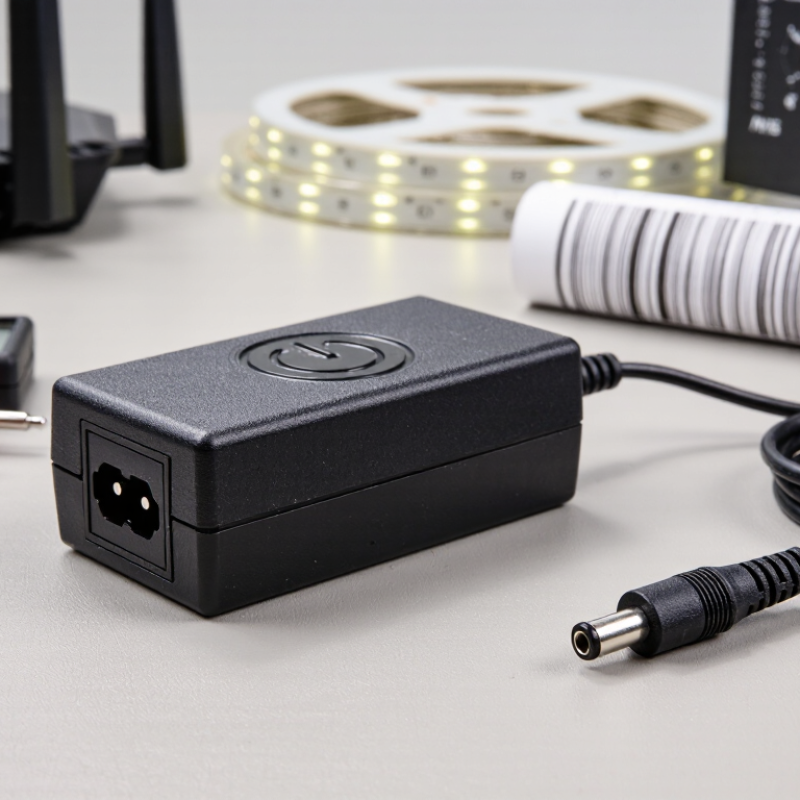
What Is a 12V 3A AC Adapter and How Does It Work?
A 12V 3A AC adapter is an external power supply for compatible electronic devices. It accepts alternating current from a wall outlet. Then, it delivers 12 volts of regulated direct current. That output is usually DC. At its rated capacity, it can provide up to 36 watts. Not more than that. Inside, a transformer or switch-mode circuit changes the incoming voltage. Modern compact adapters commonly use switch-mode conversion for better efficiency and smaller size.
The process includes several stages. Input filtering reduces electrical noise from the outlet. A rectifier changes AC into pulsed DC. Capacitors smooth the waveform. A control circuit then adjusts the output voltage continuously. Protection features may limit overcurrent, overheating, and short circuits. These features improve reliability, but they are not guaranteed on every low-cost model. When sourcing globally, check the input range, plug format, output polarity, connector size, and required safety documentation.
For equipment using 12V, the voltage must match exactly. The current rating works differently. A device needing 2A can use a 3A adapter, but a device needing 4A cannot. A multimeter can confirm the output before installation. Check polarity too. The label alone is not enough. It is tempting to treat “12V 3A” as a complete specification, but that view misses thermal performance and cable loss. A careful buyer should request datasheets, inspect samples, and test the adapter under realistic loads. Small oversights can still cause unstable operation.
Why Choose a 12V 3A AC Adapter for Global Sourcing?
A 12V 3A adapter provides a maximum rated output of 36 watts, calculated as voltage × current.
The chart shows the calculated DC output power at different load levels for a 12V 3A adapter. At full rated load, the adapter delivers 12V × 3A = 36W. For global sourcing, buyers should also verify input-voltage compatibility, plug standards, safety certifications, efficiency, and regional compliance for the target market.
Key Specifications to Check Before Global Sourcing
Why Choose an AC Adapter 12V 3A for Global Sourcing?
A 12V 3A adapter provides up to 36 watts of regulated DC power. It suits routers, control panels, LED equipment, and small industrial devices. Before sourcing, check the input range carefully. A practical global option usually supports 100–240V AC and 50/60Hz operation. However, input range alone does not guarantee reliable performance.
Confirm the output voltage is exactly 12V DC, with a continuous current rating of 3A or higher. Check the connector size, polarity, cable length, and plug type for each destination. A wrong center polarity can damage equipment. Also review efficiency, ripple, load regulation, and no-load power consumption. Protection features should include overcurrent, overvoltage, short-circuit, and thermal protection. Ask for test reports and clear technical drawings. Documents matter when specifications change between samples and production units.
Tips: Request samples from the same production line. Test startup behavior, heat, noise, and voltage stability under full load. Measure the adapter after several hours, not only after ten minutes. Verify regional safety documentation with a qualified compliance professional. Requirements can differ by market and product application. Do not rely on attractive labels alone. I have seen small connector details delay an otherwise suitable purchase. A slightly longer cable may also create unnecessary voltage drop. That detail is easy to miss.
Why Choose 12V 3A for Different Electronic Applications?
For different electronic applications, a 12V 3A AC adapter offers a useful balance between capacity, size, and sourcing flexibility. Its maximum output is 36 watts, which suits control panels, LED equipment, networking accessories, small monitors, and laboratory instruments. In practical product evaluations, this rating provides reasonable headroom for devices drawing around 2 to 2.5 amps. That reserve can reduce heat and voltage drop during startup.
Compatibility still matters more than the number printed on the label. Check the required voltage, minimum current, connector dimensions, and polarity before ordering. A 12V output must match a 12V input. A higher current rating is usually acceptable when other specifications match. Connector mistakes remain common.
For global sourcing, request test reports, insulation details, overload protection, short-circuit protection, and regional plug options. Confirm whether the output remains regulated under light and full load. A low-cost unit can look efficient on paper, yet run hot beside a router or enclosed controller. I have seen this overlooked.
Use cases differ. A compact controller may need stable current during relay switching. LED strips may require cleaner power and suitable wiring. Audio or measurement equipment can expose ripple that ordinary devices ignore. The 12V 3A choice works well for moderate, continuous loads, not motors with heavy surges. I once treated the rating as universal. That was too simple. Thermal testing, connector samples, and a small pilot order often reveal problems before volume purchasing.
How to Evaluate Suppliers, Costs, and Supply Reliability
Why Choose an AC Adapter 12V 3A for Global Sourcing?
How to Evaluate Suppliers, Costs, and Supply Reliability
A 12V 3A AC adapter suits many compact devices, but sourcing requires more than checking voltage and current. Confirm the input range, plug type, connector size, polarity, efficiency, and output stability. Small differences can create expensive compatibility problems.
Ask suppliers for recent test reports, production photos, sample units, and traceable quality records. A serious supplier should explain inspection points, component controls, and corrective actions. Request samples from normal production, not specially prepared units. Test them under low and high input voltage, continuous load, heat, and repeated plug cycles. Details matter.
Compare total landed cost, not only the quoted unit price. Include tooling, samples, packaging, freight, duties, testing, warranty handling, and possible rework. A low offer can hide weak documentation or unstable components. I have seen sourcing decisions favor price, then lose time through late replacements. That mistake is easy to repeat.
Check minimum order quantities, lead times, capacity, and backup production arrangements. Ask how the supplier manages shortages and whether critical components have approved alternatives. A written change-control process is valuable. Request a pilot order before scaling. It may feel slower, but it reveals packing errors, inconsistent labels, and delivery gaps. Supplier scorecards should track defect rates, response time, on-time delivery, and corrective-action closure. No scorecard is perfect. Review it after every shipment.