2026 Best Robot Cell Manufacturers for Global Buyers

The 2026 robot cell market is becoming more capable, connected, and difficult to compare. Global buyers now evaluate more than robot-arm speed. They examine payload accuracy, safety design, software integration, service response, and total ownership cost.

The International Federation of Robotics reported 541,302 industrial robots were installed worldwide in 2023. The global operational stock exceeded 4.28 million units. These figures show strong automation demand across automotive, electronics, logistics, food, and general manufacturing. However, a robot cell is not simply a robot inside a guarded area. It includes fixtures, vision systems, conveyors, grippers, controllers, safety devices, programming, and production support. Each element affects uptime.

This guide reviews leading robot cell manufacturers for international purchasing teams in 2026. The assessment considers engineering experience, documented performance, customization ability, compliance support, integration capacity, and after-sales service. Manufacturer evidence matters. So do factory references and practical commissioning records. A polished brochure cannot replace stable cycle times on a real production line.

No ranking is perfect. A low-cost supplier may offer excellent hardware but limited local support. A premium builder may deliver stronger validation but require a larger budget. Buyers should question every headline claim. They should request sample layouts, risk assessments, acceptance-test details, spare-parts plans, and realistic delivery schedules. The best choice depends on the application, workforce, facility, and regional requirements. This comparison aims to make that decision clearer, while acknowledging that actual results can vary.
2026 Best Robot Cell Manufacturers for Global Buyers

What a Robot Cell Is and How It Works

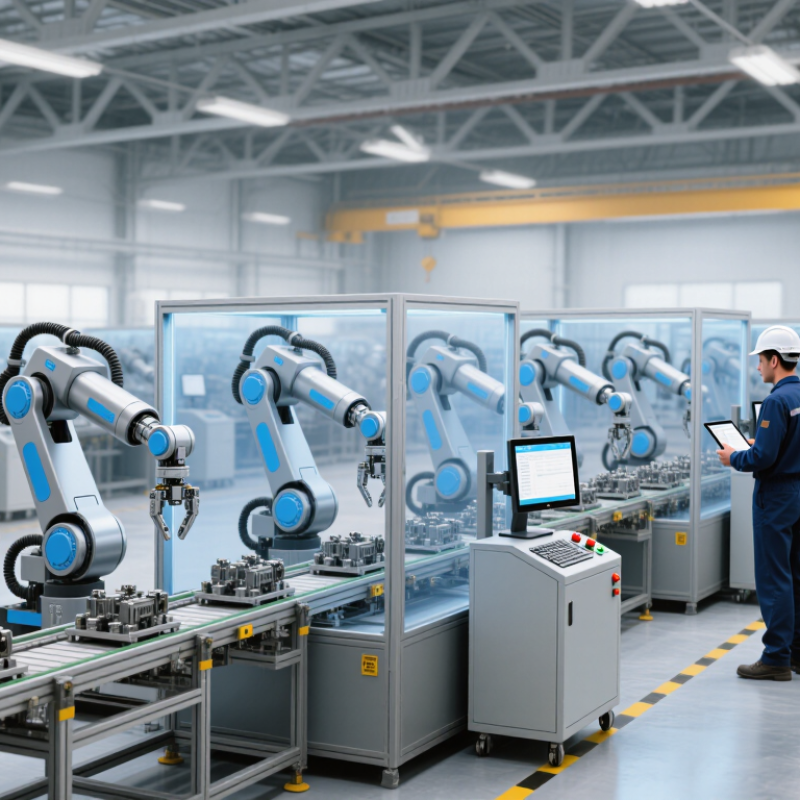
A robot cell is a controlled production area where a robotic arm works with fixtures, tools, sensors, and safety equipment. It may load parts, weld assemblies, apply sealant, or move finished products. The cell is designed around one repeatable task, but its layout depends on part size, cycle time, access, and operator needs.

The process begins when a sensor confirms that a part is correctly positioned. A programmable controller then allows the robot to start. The robot follows programmed points, while an end effector grips, drills, welds, or handles the part. Additional sensors check presence, position, pressure, and tool condition. If a reading falls outside its set range, the system should stop or request inspection. It repeats precisely.

The theory is neat. The floor is not.

Parts can arrive with small variations, fixtures can wear, and dust may affect sensors. During a proper factory acceptance test, engineers should measure cycle time, repeatability, access, guarding, and recovery after a fault. Operators should also test the controls, not only watch an automatic cycle. A cell that runs quickly but confuses users can create delays and unsafe decisions. For global buyers, clear manuals, documented safety functions, spare-part planning, and remote diagnostic access matter as much as the robot itself. These details reveal whether the equipment is genuinely production-ready or merely impressive during a demonstration.

How to Evaluate Robot Cell Manufacturers in 2026

Choosing a robot cell manufacturer in 2026 requires more than comparing hourly cycle claims. Assess the complete system, including robot reach, grippers, safety controls, vision, software, and service support. Ask for test results using parts that match your material, tolerance, weight, and production speed. A showroom demo is not enough. During factory visits, inspect cable routing, guarding, access panels, and changeover time. These details reveal practical engineering experience.

Request documented risk assessments, validation records, training plans, and maintenance procedures. A dependable manufacturer should explain how its cell follows applicable machine-safety requirements in your operating region. Check spare-parts availability, remote support limits, response times, and technician coverage. Speak with existing users, but verify references independently. Their feedback should include downtime, rejected parts, software updates, and support after installation. Do not ignore integration responsibility. A manufacturer may build excellent hardware yet provide weak interfaces for upstream or downstream equipment. I have also seen impressive proposals hide unclear ownership of programming changes. Put every responsibility in writing.

Tips: Score suppliers against the same checklist, then request a live acceptance test with measurable pass criteria. Leave room for failure. Your first specification may be incomplete, especially around cleaning, tooling wear, or operator access. Use pilot data to revise it before signing a final contract.

Leading Manufacturers by Region, Industry, and Specialty

2026 Best Robot Cell Manufacturers for Global Buyers

Leading Manufacturers by Region, Industry, and Specialty

Regional strengths often shape a robot cell manufacturer’s practical value. European suppliers commonly emphasize safety engineering, precision machining, and strict documentation. North American manufacturers often focus on flexible integration and rapid service access. Asian producers may offer strong electronics expertise, compact designs, and competitive production capacity.

Industry demands change the selection process. Automotive plants need welding cells that manage heat, repeatable positioning, and short cycle times. Food processors require washable surfaces, corrosion resistance, and careful material handling. Metalworking companies usually prioritize payload, enclosure protection, and reliable tool changing. In each case, a capable manufacturer should provide risk assessments, layout drawings, programming support, and operator training.

Specialty expertise can matter more than factory size. Some manufacturers build palletizing cells for uneven cartons, while others develop vision-guided systems for small components. During factory evaluations, buyers should inspect wiring quality, guarding, spare-parts planning, and software documentation. These details reveal daily reliability. A polished demonstration can still hide weak maintenance access. No ranking is perfect. A supplier with excellent engineering may have slower regional support, while a smaller integrator may respond faster but lack international resources. Buyers should test sample parts, confirm local compliance, and request measurable acceptance criteria before signing.

2026 Best Robot Cell Manufacturers for Global Buyers - Leading Manufacturers by Region, Industry, and Specialty

Region Manufacturer Profile Primary Cell Specialty Typical Robot Payload Typical Reach Integration Scope Key Industries Relevant Standards Typical Delivery Window
North America Custom automation and turnkey system integrators Palletizing, machine tending, welding, and material handling 10–500 kg 1.4–3.2 m Robot, tooling, safety fencing, PLC controls, vision, conveyors, and line validation Automotive, aerospace, food and beverage, logistics, and general manufacturing ANSI/RIA R15.06, ISO 10218, ISO 13849-1, IEC 60204-1 12–32 weeks
Europe Safety-focused engineering and modular automation manufacturers Assembly, dispensing, packaging, welding, and collaborative workstations 3–300 kg 0.5–3.0 m Risk assessment, mechanical design, safety circuits, digital monitoring, and CE-oriented documentation Automotive, machinery, electronics, pharmaceuticals, and consumer products ISO 10218, ISO/TS 15066, ISO 13849-1, IEC 62061, IEC 60204-1 14–36 weeks
East Asia High-volume production automation and precision robotics manufacturers Spot welding, arc welding, high-speed assembly, inspection, and electronics handling 0.5–500 kg 0.3–3.5 m Multi-axis robots, servo fixtures, feeder systems, vision inspection, and takt-time optimization Electronics, automotive, batteries, metal fabrication, and appliances ISO 10218, ISO 13849-1, IEC 60204-1, IEC 61000 series 10–28 weeks
South Asia Cost-optimized automation builders and application-specific cell manufacturers Palletizing, welding, machine tending, cutting, and basic assembly 5–250 kg 0.8–2.8 m Cell fabrication, grippers, conveyors, operator stations, controls, and installation support Automotive components, textiles, food processing, fabricated metals, and construction materials ISO 10218, ISO 13849-1, IEC 60204-1, local electrical and machinery requirements 10–26 weeks
Southeast Asia Export-oriented integrators and flexible manufacturing cell suppliers Packaging, pick-and-place, palletizing, assembly, and inspection 3–200 kg 0.6–2.6 m Robotic cell design, conveyors, end-of-line automation, vision, and remote service Food and beverage, electronics, rubber, plastics, logistics, and consumer goods ISO 10218, ISO/TS 15066, ISO 13849-1, IEC 60204-1 12–30 weeks
Middle East Project-based automation contractors and heavy-industry cell integrators Welding, cutting, palletizing, material handling, and harsh-environment automation 20–500 kg 1.5–3.5 m Turnkey engineering, dust and heat protection, safety systems, commissioning, and operator training Oil and gas equipment, metals, construction materials, logistics, and food processing ISO 10218, ISO 13849-1, IEC 60204-1, IEC 60529 16–40 weeks
Latin America Regional integrators focused on retrofit and production-efficiency projects Palletizing, welding, machine tending, packaging, and process automation 5–350 kg 0.8–3.0 m Brownfield integration, guarding, controls upgrades, tooling, training, and maintenance support Automotive, agriculture, food and beverage, mining, and metalworking ISO 10218, ISO 13849-1, IEC 60204-1, applicable national safety regulations 14–34 weeks
Oceania Specialized integrators serving remote and resource-intensive operations Palletizing, case packing, welding, inspection, and autonomous material movement 5–400 kg 0.8–3.2 m Remote diagnostics, ruggedized guarding, machine vision, safety validation, and lifecycle service Mining, agriculture, food processing, logistics, and fabricated metals ISO 10218, ISO 13849-1, IEC 60204-1, AS/NZS 4024 series 16–38 weeks

Note: Payload, reach, delivery windows, and application coverage are typical engineering ranges for complete robotic cells and may vary according to process complexity, tooling, safety validation, imported components, site conditions, and production volume.

How to Compare Robot Cell Design and Technical Capabilities

2026 Best Robot Cell Manufacturers for Global Buyers

Comparing robot cell manufacturers requires more than checking payload and cycle time. Examine how each supplier converts your process into a stable, serviceable cell. Request a layout showing robot reach, operator zones, guarding, tooling, sensors, and maintenance access. A compact cell may save floor space but create awkward servicing points. That matters later.

Review technical evidence, not polished claims. Ask for documented cycle-time tests using parts similar to yours. Check positional repeatability, vision accuracy, gripper performance, and recovery procedures after faults. The controller should exchange data with your production system through suitable industrial communication methods. Electrical drawings, risk assessments, manuals, and spare-parts lists also reveal engineering discipline. We learned that missing documentation can delay commissioning more than a slow robot. Do not ignore integration details.

Tips: Compare total ownership cost, not only purchase price. Request a factory acceptance test with clear pass criteria. Observe cable routing, weld quality, guarding alignment, and emergency-stop access. Ask who supports software updates and on-site troubleshooting in your region. A supplier with strong references should explain failures honestly, including redesigns and repeated tests. One warning sign is vague language around safety validation. Another is refusing to share realistic production data. Get every assumption written into the technical proposal. Specs alone rarely predict daily reliability.

2026 Robot Cell Manufacturer Evaluation Benchmark

This buyer-oriented index compares the technical capabilities commonly required in industrial robot-cell projects. Scores are based on measurable engineering factors, including safety compliance, repeatability, integration readiness, changeover efficiency, traceability, and lifecycle serviceability. The chart is manufacturer-neutral and does not represent company-specific claims.

Global Purchasing, Compliance, Installation, and Support Factors

2026 Best Robot Cell Manufacturers for Global Buyers

Global robot cell purchasing requires more than comparing cycle times and quoted prices. Buyers should verify the manufacturer’s engineering records, export experience, and service coverage. Request a detailed scope of supply, including robots, tooling, sensors, guarding, software, spare parts, and documentation. Confirm voltage, floor loading, compressed-air needs, and communication protocols before signing. A small mismatch can delay installation by weeks.

Tips: Ask for a factory acceptance test with sample parts. Review risk assessments and safety circuit diagrams. Check whether manuals support the destination country’s language. Confirm customs documents, packaging dimensions, insurance, and delivery responsibilities. Compliance requirements vary by location, so involve a qualified local safety professional. Do not treat certificates as a complete safety review.

Installation support should include remote preparation, on-site commissioning, operator training, and troubleshooting response times. Clarify who manages programming changes after handover. Ask for a realistic spare-parts schedule, not only a sales promise. Service quality often becomes visible after the first sensor failure.

No checklist catches every site issue. A careful buyer should record assumptions and revisit them with the supplier. Even experienced teams can overlook aisle clearance, maintenance access, or unstable network connections. These details affect production, worker safety, and long-term operating cost.

Login