Discover the Best Collaborative Robots for Your Business Needs?
In today’s rapidly evolving industrial landscape, collaborative robots (cobots) are transforming the way businesses operate. According to Dr. Mark D. Smith, an expert in robotics and automation, "Collaborative robots are set to redefine productivity across multiple sectors." This innovative technology combines human and machine capabilities, enhancing efficiency and safety on the production floor.
Many businesses are exploring how collaborative robots can fit their specific needs. These robots are designed to work alongside humans, making them versatile tools in various industries. However, selecting the right collaborative robots can be daunting. Companies often face challenges in understanding the technology and its applications. It’s not just about choosing a robot; it’s about integrating it into existing workflows effectively.
The potential for collaborative robots is immense, yet businesses must approach this technology critically. Ensuring compatibility with existing systems is crucial. Additionally, some users report issues with training and optimizing performance. Embracing collaborative robots requires a willingness to experiment and adapt, highlighting the importance of continuous learning and understanding in this field.

Understanding Collaborative Robots: Definition and Benefits
Collaborative robots, or cobots, are changing the landscape of automation. They are designed to work alongside humans. This interaction enhances productivity and safety in various sectors. According to a 2022 report by MarketsandMarkets, the global collaborative robot market is projected to reach over $12 billion by 2025. This rapid growth highlights their increasing adoption in industries like manufacturing and logistics.
The primary benefit of cobots is their flexibility. Unlike traditional industrial robots, they can adapt to different tasks without extensive reprogramming. This is attractive for small to medium enterprises that need to stay agile. In fact, research from ABI Research indicates that collaborative robots can improve operational efficiency by up to 85%. However, their integration is not without challenges. Companies need to invest in training and ensure a clear understanding of safety protocols. These factors can complicate initial deployment.
Moreover, cobots raise concerns about job displacement among workers. Many fear that automation could replace human roles. Yet, a study from McKinsey suggests that 60% of occupations could see at least one-third of their tasks automated. This scenario underscores the importance of upskilling the workforce rather than allowing displacement. Embracing cobots means fostering a collaborative environment where humans and machines enhance each other’s strengths. Balancing these aspects is crucial for sustainable growth.
Key Features to Consider When Choosing Collaborative Robots
When selecting collaborative robots (cobots) for your business, key features are crucial. A recent report from the International Federation of Robotics indicates that adopting cobots can increase productivity by up to 30%. Understanding different functionalities will help tailor your choice to your specific needs.
One vital feature to consider is payload capacity. Cobots come in various sizes, capable of lifting different weights. Some may only handle small parts, while others can lift over 10 kg. These distinctions determine where and how these robots can be deployed. Safety features also matter. Ensure the cobot has advanced sensors. These sensors prevent accidents and enhance human-robot collaboration.
**Tips:** Evaluate your workflow. Identify repetitive tasks that can be automated by cobots. Understand that a cobot’s usability varies by application. Training might be needed, even if they are designed for easy operation. Look for robots with intuitive interfaces to reduce the learning curve.
Lastly, consider adaptability. As operations change, the ability to reprogram cobots can save time and costs. Certain robots allow quick changes between tasks, enhancing operational flexibility. Make sure your chosen cobot supports this flexibility, ensuring longevity in your investment.
Top Collaborative Robot Brands and Their Unique Offerings
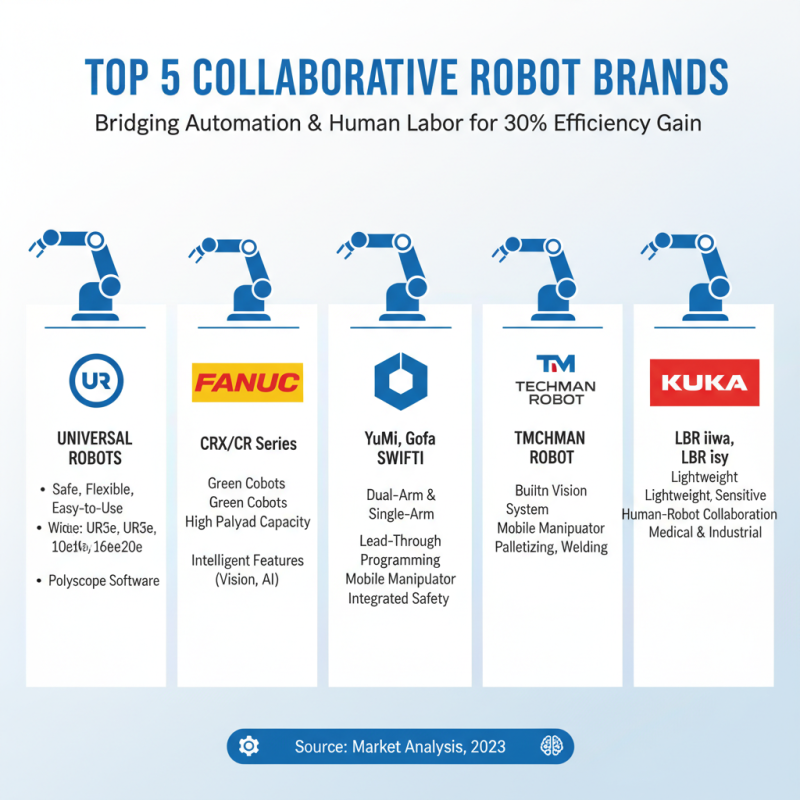
Collaborative robots, or cobots, are revolutionizing the workplace. They bridge the gap between automation and human labor. Companies have noted a 30% increase in efficiency when integrating cobots into their operations, according to a recent market analysis.
Several leading brands dominate the cobot landscape, each offering unique solutions. Some focus on user-friendly designs, enabling rapid deployment. Others emphasize adaptability, providing tools that easily integrate with existing systems. These innovations cater to industries from manufacturing to healthcare, showcasing versatility.
Tip: When choosing a cobot, assess your specific business needs. Consider your production environment and the required tasks. A thorough needs analysis enhances the chance of successful integration.
While cobots promise efficiency, challenges exist. Training staff to work alongside robots can be daunting. Misunderstanding tasks could lead to errors. Regular reviews of robot performance are crucial to address potential shortcomings. This ongoing process improves both technology and human collaboration, ultimately driving better results.
Tip: Encourage an open dialogue among your team about the integration process. Feedback can reveal insights that enhance collaboration. Remember, the goal is synergy, not just automation.
Applications of Collaborative Robots Across Different Industries
Collaborative robots, or cobots, are transforming industries. Their versatility makes them suitable for various applications. In manufacturing, cobots assist with assembly and quality control. This enhances productivity and ensures precision. In healthcare, they aid in surgeries and logistics, allowing medical staff to focus on patient care.
**Tips:** When selecting a cobot, evaluate the specific tasks it will perform. Ensure it can adapt to your workflow.
In warehouses, cobots handle inventory management and packing. They work alongside human workers, improving efficiency. However, challenges can arise. Integration with existing systems may require adjustments. Training staff to collaborate with these robots is crucial.
**Tips:** Invest time in staff training. Familiarity with cobots boosts productivity and reduces resistance.
Discover the Best Collaborative Robots for Your Business Needs
| Industry |
Robot Model |
Payload Capacity (kg) |
Reach (mm) |
Typical Applications |
| Manufacturing |
UR10e |
10 |
1300 |
Assembly, packaging |
| Healthcare |
RB3 |
3 |
600 |
Medication dispensing, patient interaction |
| Food & Beverage |
P4 |
4 |
800 |
Sorting, packing |
| Logistics |
Adept |
10 |
1000 |
Pick and place, palletizing |
| Electronics |
Cobot |
5 |
700 |
Screw driving, inspection |
Implementation Best Practices for Successful Deployment of Collaborative Robots
Implementing collaborative robots (cobots) requires careful planning and execution. Start by assessing your specific business needs. Define the tasks you want the cobots to perform. This clarity helps in choosing the right robot. Without a clear direction, the deployment may not yield desired efficiency.
Training your staff is crucial. Workers must understand how to work alongside cobots safely and effectively. Conducting workshops can bridge knowledge gaps. Ignoring this step might lead to resistance or accidents. Ensure ongoing support for employees during the transition to a robotic workforce.
Monitoring and evaluating the performance of cobots is essential. Collect data to understand their impact on productivity. Adjust your processes based on findings. If the robots are not meeting expectations, a reassessment of their role may be needed. Reflecting on challenges faced during implementation can guide future strategies.
Best Collaborative Robots for Business Deployment