China’s robot industry has moved from rapid adoption to global influence. The International Federation of Robotics (IFR) reported 276,288 industrial robot installations in China during 2023. That figure represented more than half of global installations. It also showed the market’s demanding scale.
This “China Top 10 Elite Robot Manufacturers” guide examines companies shaping that expansion. The selection considers manufacturing experience, installed applications, research capability, product reliability, and international service coverage. These criteria matter because a robot is more than a polished arm on a showroom floor. It must weld accurately, move pallets safely, and repeat the same motion through thousands of production cycles.
Marina Bill, President of the IFR, said, “China remains the world’s largest robot market, with 276,288 industrial robots installed in 2023.” Her statement reflects market volume, but volume alone does not prove technical leadership. The China Robot Industry Alliance and IFR data offer useful benchmarks, yet company comparisons remain imperfect. Some manufacturers disclose detailed performance data, while others reveal less. That difference can affect rankings.
This introduction therefore treats “elite robot” as a practical standard, not a marketing label. Readers will see established leaders, specialist innovators, and manufacturers with strong domestic reach. The list may not satisfy every buyer. That is the point. Robot selection depends on payload, cycle time, software integration, maintenance access, and local support. A compact six-axis robot may outperform a larger model in a crowded electronics line. Real factories decide.
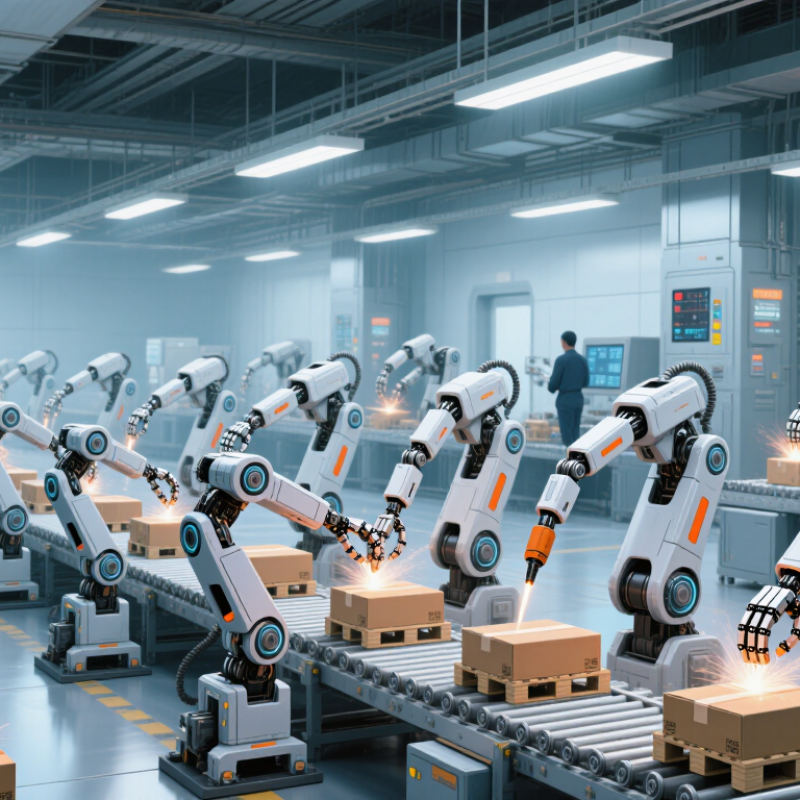
China’s elite robot manufacturers are defined by more than shipment volume. They combine motion accuracy, stable software, safe operation, and responsive engineering support. In 2023, China installed 276,288 industrial robots, representing 51% of global installations, according to the International Federation of Robotics’ World Robotics 2024 report. This scale creates pressure. A factory may need robots that repeat a 0.02-millimeter movement thousands of times, beside workers, under changing temperatures.
Reliability begins with measurable evidence. Elite manufacturers publish cycle-time results, failure rates, maintenance intervals, and safety validation records. They also test integration with vision systems, conveyors, and manufacturing execution software. China reached 470 industrial robots per 10,000 manufacturing employees in 2023, according to IFR. High density makes downtime expensive. A strong supplier therefore provides local technicians, spare parts, training, and clear recovery procedures. ISO 10218 compliance and risk assessment under ISO/TS 15066 should support these claims, not replace practical testing.
Still, no scorecard is perfect. A polished demonstration can hide difficult programming and weak after-sales service. Buyers should inspect production records, request sample data, and speak with working users. I would also examine how quickly a robot recovers after a sensor fault. That detail often reveals engineering maturity. Elite status is earned on the factory floor, where dust, rushed operators, and imperfect data expose every convenient promise.
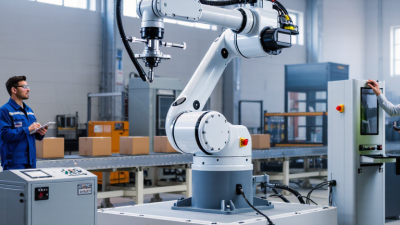
China’s Top 10 Robot Manufacturers by Technology and Market Reach
China’s leading robot manufacturers compete across industrial arms, SCARA systems, collaborative robots, mobile platforms, and machine vision. A practical top-ten ranking should measure more than sales. Technology depth, controller reliability, system integration, patents, and overseas service coverage also matter. The International Federation of Robotics reported 276,288 industrial robot installations in China during 2023. That represented 51% of global installations.
The strongest manufacturers typically serve automotive, electronics, metal processing, logistics, and battery production. Some focus on high-speed assembly, while others build heavy-load welding systems or safer collaborative models. IFR’s World Robotics 2024 report recorded China’s robot density at 470 units per 10,000 manufacturing employees. Domestic suppliers also reached about 47% of China’s industrial robot installations in 2023. Market reach is expanding.
Yet the ranking needs caution. Several manufacturers show impressive shipment growth but still depend on imported precision components or overseas software ecosystems. That weakness affects maintenance costs and export confidence. In factory visits, uptime, cable durability, calibration stability, and local technician response often matter more than polished demonstrations. Some companies have strong domestic networks but limited international support. Others export widely but lack deep application experience. Technology leadership is uneven, and the data can lag behind rapidly changing production lines.
China’s top ten elite robot manufacturers are better judged by products and deployment depth than by publicity. Their portfolios commonly include six-axis articulated robots, SCARA systems, delta robots, collaborative arms, mobile robots, controllers, and machine-vision modules. These systems support welding, palletizing, packaging, assembly, inspection, and warehouse movement.
The International Federation of Robotics reported 276,288 industrial robot installations in China during 2023, representing about 51% of global installations. The same World Robotics 2024 report recorded more than 4.28 million industrial robots operating worldwide. These figures explain the demand for high-payload arms in automotive plants, compact SCARA units in electronics assembly, and vision-guided robots for precision inspection. Semiconductor factories require cleaner motion platforms and tighter repeatability. Food and pharmaceutical facilities need careful material handling and traceable process control.
Collaborative robots are expanding in small factories. They assist with screwdriving, packaging, machine tending, and quality checks. Autonomous mobile robots move bins between workstations, reducing walking time and manual lifting. Interact Analysis has identified China as a major growth market for warehouse automation and mobile robotics, although adoption varies sharply by region and factory size. A polished top-ten ranking can mislead. Real performance depends on uptime, integration support, spare parts, software compatibility, and operator training. The robot is only one part of the cell. Often, the difficult work begins after installation.
China's annual industrial robot installations, reflecting the expanding market served by leading domestic robot manufacturers.
The leading Chinese robot manufacturers commonly develop industrial robot arms, SCARA robots, delta robots, collaborative robots, autonomous mobile robots, and machine-vision systems. These products are widely applied in automotive manufacturing, electronics, metalworking, logistics, welding, assembly, packaging, and warehousing. Annual installation figures are based on International Federation of Robotics market statistics.
China’s top ten elite robot manufacturers are defined by more than sales volume. Their advantage combines in-house control systems, precision components, testing laboratories, and responsive service teams. The International Federation of Robotics reported 276,288 industrial robots installed in China during 2023. That represented about 51% of global installations.
Innovation now means practical intelligence. Leading factories connect vision systems, force sensors, digital twins, and predictive maintenance tools. They also test robots beside real production lines, not only in demonstration rooms. Production strength appears in repeatable welding, assembly, packaging, and logistics performance. However, ranking these manufacturers remains imperfect. Public data often mixes shipment value, robot arms, complete systems, and software revenue. Buyers should examine audited capacity, uptime records, safety certifications, and spare-parts availability.
Global expansion requires local engineers, multilingual documentation, and regional integration partners. The IFR’s World Robotics 2024 report placed China’s manufacturing robot density at 470 units per 10,000 employees in 2023. That figure signals strong domestic demand and a demanding test market. Yet overseas success depends on compliance, installation training, cybersecurity controls, and dependable after-sales response. A low purchase price can become expensive when commissioning support is weak.
Tips: Request a factory video audit and three verified customer references. Compare total operating cost, not only the robot quotation. Ask how quickly critical components can be replaced locally. A useful pilot should measure cycle time, defect rate, energy use, and operator training hours. Expect some promises to change after production starts. That is why staged contracts are safer.
An anonymized comparative benchmark of leading Chinese robotics manufacturers, based on publicly documented product capabilities, manufacturing characteristics, certification activity, and international market direction.
| Rank | Anonymized Profile | Primary Robotics Segment | Core Innovation Strength | Production Capability | Typical Customer Industries | International Certification Focus | Global Market Reach | Expansion Strategy |
|---|---|---|---|---|---|---|---|---|
| 1 | Profile 01 | Six-axis industrial robots and integrated automation cells | High-payload motion control, welding integration, and digital production-line management | Large-scale standardized assembly with application engineering centers | Automotive, metal fabrication, electronics, and general manufacturing | ISO 9001 / CE-oriented compliance | Asia, Europe, North America, and selected emerging markets | Local service hubs, distributor networks, and overseas system-integration partnerships |
| 2 | Profile 02 | Collaborative robots and lightweight robotic arms | Force sensing, intuitive programming, rapid deployment, and human-machine collaboration | Modular production designed for flexible batch manufacturing | Electronics, medical devices, logistics, food processing, and small manufacturers | CE / ISO 10218 / ISO/TS 15066 focus | Broad export activity across Europe, Asia-Pacific, and the Americas | Direct regional offices, channel partners, application demonstrations, and developer ecosystems |
| 3 | Profile 03 | Industrial robots for welding, palletizing, and material handling | Cost-efficient servo systems, repeatability, and turnkey automation packages | High-volume manufacturing supported by mature component sourcing | Automotive components, appliances, construction materials, and logistics | ISO 9001 / CE-oriented compliance | Strong domestic base with expanding sales in Southeast Asia and the Middle East | Competitive pricing, localized distributors, and regional technical-support teams |
| 4 | Profile 04 | SCARA robots and high-speed assembly systems | High-speed pick-and-place, precision assembly, vision integration, and compact design | Automated production lines with broad standard-model availability | Consumer electronics, semiconductors, batteries, and precision components | CE / EMC / machinery-safety compliance | East Asia, Europe, and electronics-manufacturing centers worldwide | Integration with production-equipment partners and direct sales to major factories |
| 5 | Profile 05 | Mobile robots, autonomous forklifts, and warehouse automation | SLAM navigation, fleet management, obstacle avoidance, and warehouse software | Platform-based manufacturing with configurable vehicle and software modules | E-commerce, third-party logistics, automotive, pharmaceuticals, and retail distribution | CE / ISO 3691-4-oriented safety focus | Projects and partnerships across Asia, Europe, North America, and Australia | Reference projects, software subscriptions, system integrators, and joint overseas ventures |
| 6 | Profile 06 | Service robots for commercial, hospitality, and public environments | Computer vision, speech interaction, cloud connectivity, and autonomous navigation | Flexible production supported by contract manufacturing and in-house testing | Hotels, restaurants, hospitals, offices, airports, and shopping centers | Electrical safety / EMC / market-specific approvals | Primarily China and Asia with selective deployments in Europe and the Middle East | Scenario-based pilots, software localization, and partnerships with facility operators |
| 7 | Profile 07 | Specialized robots for welding, painting, and hazardous environments | Process know-how, environmental protection, application-specific tooling, and reliability | Project-oriented manufacturing with strong customization capability | Heavy industry, shipbuilding, energy, chemicals, and construction machinery | Industrial safety / explosion-risk application focus | Domestic leadership with project exports to Asia, Africa, and Latin America | Engineering-led international projects, local contractors, and lifecycle maintenance |
| 8 | Profile 08 | Delta robots, vision systems, and intelligent sorting equipment | High-speed parallel kinematics, machine vision, AI inspection, and hygienic design | Standardized platforms optimized for high-throughput applications | Food and beverage, pharmaceuticals, packaging, and consumer goods | CE / food-contact and hygienic-design focus | China, Southeast Asia, Europe, and selected North American markets | OEM cooperation, packaging-line integrators, and application-specific solution bundles |
| 9 | Profile 09 | Medical, rehabilitation, and laboratory automation robots | Precision motion, sterile-environment compatibility, remote monitoring, and data traceability | Controlled production with specialized validation and quality procedures | Hospitals, laboratories, rehabilitation centers, and life-science companies | Medical-device quality and market authorization focus | China-led commercialization with selective international clinical and laboratory projects | Hospital pilots, research partnerships, regulatory filings, and specialized distributors |
| 10 | Profile 10 | Construction, inspection, agricultural, and outdoor mobile robots | Outdoor localization, ruggedized hardware, machine vision, and remote fleet supervision | Pilot-to-volume production with application-specific customization | Agriculture, infrastructure inspection, mining, construction, and public services | Outdoor safety / EMC / sector-specific compliance | Early-stage international expansion through demonstration projects and regional partners | Government and enterprise pilots, research alliances, and localized field-service models |
China Top 10 Elite Robot Manufacturers?
How to Compare China’s Leading Robot Manufacturers Effectively
Comparing China’s top ten robot manufacturers requires more than checking production volume or website claims. Start with the application. A welding cell, warehouse vehicle, and medical handling arm need different design strengths. Request cycle-time data from a task similar to yours. Ask for accuracy results after continuous operation, not only laboratory figures.
Factory visits can reveal important details. Observe cable routing, safety guarding, calibration tools, and spare-part storage. Speak with engineers who will support installation. A reliable manufacturer should explain failure rates, maintenance intervals, software updates, and operator training clearly. Review certifications, export experience, and documented testing records. Independent customer references are more useful than polished case studies.
Price deserves careful attention. A cheaper robot may require expensive integration, custom fixtures, or frequent downtime. Compare the complete ownership cost over five years. Include installation, programming, training, energy use, repairs, and replacement parts. Ask whether the controller supports your existing systems. Small compatibility issues can delay a project for weeks.
A scoring sheet helps.
However, spreadsheets can mislead. I have seen strong technical proposals fail during site acceptance because communication was weak. Leave room for response speed, engineering flexibility, and honest risk disclosure. A manufacturer that admits limitations may be safer than one promising everything. Run a pilot with real materials and real operators before approving a full deployment. Judge evidence, not enthusiasm.