

What Are the Top Robotics and Automation Trends for 2026?
What Are the Top Robotics and Automation Trends for 2026?
By 2026, robotics and automation will move beyond isolated factory cells. Machines will increasingly sense, learn, and respond within changing environments. A mobile robot may scan a warehouse aisle, avoid a worker, and update its route within seconds. In hospitals, assistive systems could support logistics, sterilization, and routine material handling. On production lines, collaborative robots may adjust grip strength for fragile parts.
Rodney Brooks, a respected robotics researcher, once wrote, “The robots are coming, but they are not going to take your jobs.” His observation remains useful, but it needs careful examination. Automation may replace specific tasks, reshape job descriptions, and create demand for new technical skills. The transition will not feel equal everywhere.
This article examines the forces shaping the sector, including embodied artificial intelligence, humanoid platforms, autonomous mobile robots, digital twins, edge computing, and safer human-machine collaboration. It also considers energy use, cybersecurity, maintenance, workforce training, and responsible deployment. Practical experience matters here. A robot that performs well in a demonstration may struggle with glare, dust, crowded walkways, or irregular objects.
The forecasts are promising. They are also imperfect.
Companies will need measurable evidence, not impressive videos. Managers should compare downtime, safety outcomes, energy consumption, training costs, and worker acceptance. Policymakers and engineers must keep human oversight visible. The most important trend may not be a new robot shape. It may be the disciplined integration of automation into real workplaces.
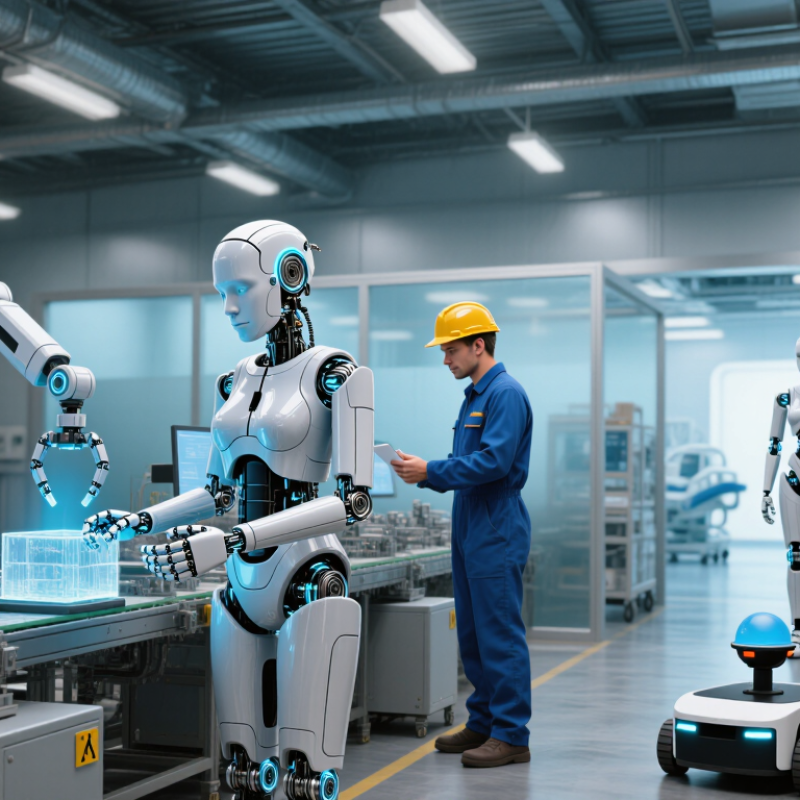
Defining Robotics and Automation Trends in 2026
In 2026, robotics and automation will be defined by practical coordination, not isolated machines. Robots will increasingly share workspaces with people, handling repetitive lifting, inspection, sorting, and precise assembly. Compact mobile units may move materials between production cells while software adjusts routes around workers and equipment. The shift is measurable. Cycle times, error rates, energy use, and workplace incidents will matter more than impressive demonstrations.
Artificial intelligence will make robots more adaptable, but dependable automation still requires clear boundaries. Vision systems can identify damaged packaging or changing object shapes, while digital twins can test a new workflow before physical installation. Engineers should verify sensor accuracy, emergency stops, maintenance access, and data protection during deployment. A system that learns quickly but cannot explain a failed decision creates operational risk. That assumption fails.
The strongest trend may be human-centered automation. Technicians will supervise fleets through simpler interfaces, review alerts, and retrain systems using real production data. Smaller companies may adopt modular robots because they can scale gradually instead of rebuilding an entire facility. Yet adoption will not be effortless. Integration costs, limited technical skills, and poorly labeled training data can delay results. Early field experience suggests that reliable automation grows through measured pilots, documented failures, and regular safety reviews. Perfect autonomy remains an attractive idea, but many workplaces will benefit more from controlled assistance.
What Are the Top Robotics and Automation Trends for 2026? - Defining Robotics and Automation Trends in 2026
| Trend | 2023–2025 Evidence | Key Data Point | Main 2026 Applications | 2026 Adoption Outlook | Primary Business Value | Main Constraint |
|---|---|---|---|---|---|---|
| AI-Enabled and Autonomous Robots | Robotics is increasingly integrating computer vision, machine learning, natural-language interfaces and real-time decision-making. | 58% of employers surveyed expect robotics and autonomous systems to transform business by 2030. | Adaptive picking, inspection, mobile navigation, warehouse orchestration and human–robot collaboration. | Rapidly scaling | Greater flexibility in variable, semi-structured work environments. | Validation, safety assurance, cybersecurity and the availability of high-quality operational data. |
| Collaborative Robots | Collaborative systems are designed to operate closer to people and support smaller-batch, high-mix production. | Industrial robot installations reached 541,302 units globally in 2023. | Machine tending, assembly, packaging, quality checks and ergonomic assistance. | Steady expansion | Lower deployment barriers and improved worker ergonomics. | Payload limits, cycle-time requirements, risk assessment and integration with existing equipment. |
| Autonomous Mobile Robots | Mobile robots are moving beyond fixed routes by using mapping, sensors and fleet-management software. | More than 205,000 professional service robots were sold globally in 2023. | Material transport, warehouse replenishment, hospital logistics, cleaning and internal delivery. | High growth potential | Reduced repetitive travel and better intralogistics visibility. | Traffic management, facility layout changes, battery uptime and worker interaction. |
| Robotics-as-a-Service | Subscription and usage-based models are lowering the need for large upfront capital investment. | Commercial service-robot sales exceeded 205,000 units in 2023 across reported categories. | Cleaning, security, logistics, agricultural tasks and short-term manufacturing capacity. | Expanding access | Faster deployment, predictable operating costs and easier technology upgrades. | Data ownership, service-level commitments, long-term total cost and supplier dependency. |
| Digital Twins and Simulation | Virtual models are increasingly used to test layouts, production sequences and robot behavior before physical deployment. | Simulation can identify bottlenecks before commissioning, reducing the need for repeated physical trials. | Factory planning, warehouse design, predictive maintenance and workforce training. | Maturing | Lower commissioning risk and improved asset utilization. | Data synchronization, model accuracy, interoperability and specialized skills. |
| Robotic Vision and Quality Inspection | Camera-based inspection is expanding from rule-based measurement toward AI-assisted defect detection. | Inspection systems can operate continuously and produce traceable digital quality records. | Surface inspection, dimensional checks, sorting, food processing and pharmaceutical packaging. | Broad adoption | More consistent inspection and earlier detection of production defects. | Lighting variation, limited defect samples, false positives and explainability requirements. |
| Humanoid and Multi-Purpose Robots | General-purpose robots are being tested for tasks that require human-oriented reach, movement and tool use. | The technology remains earlier-stage than conventional industrial and mobile robotics. | Material handling, workplace assistance, inspection and selected repetitive service tasks. | Early-stage pilots | Potential reuse across multiple tasks without redesigning the entire workspace. | Reliability, energy consumption, safety certification, cost and limited field evidence. |
| Sustainable and Energy-Aware Automation | Energy monitoring and lifecycle assessment are becoming part of automation investment decisions. | Industrial robot systems are increasingly evaluated by energy use per cycle, uptime and lifecycle impact. | Energy-efficient motion planning, predictive maintenance, remanufacturing and low-waste production. | Growing priority | Lower operating costs, improved resource efficiency and stronger environmental reporting. | Measurement consistency, retrofit costs, battery materials and incomplete lifecycle data. |
| Resilient and Flexible Manufacturing | Automation is shifting from maximum-volume production toward flexible systems that can handle product variation. | Skills gaps were identified as a major barrier by 63% of employers in the World Economic Forum’s 2025 survey. | Rapid changeovers, mixed-model assembly, local production and automated material handling. | Strategic priority | Improved continuity, labor productivity and responsiveness to demand changes. | Integration complexity, workforce training, capital requirements and process standardization. |
Related Posts
-
What Are the Top Types of Robotics and Automation?
-
Exploring the Top Innovations in Dobot Robotics Technology?
-
Why Are Automatic Robots Revolutionizing Industries Today?
-
Top Robotics Robot Innovations Shaping the Future of Technology?
-
Why is the Use of Automatic Robots Revolutionizing Industries Today?
-
Top 10 Robotics Applications Revolutionizing Global Supply Chain?