
China has become a major sourcing base for the global automation industry. Its manufacturers supply robotic arms, PLC systems, machine-vision equipment, conveyors, sensors, and complete production lines. Yet choosing a reliable partner requires more than comparing prices or browsing polished websites.
Joseph Engelberger, widely regarded as the father of industrial robotics, once said, “I can’t define a robot, but I know one when I see one.” His remark remains relevant for buyers assessing automation suppliers today. A capable manufacturer should demonstrate real engineering depth, not only attractive product images. Look for documented factory experience, clear technical specifications, stable software support, and evidence from operating installations.
The strongest Chinese manufacturers usually provide detailed drawings, sample testing, remote diagnostics, and practical integration guidance. They may also support international certifications, language requirements, spare-parts planning, and operator training. Ask how the system performs under dust, vibration, temperature changes, or continuous shifts. Small details matter.
A supplier’s response to failure matters, too. Can it identify a sensor fault within minutes? Can it deliver replacement components without confusion? Can its engineers communicate clearly across time zones?
No shortlist is perfect. A factory tour can impress while revealing little about long-term service. A low quotation can hide integration costs. I have found that careful buyers should verify references, inspect quality records, and request a realistic acceptance test before signing major contracts.
This guide examines China’s leading automation industry manufacturers for global buyers. It focuses on capability, reliability, customization, after-sales support, and measurable value. The goal is not to praise every supplier. It is to help buyers make a more informed and defensible decision.
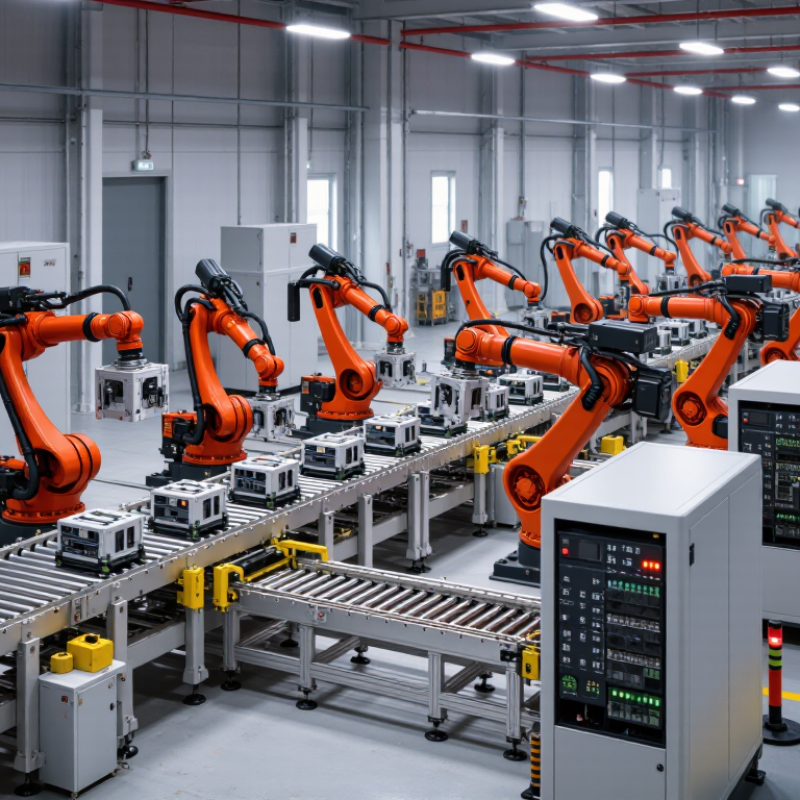
China’s automation industry spans factory robots, programmable controllers, servo systems, machine vision, sensors, and automated guided vehicles. It also includes engineering integration, production software, maintenance, and data services. The scope is broad because automation now reaches welding lines, warehouse aisles, and small electronics workshops.
The International Federation of Robotics reported 276,288 industrial robot installations in China during 2023. That represented about 51% of global installations. Its World Robotics 2024 report also recorded China’s robot density at 470 units per 10,000 manufacturing employees. These figures show strong demand, but they do not reveal every weakness. Smaller factories may still depend on manual inspection, uneven data systems, and limited technical training.
Market structure is layered. Equipment manufacturers supply core hardware, while system integrators connect robots with conveyors, vision cameras, safety controls, and enterprise software. Component suppliers often serve several industries, including automotive, batteries, logistics, food processing, and general machinery. The China Industrial Information Industry Development Report identifies smart manufacturing as a continuing policy and investment priority. Yet adoption remains uneven across regions and factory sizes. A modern robotic arm can move quickly, but poor process design still creates expensive downtime. That practical gap deserves more attention.
China Best Automation Industry Manufacturers for Global Buyers?
Major Automation Manufacturing Hubs and Industrial Clusters in China
China’s automation industry is concentrated in several powerful manufacturing hubs. The Yangtze River Delta connects Shanghai, Jiangsu, and Zhejiang through dense supplier networks. Buyers can find motion-control components, sensors, machine vision systems, and assembly equipment within short transport distances. The Pearl River Delta, especially Guangdong, remains strong in electronics, batteries, appliances, and high-speed production lines.
According to the International Federation of Robotics, China installed 276,288 industrial robots in 2023. That represented about 51% of global installations. China also reached approximately 470 robots per 10,000 manufacturing employees, based on the World Robotics 2024 report. These figures show deep demand for automation, not merely factory capacity. Beijing-Tianjin-Hebei supports research and advanced engineering, while Wuhan and Chongqing offer growing automotive and industrial equipment ecosystems.
Cluster maps are useful. They are not perfect.
From practical sourcing experience, regional specialization can reduce lead times and simplify technical communication. However, a nearby supplier may still depend on distant electronic components. Factory audits should examine calibration records, testing stations, spare-part policies, and software documentation. Buyers should also compare integration skills, not only equipment prices. China’s automation landscape is broad, but quality consistency varies between workshops, even within the same industrial park.
China’s industrial robot production expanded strongly from 2019 to 2022 before moderating in 2023. The main automation manufacturing ecosystems are concentrated in the Yangtze River Delta, the Pearl River Delta, the Beijing–Tianjin–Hebei region, and Shandong, where machinery, electronics, automotive, logistics, and smart-factory supply chains are highly developed. Data source: National Bureau of Statistics of China; 2023 figure is reported in rounded form.
China’s automation manufacturing sector includes several distinct supplier types. Component specialists produce PLC panels, servo systems, sensors, drives, and industrial communication modules. Their strength is technical depth. Buyers should request wiring diagrams, heat-load data, firmware policies, and test records before approving a sample.
Machine builders focus on packaging, assembly, inspection, or material handling equipment. A capable builder can combine robotics, vision cameras, conveyors, and safety controls into one production cell. Factory automation integrators offer broader project support. They study line speed, product variation, floor space, and operator access before proposing equipment. This practical approach matters more than an impressive catalog.
Custom engineering workshops serve buyers with unusual dimensions or low-volume production. They often modify frames, grippers, feeding systems, and control logic quickly. However, documentation quality can vary between suppliers. I have seen attractive demonstrations fail when product tolerances changed. A serious evaluation should include sample trials, factory acceptance testing, spare-parts lists, and remote support procedures. Ask who writes the software. Confirm who owns the drawings. Review safety risk assessments and conformity records for the destination market. Delivery is only one milestone. Stable operation after installation is the harder measure.
| Manufacturer Type | Core Specialty | Typical Products or Services | Common Industries | Customization Capability | Key Advantages for Global Buyers | Important Verification Points |
|---|---|---|---|---|---|---|
| Industrial Control System Manufacturers | Machine sequencing, data collection, plant-level control, and system integration | PLC panels, HMI stations, SCADA interfaces, industrial networks, control cabinets | Manufacturing, water treatment, utilities, food processing, chemicals | High; programs, electrical drawings, communication protocols, and panel layouts can be adapted | One-stop engineering support and integration of multiple automation components | Programming ownership, source-code access, cybersecurity measures, documentation, and local service support |
| Motion Control and Servo Manufacturers | Precise control of speed, position, torque, and synchronized motion | Servo motors, servo drives, stepper systems, motion controllers, linear modules | Packaging, electronics, printing, machine tools, textile equipment | Medium to high; motor ratings, feedback systems, shafts, firmware, and mounting options may be configured | Competitive pricing, broad motor sizes, and availability of integrated motion packages | Positioning accuracy, repeatability, overload capacity, encoder compatibility, tuning software, and spare parts |
| Industrial Robot Manufacturers | Automated handling, assembly, welding, palletizing, and repetitive production tasks | Articulated robots, SCARA robots, delta robots, collaborative robots, robot cells | Automotive components, electronics, metal fabrication, logistics, consumer goods | Medium to high; end-effectors, reach, payload, safety systems, and cell layouts can be engineered | Growing engineering capacity, flexible cell design, and integration with local equipment suppliers | Payload and reach calculations, cycle-time tests, safety risk assessment, programming interface, and training |
| Machine Vision Manufacturers | Inspection, measurement, identification, guidance, and defect detection | Industrial cameras, lenses, lighting, vision controllers, barcode and OCR systems | Electronics, pharmaceuticals, packaging, automotive parts, food and beverage | High; image-processing algorithms, lighting geometry, inspection criteria, and interfaces can be tailored | Cost-effective inspection solutions and rapid adaptation for application-specific requirements | Sample testing, false-rejection rate, resolution, lighting stability, software licensing, and data security |
| Sensor and Measurement Manufacturers | Detection and measurement of position, pressure, temperature, flow, level, and proximity | Photoelectric sensors, inductive sensors, pressure transmitters, encoders, temperature sensors | Factory automation, HVAC, energy, process industries, packaging, material handling | Medium; sensing range, housing, connector, output type, and calibration requirements may be customized | Wide product selection, short development cycles, and competitive options for standard applications | Accuracy, repeatability, environmental protection rating, temperature range, electrical output, and calibration records |
| Pneumatic and Motion-Component Manufacturers | Mechanical actuation, clamping, gripping, lifting, and controlled air movement | Cylinders, pneumatic valves, air preparation units, grippers, vacuum components, fittings | Assembly, packaging, material handling, automotive, general machinery | Medium; stroke length, bore size, port configuration, seals, mounting, and application kits can vary | Large catalog coverage and economical sourcing for standard automation mechanisms | Pressure rating, leakage performance, seal compatibility, cycle life, thread standards, and replacement availability |
| Packaging Machine Manufacturers | Automated filling, sealing, labeling, wrapping, coding, and case handling | Form-fill-seal machines, cartoners, labeling machines, checkweighers, case packers | Food, beverage, pharmaceuticals, cosmetics, household products | High; package dimensions, materials, speed, dosing method, and line layout can be engineered | Integrated production lines, configurable formats, and strong cost-to-capacity performance | Product trials, hygiene design, changeover time, output rate, consumables, electrical standards, and validation documents |
| CNC and Automated Machine-Tool Manufacturers | Computer-controlled cutting, milling, turning, drilling, and forming operations | CNC lathes, machining centers, laser equipment, automatic loading systems, tool-management systems | Metalworking, aerospace components, automotive parts, medical devices, mold making | Medium to high; spindle configuration, work envelope, fixtures, automation modules, and software can be specified | Broad equipment range and options for complete machining cells | Accuracy testing, thermal stability, spindle performance, machine guarding, controller compatibility, and after-sales response |
| Warehouse and Intralogistics Automation Manufacturers | Automated storage, conveying, sorting, picking, and warehouse control | Conveyors, sorters, automated storage systems, mobile robots, picking stations, warehouse software | E-commerce, retail distribution, manufacturing, cold chain, third-party logistics | High; layouts, throughput, storage density, software interfaces, and material-flow rules require project design | Scalable project solutions and integration of mechanical, electrical, and software systems | Throughput simulation, system uptime, warehouse-management integration, battery management, safety, and maintenance planning |
| Custom Automation and OEM/ODM Manufacturers | Design and production of application-specific machines or subsystems | Assembly machines, testing equipment, fixtures, special-purpose machinery, contract manufacturing | Electronics, medical devices, automotive, renewable energy, industrial components | Very high; mechanical design, controls, tooling, software, and production documentation can be developed to specification | Flexible engineering, prototype-to-production support, and solutions for non-standard processes | Design ownership, acceptance criteria, intellectual-property protection, change-control procedures, testing, and service commitments |
| Energy-Efficient Motor and Drive Manufacturers | Efficient conversion and regulation of electrical power for industrial equipment | Variable-frequency drives, industrial motors, soft starters, regenerative units, energy-monitoring modules | Pumps, fans, compressors, conveyors, HVAC, water treatment, process equipment | Medium; power rating, enclosure, control mode, communication interface, and application parameters can be configured | Energy-saving potential, broad power ranges, and integration with common industrial control networks | Efficiency data, harmonic performance, overload rating, electromagnetic compatibility, cooling method, and regional electrical requirements |
China’s automation sector offers broad manufacturing capacity, but supplier selection requires more than a polished website. Global buyers should verify engineering experience, production control, and after-sales capability through evidence. Ask for factory photos, process records, equipment lists, and recent project references. A video tour helps, but it cannot replace an on-site audit.
Check whether the supplier understands your application, not just your product drawing. Request a technical review covering cycle time, tolerances, materials, safety functions, and maintenance access. Confirm relevant certifications and testing procedures for your destination market. Ask for a sample run or factory acceptance test. Measure actual output, repeatability, noise, and changeover time. Test the details.
Commercial terms also deserve careful attention. Compare total cost, spare-part availability, training, installation support, warranty limits, and response times. A low quotation may hide expensive integration work or long replacement delays. Review quality checkpoints from incoming materials to final inspection. Require clear documentation, serial-number tracking, and agreed acceptance criteria.
Communication is another practical signal. Can the supplier explain a failure without vague promises? Do engineers answer technical questions directly? Buyers should speak with previous customers when possible and record every commitment in the contract. No evaluation is perfect. I would still treat a confident presentation as only an early clue, because real reliability appears during testing, delivery, and the first difficult maintenance call.
China remains a major sourcing base for automation equipment, but international procurement requires more than comparing quotations. The International Federation of Robotics reported 541,302 industrial robot installations worldwide in 2023. This demand increases supplier competition and documentation risks. Global buyers should verify factory capability, component traceability, and previous export experience before signing.
Compliance begins with a clear technical file. It should include drawings, risk assessments, manuals, test records, and software versions. Standards such as ISO 12100 and IEC 60204-1 support safer machine design and electrical evaluation. For robotic systems, ISO 10218 provides useful safety requirements. Requirements still vary by destination. A competent third-party assessment can identify gaps before shipment. Small gaps become expensive delays.
Use a staged purchasing process. Audit the production site, approve the specification, and define factory acceptance testing. Check emergency stops, guarding, cycle accuracy, noise levels, and cybersecurity controls. Require serial-number records and calibration certificates. The World Robotics 2024 report also shows sustained automation growth, making qualified inspection resources increasingly important. Yet, paperwork can still be incomplete. A spreadsheet can be wrong. Buyers should retain evidence, repeat critical checks, and confirm local import and machinery rules with qualified professionals. Payment milestones should follow measurable acceptance results, not optimistic delivery promises.