Top 10 Types of Industrial Robots for Manufacturers
Manufacturers rarely need a robot for its own sake. They need a steadier weld, a faster pick, or fewer heavy lifts on a crowded line. The right machine depends on the task, payload, reach, cycle time, and workspace. A compact SCARA robot may serve an assembly station well, while a large articulated arm can handle palletizing or welding. The differences matter.
Joseph Engelberger, a pioneer of industrial robotics, is often credited with saying, “I can’t define a robot, but I know one when I see one.” The quote captures a useful tension: robots come in many forms, yet each must solve a specific production problem. A robot industrial buyer should compare more than speed. Tooling, sensors, safety systems, programming, maintenance, and operator training shape the real cost of deployment. A fast arm can still become a poor investment if it stands idle during changeovers.
This guide examines ten common types of industrial robots, from articulated and Cartesian systems to collaborative robots and delta designs. Each type has strengths and limits. Some need guarded cells; others fit tighter spaces but carry lighter loads. No category is universally best. Even a well-matched robot may disappoint when parts vary more than expected or fixtures shift by a few millimeters. That detail is easy to miss. The goal here is practical comparison, not a promise that automation fixes every production challenge. Manufacturers can use these distinctions to ask better questions, narrow their options, and plan a more realistic installation.
Industrial Robot Classification: 10 Types and IFR’s 4.28 Million Installed Units
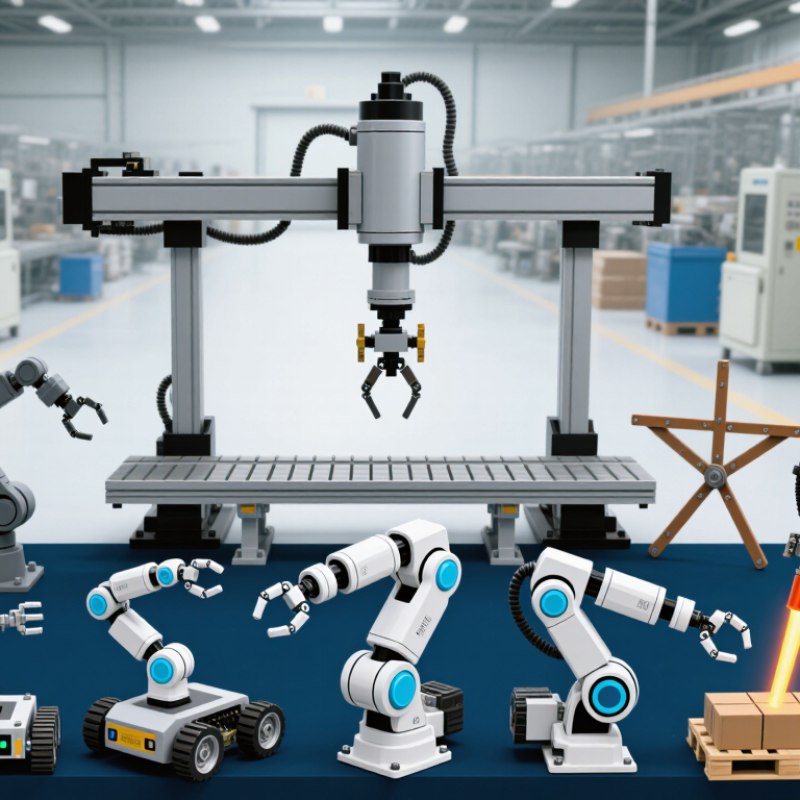
Industrial robot classification is useful only when it matches the work on the factory floor. Common designs include articulated, SCARA, Cartesian, delta, cylindrical, and polar robots. Manufacturers also use collaborative robots, mobile robots, gantry systems, parallel robots, and machine-tending systems. These categories are not perfectly separate: a mobile platform may carry an articulated arm, for example. That overlap can make a simple “top ten” list less practical than it looks.
The International Federation of Robotics reported approximately 4.28 million industrial robots operating worldwide in 2023, in World Robotics 2024. This figure describes the global operational stock, not units newly installed that year. Annual installations reached 541,302 in 2023, according to the same report. The distinction matters when assessing market growth. A plant manager might see a robot arm loading a press, while the industry statistic counts it as one unit within a much larger installed base. Details matter.
Each robot type fits different constraints. A SCARA system can move small parts quickly across a tabletop; a Cartesian unit may suit a straight, repeatable pick-and-place path. Articulated arms offer broad reach, but require careful layout planning around fixtures and operators. IFR’s figures show how widespread automation has become, yet they do not reveal whether a specific cell is productive or well integrated. That requires looking at cycle time, payload, downtime, and the actual task—measurements that are sometimes overlooked in early purchasing discussions.
Articulated and Collaborative Robots: 6 Axes and 3–1,000+ kg Payloads
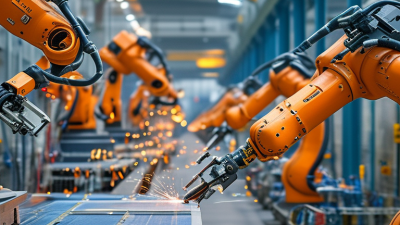
Articulated robots use rotary joints to move around fixtures, reach into machines, and approach parts from changing angles. Six-axis models can orient a tool across three-dimensional workspaces, making them useful for welding, machine tending, and material handling. Payloads vary widely: compact arms may handle a few kilograms, while heavy-duty systems can exceed 1,000 kg. That range is not a direct measure of suitability. Reach, speed, wrist load, and cycle time matter too.
Collaborative robots are designed for tasks where people and automation share a work area, such as tending a bench-top machine or positioning components. Their payloads often sit toward the lighter end of the range, though models differ. A safety assessment and application-specific testing remain essential; “collaborative” does not mean safe in every setup. The International Federation of Robotics reported 541,302 industrial robots installed worldwide in 2023, in World Robotics 2024. That scale reflects automation’s reach, but it does not make every task a good fit. Sometimes a simpler fixture works better. A useful selection begins with the actual part, its mass, and the path the tool must follow. Then test the cycle on the real workpiece. Small details can change the answer.
SCARA, Delta, and Parallel Robots: Up to 200 Picks per Minute
SCARA, delta, and parallel robots are built for fast, repetitive handling. In well-matched applications, some systems can reach 200 picks per minute. That figure is a peak, not a promise for every production line. Product weight, travel distance, grip time, and conveyor speed all affect real output. A small carton moving across a short, clear path is very different from a fragile part that needs careful alignment.
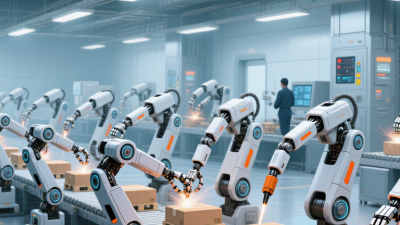
SCARA robots often suit assembly and pick-and-place tasks on a horizontal plane. Delta robots use lightweight arms to move small items quickly, making them common in sorting and packaging. Parallel robots can provide rigid, coordinated motion for compact work areas. Each design has trade-offs. A faster cycle may increase vibration, and a crowded layout can erase expected gains. Measure actual cycle time with the real product before changing staffing or line targets. This is easy to overlook.
Tips: Track successful picks per minute, not just arm speed. Test with production lighting, actual packaging, and planned shift conditions. Check rejected items and recovery time too. A brief trial may look excellent, while a full shift reveals jams, worn grippers, or awkward replenishment. Sometimes slower is better.
Cartesian, Gantry, Cylindrical, and Polar Robots: 0.5–10+ m Workspaces
Cartesian, gantry, cylindrical, and polar robots cover very different workspaces, from compact cells around 0.5 meters to installations spanning 10 meters or more. Cartesian robots move along straight axes, making their rectangular reach easy to map for machine tending or precise assembly. Gantry systems extend that approach overhead, often serving large work areas such as long production lines. Their size can be useful, but support structures and deflection need careful attention.
Cylindrical robots rotate around a central column and move vertically and radially. They can fit into a compact footprint, though nearby fixtures may limit access. Polar robots combine rotation with an extendable arm, reaching around obstacles in a roughly spherical envelope. Actual reach depends on payload, tooling, mounting, and safe operating limits—not just the catalog workspace. A ten-meter span sounds impressive. It may also be unnecessary.
Tips: Measure the part’s full path, including pickup, placement, and tool changes. Mark columns, conveyors, and operator access on a floor plan. Compare usable reach, not just maximum reach. One easy mistake is selecting a robot around its longest dimension; I would revisit that choice if most tasks sit close to the base. Allow room for cables, maintenance, and future layout changes.
Mobile Industrial Robots: 541,302 New Installations Reported by IFR in 2023
Mobile industrial robots are becoming an important category among the top types of industrial robots for manufacturers. In 2023, the International Federation of Robotics reported 541,302 new industrial robot installations worldwide. This figure shows strong automation demand, but it should not be described as mobile robot installations alone. It covers industrial robots broadly, including fixed robotic systems.
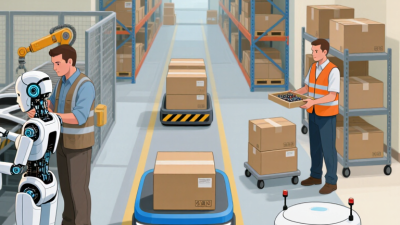
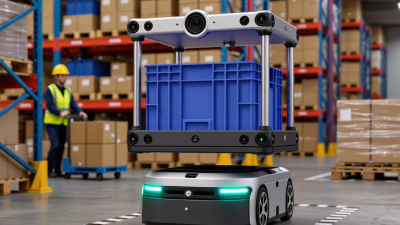
Mobile units add movement to factory operations. They can transport bins, tools, and components between workstations. A typical system may travel across marked routes, scan its surroundings, and stop near a busy operator. This reduces repeated walking and supports safer material flow. It also helps manufacturers adjust production layouts without rebuilding every conveyor line.
Practical results depend on site conditions. Narrow aisles, uneven floors, weak network coverage, and changing workloads can reduce performance. Poor route planning creates delays instead of removing them. That part is easy to underestimate. Manufacturers should measure travel time, loading errors, battery use, and operator waiting time before expanding deployment. Safety checks, clear pedestrian rules, and trained staff remain essential.
The 541,302-installation figure signals a large industrial shift, while mobile robotics represents one practical direction within it. Buyers should verify what each statistic measures and compare it with their own production data. Numbers can guide investment, but they cannot replace an on-site assessment.
Industrial Robot Installations Worldwide, 2019–2023
Annual installations rose to a record 553,000 in 2022 before easing to 541,302 in 2023. These figures cover industrial robots overall, not mobile robots alone.
Source: International Federation of Robotics (IFR). Values are annual installations, rounded to the nearest thousand except for 2023.