Why Choose an Automatic Tool Changer Robot?
A robot that stops for a manual tool swap can interrupt a carefully paced production line. An automatic tool changer robot can switch between compatible end effectors, such as a gripper and a welding torch, with less operator involvement. In a well-planned cell, that change may reduce downtime and let one robot handle more than one task. Small pauses add up.
The benefits depend on the application, not the label. A useful evaluation considers tool weight, payload, change frequency, connector requirements, cycle time, and the environment around the robot. A food-processing cell, for example, may need different cleaning and material choices from a dusty machining area. Compatibility matters, too: the changer, robot flange, tools, cables, and control system must work together. A mismatch can create delays rather than prevent them.
This guide examines why manufacturers choose an automatic tool changer robot, where it can improve flexibility, and what to check before installation. It also looks at practical trade-offs, including purchase cost, maintenance, safety procedures, and the time needed to validate each tool change. Not every line needs one. Sometimes a dedicated robot is the simpler choice. That deserves consideration. Careful application data and a realistic trial can help teams decide whether tool changing will solve a genuine production problem—or add complexity they do not need.
What Is an Automatic Tool Changer Robot?
Why Choose an Automatic Tool Changer Robot?
What Is an Automatic Tool Changer Robot?
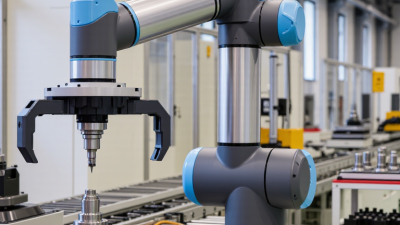
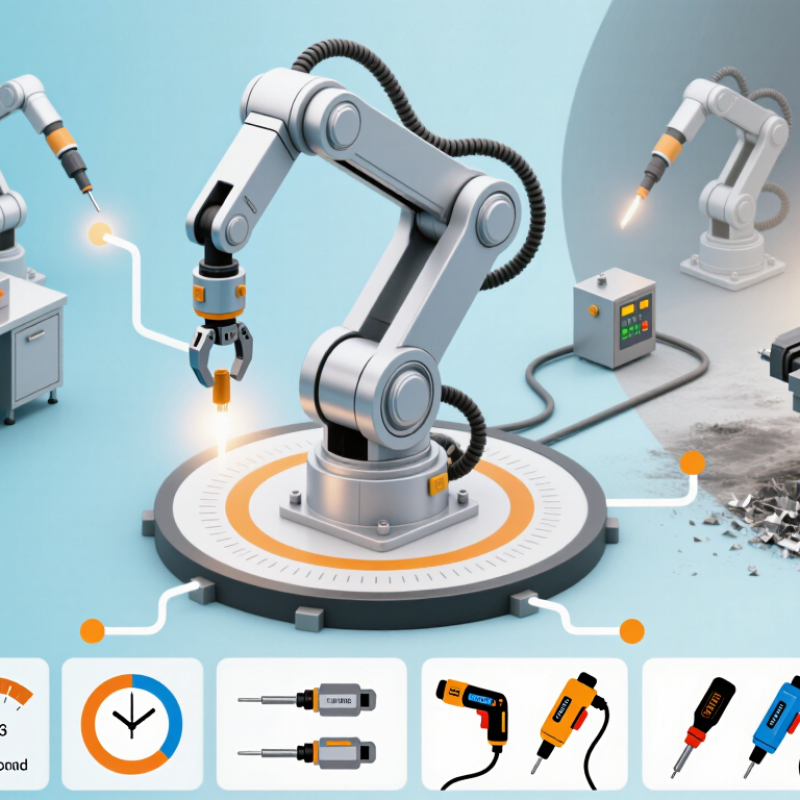
An automatic tool changer robot is a robotic arm fitted with a mechanism that swaps its end-of-arm tool without a person changing it by hand. The tool may be a gripper, suction cup, camera, or another task-specific attachment. A typical changer has a robot-side coupling, a matching tool-side plate, and a locking mechanism. Some systems also connect air, electrical signals, or other utilities through the coupling.
During a change, the robot moves to a fixed rack, releases its current tool, and secures another one. Sensors can confirm that the coupling is locked before work resumes.
Small detail, big consequence: a poor connection can cause misalignment or dropped parts. The idea sounds simple; setup is not. Tool weight, reach, cable routing, and the robot’s payload limits all matter. A changer must also fit the task and the workcell’s safety controls.
In a packaging cell, for example, one tool might grip a carton while another handles a divider. The robot can switch between them as the process requires. This reduces manual tool swaps, but does not remove the need for inspection.
Worn seals, debris on the coupling faces, or an incorrect rack position can disrupt repeatability. Regular checks help keep the changeover reliable.
How Does Its Tool-Changing System Work?
Why Choose an Automatic Tool Changer Robot?
How Does Its Tool-Changing System Work?
An automatic tool changer robot switches tools without requiring an operator to exchange each one by hand. The controller receives a tool request, then guides the robot to a rack holding the needed tool. A gripper or coupling secures the tool, while the robot releases its current attachment and places it in an open rack position. The exchange may take only seconds. Small details matter.
Sensors check that the new tool is seated and locked before work resumes. Depending on the setup, the system may use pneumatic, electric, or mechanical connections. It can also confirm tool identity and report a failed connection. These checks reduce risk, but they do not make errors impossible. Dust, worn couplings, or imperfect alignment can still interrupt a cycle. A well-planned setup includes regular inspection and a clear recovery procedure.
Tips: Keep tool positions consistent, label rack locations, and test each exchange at low speed during commissioning. Watch for unusual vibration or a loose fit. Not always obvious. Even a small alignment issue can cause repeat failures, so record faults and investigate patterns rather than simply restarting the robot.
What Benefits Does It Offer in Automation?
An automatic tool changer lets a robot switch tools without waiting for someone to remove one by hand. A gripper can pick up a part, then exchange for a screwdriver or inspection probe. That change can happen within the same programmed cycle. Less waiting. For a production cell handling several tasks, this can reduce idle time and make smaller production runs easier to manage.
Tool changes can also improve consistency. The robot returns to a defined tool interface, helping keep tool positioning repeatable between cycles. Operators may spend less time near moving equipment, though safe guarding and risk assessment still matter. There is a catch. The changer, tools, cables, and software must all be compatible and maintained. Dust on a coupling or a worn connection can cause misalignment, failed tool pickup, or unexpected stops. A setup that looks efficient on paper may need careful testing with real parts and realistic cycle times. It is worth measuring change time, fault frequency, and tool wear during trials, because automation does not remove every delay.
Why Choose an Automatic Tool Changer Robot? - What Benefits Does It Offer in Automation?
| Automation dimension |
Benefit of automatic tool changing |
Typical operational effect |
Useful KPI to track |
| Changeover time |
The robot can exchange compatible end-of-arm tools without an operator manually unbolting and reconnecting each tool. |
Tool changes can be incorporated into the programmed production cycle. Actual change time depends on the changer, tool, utilities, and safety sequence. |
Average tool-change duration; production time spent on changeovers |
| Task flexibility |
One robot can use multiple compatible tools, such as a gripper, vacuum tool, or process head. |
A cell can switch between tasks or product variants with less manual intervention, provided the tools and programs are configured for the application. |
Number of supported tasks or product variants per cell |
| Labor and operator involvement |
Routine tool exchange can be automated as part of the robot program. |
Operators may spend less time performing repetitive tool swaps and more time on setup, inspection, or other production duties. |
Manual tool changes per shift; labor time per changeover |
| Production continuity |
Automatic docking and release can reduce pauses associated with manual tool replacement. |
Tool changes can be scheduled between operations or product runs; the benefit depends on the production sequence and cell layout. |
Unplanned and planned downtime related to tool changes |
| Process capability |
Tool interfaces can provide repeatable mechanical positioning and, where designed, connections for air, electrical signals, or other utilities. |
The robot can perform different operations while maintaining a defined tool interface. Repeatability depends on the changer, tool design, robot, and application conditions. |
Tool-change success rate; process quality after tool exchange |
| Safety and consistency |
A programmed exchange sequence can reduce routine manual handling of tools in the robot work area. |
Consistent procedures can support safer operation when combined with appropriate guarding, interlocks, risk assessment, and maintenance practices. |
Manual interventions; tool-change faults; safety incidents |
| Tool and system compatibility |
A changer is selected to match the robot payload, tool mass, forces, utilities, and required connection type. |
Correct sizing and integration help ensure reliable operation; the changer’s rated load and interface requirements must be checked for each application. |
Compatibility checks completed; tool-change fault frequency |
Note: Results vary by robot, tool changer, workpiece, production cycle, and cell design. Validate performance and safety requirements for the specific application.
Where Are Automatic Tool Changer Robots Used?
Why Choose an Automatic Tool Changer Robot?
Where Are Automatic Tool Changer Robots Used?
Automatic tool changer robots are useful wherever one robot must handle different tasks or parts. A changer lets the robot switch end effectors, such as a vacuum cup, gripper, or deburring tool, without manual replacement. In automotive plants, a cell may grip panels, then change tools for another operation. Metal fabrication shops use them for machine tending, grinding, and finishing. Electronics and packaging lines can benefit when product sizes or handling needs change often. Small parts matter.
The wider adoption of automation gives useful context. The International Federation of Robotics reported 541,302 industrial robot installations worldwide in 2023, with 4,281,585 robots in operation. These figures cover industrial robots overall, not automatic tool changers specifically. Still, they indicate the scale of production where flexible tooling may help. A changer is not automatically the right choice: frequent changeovers and varied tasks make the strongest case, while simple, repetitive work may not justify added complexity.
Tips: Check payload, tool weight, air or electrical connections, and changeover repeatability before selecting a system. Test the full tool-change sequence with real parts. A changer cannot fix poor cell design, and that is easy to overlook.
Why Choose an Automatic Tool Changer Robot?
Automatic tool changers let one robot switch between end-effectors, helping a cell handle different tasks without manual tool changes. They are commonly used in machine tending, welding, assembly, packaging, and inspection.
The bars count example tool types listed for each application; they are illustrative, not market or adoption statistics. Tool selection depends on the specific process and robot cell.
What Factors Guide the Choice of a System?
Why Choose an Automatic Tool Changer Robot?
Choosing a system starts with the actual task, not the catalog. List every tool, its mass, dimensions, connection type, and required utilities. Then check the robot’s payload with the heaviest tool attached. A gripper may fit the wrist but still reduce usable payload or reach. Small details matter.
The International Federation of Robotics reported 553,052 industrial robot installations worldwide in 2022 in World Robotics 2023. That figure shows the scale of industrial automation, but it does not predict whether a tool changer will pay off in a specific cell. Measure current changeover time, production volume, and downtime instead. Compare those figures with expected change time and the cost of integration. A short cycle can make seconds matter. Or not.
Reliability depends on more than the changer’s rated capacity. Review locking confirmation, tool-position repeatability, cable routing, air or electrical connections, and access for maintenance. Ask how the system behaves after a failed connection. Can an operator identify the fault without dismantling the wrist? Test the intended tools under real loads and approach angles. One overlooked cable can snag during rotation. It is worth admitting that early estimates are often too optimistic; real production trials may reveal awkward access or longer changeovers. Choose a system that fits the cell’s safety design and maintenance skills, not just its headline specifications.