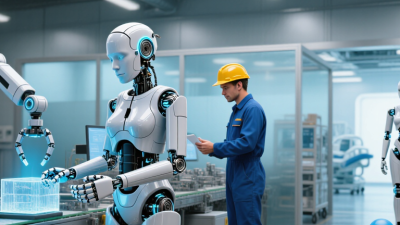
By 2026, robotic automation tools will compete on more than speed. Global buyers need dependable automation across finance, customer service, manufacturing, and supply chains. A bot that saves ten minutes but creates reconciliation errors is not efficient. It is expensive noise.
Leslie Willcocks, a leading researcher in robotic process automation, has emphasized a practical principle: “RPA works best when processes are stable, rules-based, and highly repetitive.” That principle still matters. Buyers should examine process discovery, API connectivity, OCR accuracy, human oversight, audit logs, and recovery after failures. They should also test multilingual interfaces and regional data-handling controls. These details become visible at 3 a.m., when an invoice queue stops moving.
This guide reviews the best robotic automation tools for global buyers in 2026. It considers deployment models, orchestration, security features, integration depth, pricing clarity, and vendor support. Enterprise platforms may offer stronger governance, while specialist tools can provide faster implementation. Neither option wins automatically. The right choice depends on workflow complexity, technical resources, and the cost of human review.
Real-world experience offers a warning. Demonstrations are polished; production systems are not. A successful pilot may still fail with poor exception handling, changing documents, or unclear ownership. Buyers should measure accuracy, maintenance effort, and business outcomes over time. Some recommendations will remain debatable. That is intentional. Automation decisions deserve evidence, not enthusiasm alone.
Robotic automation tools combine robots, sensors, software, and control systems. They perform repeated physical or digital tasks with consistent timing. Examples include robotic arms, mobile units, vision systems, and workflow software. Global buyers need them when labor costs, quality demands, and delivery pressure rise together.
In warehouses, a vision system can check a barcode while a robot moves a 12-kilogram carton. The International Federation of Robotics reported 541,302 industrial robots were installed worldwide in 2023. Its World Robotics 2024 report also recorded more than 4.28 million operational industrial robots globally.
These tools support measurable goals, such as fewer handling errors and steadier production. The World Economic Forum’s Future of Jobs Report 2025 found that 58% of employers expect robotics and autonomous systems to transform business by 2030. However, global purchasing is not simply a race for higher speed.
Buyers must examine safety certification, local service capacity, language support, data protection, and integration with existing machinery. No tool fits every factory. That assumption can waste money. A lower-cost system may require expensive redesign later.
Tips: Request a live task demonstration using your product dimensions. Check maintenance response times in your region. Ask for total ownership costs, not only the purchase price. Pilot one workflow before expanding. Human review still matters, especially when lighting, packaging, or product shapes change.
Global buyers will look beyond robot speed in 2026. They will compare complete automation categories instead. The International Federation of Robotics reported 541,302 industrial robot installations in 2023. Its report also recorded 4.28 million robots operating worldwide. This installed base creates demand for safer upgrades, flexible software, and easier maintenance.
Collaborative robots will matter where workers handle small batches, inspection, or repeated assembly. Autonomous mobile robots will support material movement between storage, production, and packing areas.
Machine vision will become more important because robots need reliable feedback, not fixed coordinates. Warehouse automation will also expand, especially where labor shortages make manual picking costly.
The World Economic Forum’s Future of Jobs Report 2025 found that 58% of employers expect robotics and autonomous systems to transform business by 2030.
Software orchestration may become the most valuable category. It can connect robots, sensors, warehouse systems, and production data. Buyers should demand open interfaces, clear cybersecurity controls, and measurable payback.
A practical warning: the cheapest robot often becomes expensive after integration. Poor lighting, uneven floors, and weak staff training can reduce performance quickly.
I would not treat every forecast as certain. Market reports often assume smooth adoption, while real factories remain messy. A 2026 evaluation should test one complete workflow, including downtime, operator training, spare parts, and data ownership.
Global buyers should compare robotic automation tools by market fit, not impressive demo speed. The International Federation of Robotics reported 541,302 industrial robots installed worldwide in 2023. That volume shows strong demand, but adoption differs sharply by region. A tool suited to automotive plants may fail in food processing or small warehouses.
Start with measurable operating conditions. Record payload, reach, cycle time, uptime, integration options, and maintenance hours. Then check local service coverage, technician training, spare-part delivery, and language support. A three-day repair delay can erase the savings from a cheaper machine. The IFR’s World Robotics 2024 report also recorded more than 4.28 million industrial robots operating globally, making compatibility with existing equipment increasingly important.
Total cost needs a five-year view. Include installation, software updates, energy use, worker training, cybersecurity controls, and production downtime. Compare safety documentation with the requirements of each destination market. Data handling also deserves attention when tools connect to cloud platforms. I once ranked a system too highly because its purchase price looked attractive. The integration bill changed the result. My comparison was incomplete.
Use a weighted scorecard, but challenge the weights. Is speed really more important than local support? Sometimes. Not always. Pilot the shortlisted tool with one real task, one difficult material, and one unplanned interruption. Record the recovery time. That detail often reveals more than a polished demonstration.
| Automation Tool Category | Typical Workload | Best-Fit Operating Environment | Deployment Models | Typical Integration Method | Human Involvement | Global Scalability | Indicative Implementation Time | Main Buying Advantage | Key Limitation |
|---|---|---|---|---|---|---|---|---|---|
| Rule-Based Desktop Automation | Structured, repetitive digital tasks such as data entry, file movement, form completion, and scheduled reporting. | Stable office processes with consistent screen layouts and clearly defined rules. | Cloud On-premises Hybrid | Web interfaces, desktop applications, spreadsheets, databases, APIs, and document folders. | Low after deployment; exception handling normally remains with employees. | High for standardized processes; workflows must be localized for language, tax, and regulatory differences. | Approximately 2–8 weeks for a small, well-defined workflow. | Fast automation of repetitive office work without changing the underlying business application. | Sensitive to interface changes, poor-quality input data, and unstructured exceptions. |
| API and Workflow Orchestration | Multi-step transactions connecting customer, finance, logistics, identity, and enterprise systems. | Organizations with documented processes, stable APIs, and centralized governance. | Cloud Private cloud On-premises | REST APIs, webhooks, message queues, database connectors, and event-based integration. | Low for straight-through processing; moderate where approval gates are required. | Very high when interfaces, data models, and access policies are standardized across regions. | Approximately 4–16 weeks, depending on the number of systems and controls. | Reliable cross-system automation with stronger auditability than screen-based methods. | Requires technical integration skills, API access, and disciplined change management. |
| Intelligent Document Processing | Extraction and classification of invoices, purchase orders, customs documents, claims, and identity records. | High-volume document operations containing both structured and semi-structured information. | Cloud Private cloud On-premises | OCR, machine learning models, document APIs, validation rules, and enterprise workflow systems. | Moderate; low-confidence documents usually require human review. | High when the solution supports multiple languages, scripts, layouts, and regional document rules. | Approximately 6–16 weeks for an initial document family and review workflow. | Reduces manual reading and rekeying while preserving a review path for uncertain results. | Accuracy varies with scan quality, handwriting, document variation, and language support. |
| Process Mining and Task Discovery | Analysis of event logs to identify bottlenecks, rework, delays, compliance deviations, and automation candidates. | Large organizations with accessible process data from transactional systems. | Cloud On-premises | Event logs, database connectors, application interfaces, and task-capture data. | High during analysis and redesign; lower after validated improvements are implemented. | High if regional process variants and data ownership are clearly mapped. | Approximately 4–12 weeks for an initial process analysis. | Uses actual process behavior rather than assumptions to prioritize automation investment. | Provides insight rather than automation by itself; incomplete event logs reduce reliability. |
| Low-Code Business Process Automation | Approvals, service requests, case management, onboarding, compliance checks, and internal operations. | Departments that need governed automation with limited professional development resources. | Cloud Private cloud Hybrid | Forms, workflow rules, connectors, role-based access, and reusable process components. | Moderate during approval steps; low for rules-based routing. | High when multilingual forms, regional permissions, and data residency options are available. | Approximately 2–10 weeks for a department-level application. | Enables business teams and IT departments to deliver controlled workflows quickly. | Complex integrations and highly customized user experiences may still require professional coding. |
| Collaborative Industrial Robotics | Machine tending, assembly, packaging, inspection, dispensing, and material handling near production workers. | Small-batch or variable production where flexible automation and shared workspaces are important. | Factory floor Edge control Connected cloud | Industrial controllers, sensors, cameras, programmable logic controllers, and manufacturing execution systems. | Moderate; operators commonly load materials, supervise exceptions, or perform quality checks. | Medium to high, depending on local safety rules, integration capability, and available service support. | Approximately 8–24 weeks, including application engineering and safety validation. | Flexible physical automation with a smaller footprint than many traditional fenced installations. | Payload, speed, tooling, risk assessment, and application-specific safety requirements can restrict use. |
| Autonomous Mobile Robotics | Movement of components, pallets, parcels, waste, and supplies inside warehouses or factories. | Facilities with repeatable indoor routes, mapped work areas, and standardized material flows. | On-site fleet Edge control Cloud fleet management | Warehouse management systems, manufacturing execution systems, fleet managers, sensors, and navigation maps. | Moderate; staff replenish, supervise, maintain, and resolve blocked routes or unusual loads. | Medium; performance depends on facility layout, floor conditions, local labor practices, and support coverage. | Approximately 8–20 weeks for a defined facility zone. | Improves internal transport efficiency without requiring fixed conveyor infrastructure in every route. | Requires suitable floor conditions, traffic management, charging plans, and facility integration. |
| Machine Vision Inspection | Defect detection, presence checks, measurement, barcode reading, and visual verification. | Production lines with repeatable lighting, camera positions, and measurable quality criteria. | Edge On-premises Connected cloud | Cameras, lighting, industrial controllers, quality databases, and production-line systems. | Low for stable inspection tasks; moderate when defects require human confirmation. | Medium to high after standardizing hardware, samples, quality thresholds, and maintenance procedures. | Approximately 6–18 weeks, including image collection, model or rule tuning, and validation. | Provides consistent inspection speed and traceable quality records. | Performance can change with lighting, product variation, camera drift, and rare defect types. |
| Autonomous Warehouse Storage and Retrieval | Put-away, storage, picking, buffering, replenishment, and order consolidation. | Distribution centers with predictable inventory units and high transaction volume. | On-site system Edge control Cloud monitoring | Warehouse management systems, warehouse control systems, scanners, sensors, and inventory databases. | Moderate; workers handle exceptions, replenishment, maintenance, and operational supervision. | Medium; deployment is highly dependent on building design, local service capacity, and operating standards. | Approximately 6–18 months for a major facility installation. | High throughput and improved storage density for suitable product profiles. | High capital commitment and limited flexibility if inventory shapes, volumes, or facility requirements change. |
| Robotic Testing and Simulation | Software regression testing, equipment simulation, virtual commissioning, and production-cell validation. | Engineering teams seeking to reduce commissioning risk and test complex scenarios before deployment. | Cloud Workstation On-premises | Simulation models, test frameworks, digital twins, source repositories, controllers, and sensor data. | High during model creation and validation; lower for repeatable regression cycles. | High for globally distributed engineering teams when models and test standards are centrally governed. | Approximately 4–20 weeks for an initial validated model or test suite. | Finds defects earlier and can shorten physical testing or commissioning cycles. | Simulation results are only as reliable as the model assumptions, test coverage, and input data. |
Global buyers should evaluate robotic automation beyond payload and advertised speed. The International Federation of Robotics reported 541,302 industrial robots installed worldwide in 2023. That scale increases the need for measurable performance, not attractive brochures. Check payload under real wrist angles, reach with tooling attached, repeatability, cycle time, and performance after several hours of heat and dust exposure. Request recorded test results. Short demonstrations can hide thermal drift.
Safety must be designed into the complete workcell. Verify risk assessment procedures, guarded zones, emergency stops, safe-speed functions, force limits, and restart controls. ISO 10218 provides a useful reference for industrial robot safety requirements. NIST SP 800-82 Rev. 3 also recommends separating industrial control networks, controlling remote access, and monitoring system events. Safety is not only hardware. Operators need clear training, visible status lights, and simple recovery instructions. Small details matter.
Integration often determines the real project cost. Ask whether the system supports open communication standards, documented APIs, PLC connectivity, time-stamped alarms, and secure software updates. It should exchange data with sensors, conveyors, and manufacturing systems without fragile workarounds. Test failure conditions, too. What happens when a sensor disconnects? Can production resume without unsafe manual intervention? A perfect specification rarely exists. Buyers may overlook maintenance access, spare-part lead times, or language support. That mistake can turn a fast robot into a slow business decision.
Selecting robotic automation tools for global operations requires more than comparing features. Start with the workflow, not the software. Map transaction volume, exception rates, system access, language needs, and regional data rules. According to the International Federation of Robotics’ World Robotics 2024 report, 541,302 industrial robots were installed worldwide in 2023. This scale shows strong demand, but adoption alone does not guarantee business value.
Choose tools that support secure APIs, role-based access, audit logs, and human approvals. A practical pilot should target one repetitive process, such as invoice validation or shipment updates. Set measurable baselines before deployment. Track processing time, error rates, exception handling, and employee rework. The NIST AI Risk Management Framework also emphasizes governance, transparency, and ongoing monitoring for automated systems. These controls matter when workflows cross borders.
Deployment usually fails quietly. Teams may underestimate poor data quality, unstable interfaces, or local operating differences. Build a rollback plan. Keep a trained human owner for unusual cases. Manage the tool through monthly reviews, access audits, and documented change controls. The IFR report also recorded more than four million industrial robots operating globally, proving that long-term management matters as much as installation. A pilot can still disappoint. That is useful evidence. Improve the process before expanding it.