Why Should Businesses Invest in Robotic Solutions?

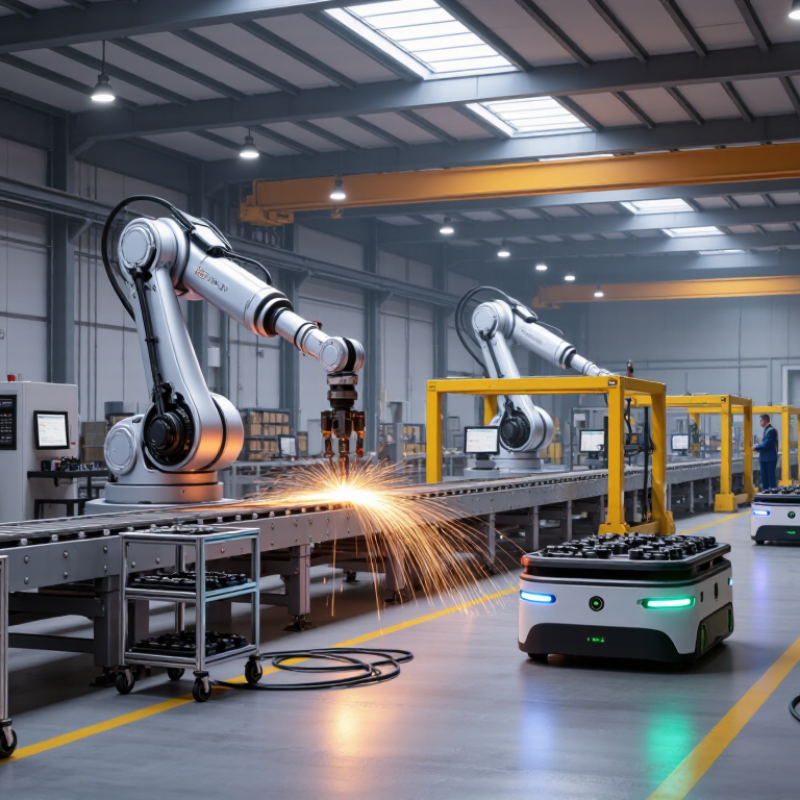
Why should businesses invest in robotic solutions? The answer often begins with a repetitive task: a welding arm tracing the same seam, or a mobile robot moving parts across a busy factory floor. These systems can improve consistency, ease physically demanding work, and help teams handle changing production needs. Results depend on the process, though. A robot cannot fix unclear instructions or poor-quality materials.

Joseph Engelberger, a pioneer of industrial robotics, famously said, “I can’t define a robot, but I know one when I see one.” The line is memorable, but businesses need more than recognition. They need a clear purpose, measurable targets, and a realistic view of integration costs. That matters. A useful pilot might track cycle time, error rates, and maintenance hours before a wider rollout. It should also include the people who will operate and service the equipment.

Robotic solutions can support safer workflows and more predictable output, but they are not a guaranteed shortcut to profit. Some projects disappoint. Software changes, unexpected downtime, or awkward layouts can slow adoption. That is worth admitting. Strong investment decisions start with a specific bottleneck, compare automation with simpler alternatives, and leave room to revise the plan. The best case is not a factory filled with machines; it is a business where people and robots each handle work suited to them.
Why Should Businesses Invest in Robotic Solutions?

How Robotic Solutions Are Used Across Business Operations

Robotic solutions appear in more places than factory lines. In warehouses, mobile robots carry totes between storage aisles and packing stations. Workers can spend less time pushing carts and more time checking orders. Robotic arms may pick predictable parts, place them in trays, or fasten components at a steady pace. Small details matter. A poorly positioned bin can interrupt an otherwise smooth workflow.

Businesses also use robots for inspection and routine facility tasks. A camera-equipped system can scan products for visible defects, while a floor-cleaning robot follows mapped routes after closing time. These tools can handle repetitive checks, but they do not judge every unusual case well. Damaged packaging, glare, or a changed product design may confuse a vision system. Human review remains important.

The best fit depends on the task, not the novelty of the machine. Teams should map each handoff, measure cycle times, and check how robots affect nearby staff. A common planning mistake is underestimating setup and maintenance. The first layout is rarely perfect. Charging spots, safety zones, and software connections all need attention. When a robot stops, someone must know whether to clear an obstruction, inspect a sensor, or call a technician.

Why Should Businesses Invest in Robotic Solutions? - How Robotic Solutions Are Used Across Business Operations

Business operation Robotic solution Typical tasks Potential business value Useful measures to track
Manufacturing and assembly Industrial robots and collaborative robots Welding, machine tending, pick-and-place, and repetitive assembly Can make repetitive processes more consistent and help workers avoid some physically demanding or hazardous tasks. Collaborative robots can be deployed for selected tasks near people when the application is appropriately risk-assessed. Cycle time, defect rate, equipment uptime, safety incidents, and maintenance cost
Warehousing and fulfillment Autonomous mobile robots and robotic picking systems Moving materials, transporting shelves or totes, and supporting item picking Can reduce some manual transport and help coordinate material movement. Benefits depend on facility layout, order patterns, system integration, and operating procedures. Orders processed, travel distance, picking accuracy, throughput, and downtime
Administration and finance Software robots for robotic process automation (RPA) Transferring data between systems, processing standardized forms, and preparing routine reports Can automate rule-based, repetitive digital tasks and free staff to handle exceptions or work requiring judgment. Processes need clear rules and suitable access controls. Processing time, error and rework rates, exception volume, and cost per transaction
Quality inspection Robotic inspection systems using cameras or other sensors Checking dimensions, surface defects, component presence, or product orientation Can support repeatable inspections and document findings. Performance depends on sensor capability, inspection conditions, and appropriate human review. Detection accuracy, false-reject rate, inspection time, and defect escape rate
Facilities and maintenance Cleaning robots and inspection robots Cleaning large floor areas and inspecting selected equipment or hard-to-access spaces Can support scheduled, repetitive work and help gather inspection information. Site conditions, access, and maintenance requirements affect suitability. Area covered, task completion rate, labor hours, equipment availability, and inspection findings
Customer service and information Interactive service robots and conversational software agents Providing directions, answering routine questions, and routing requests to staff Can provide self-service for suitable, common requests while allowing staff to handle complex cases. Clear escalation paths and accessible alternatives are important. Resolution rate, response time, escalation rate, user satisfaction, and accessibility feedback

Results vary by process, site, and implementation. A practical investment assessment compares the total cost of ownership—including integration, training, safety measures, maintenance, and downtime—with measured changes in quality, throughput, labor requirements, and service.

Which Tasks Are Best Suited to Business Robotics

In many workplaces, robotics is most useful where a task is repetitive, measurable, and physically tiring. A robot can move cartons from a conveyor to a pallet, scan shelf locations, or inspect the same component under steady lighting. Repetition matters. These jobs have clear inputs and outputs, so teams can test cycle time, error rates, and downtime before expanding deployment. Robots also suit tasks performed in awkward or hazardous settings, such as lifting heavy loads or cleaning large floors, provided the equipment is designed for that environment.


Less suitable are jobs that depend on subtle conversation, unusual exceptions, or rapidly changing priorities. A machine may sort standard parcels reliably, yet struggle when labels are torn or packages arrive in odd shapes. That boundary is easy to underestimate. Start with one work cell and observe the awkward cases: jammed items, blocked paths, and handoffs between shifts. Maintenance, staff training, and safe access need time and budget too. The best candidate is not always the most impressive task; it is often a narrow process with stable conditions and a human nearby. Fit matters.

How Robotics Can Improve Productivity, Quality, and Workplace Safety

Robotic systems can raise productivity by handling repetitive tasks at a steady pace. Think of a palletizing cell placing cartons while workers prepare the next load. The International Federation of Robotics’ World Robotics 2024 report counted 4,281,585 industrial robots operating in factories worldwide in 2023, a 10% increase from 2022. That scale shows growing adoption, not guaranteed returns. Track cycle time, unplanned stops, and labor hours before and after installation.

Robots can also improve consistency in welding, dispensing, and inspection, where small variations create rework. A camera-guided inspection station, for example, can check each part against the same criteria. Safety gains depend on thoughtful design. OSHA identifies impact, crushing, and trapping among robot-related hazards, so guarding, interlocks, and worker training matter. Robots may move people away from strenuous or hazardous tasks, but poor integration can introduce new risks. That deserves honest review.

Tips: Start with one repetitive, measurable process. Record defects, cycle time, and near misses before deployment; compare them afterward. Ask operators what feels awkward. Their feedback may reveal a flaw that the dashboard misses.

Why Should Businesses Invest in Robotic Solutions?

Robots can take on repetitive or hazardous tasks and perform programmed movements consistently. Their impact on quality and workplace safety depends on the task, system design, and how people and robots work together.

What the chart shows: Industrial robot density is one indicator of automation adoption, not a direct measure of productivity, product quality, or safety. In a study of 17 economies from 1993 to 2007, robot adoption was associated with an average 0.36 percentage-point increase in annual labour productivity growth. Results vary by industry and implementation.

Sources: International Federation of Robotics, World Robotics 2024 (2023 robot density); Graetz and Michaels, “Robots at Work,” Review of Economics and Statistics (2018).

What Costs and Risks Businesses Should Assess Before Investing

Before approving a robotic cell, calculate its full lifecycle cost, not just the arm’s purchase price. Include grippers, guarding, sensors, integration, programming, staff training, maintenance, spare parts, and production downtime during installation. A robot may fit the floor plan but still struggle with reflective parts, inconsistent placement, or frequent product changes. Test those conditions with real materials. Small details matter.

Scale is growing, but it is not proof of payback. The International Federation of Robotics’ World Robotics 2024 report recorded 541,302 industrial robot installations worldwide in 2023. The World Economic Forum’s Future of Jobs Report 2025 found that 86% of surveyed employers expect AI and information-processing technologies to transform their businesses by 2030. Neither figure guarantees savings for an individual site. Model conservative scenarios, including slower cycle times and lower utilization. Check whether existing equipment can support the required data connections, and assess cybersecurity exposure before linking robots to production networks. Also review emergency stops, operator access, and maintenance procedures with qualified safety personnel. The estimate may still be wrong. Revisit it after a controlled pilot, using measured uptime, defect rates, and labor hours—not vendor projections alone.

How Businesses Can Plan and Measure a Robotics Investment

Plan a robotics investment around a specific production constraint, not a vague goal to “automate more.” Map one work cell, including cycle time, changeovers, downtime, labor hours, and safety requirements. The estimate will be imperfect. Leave room for integration, staff training, maintenance, and unexpected line changes.

The International Federation of Robotics reported 541,302 industrial robot installations worldwide in 2023. That figure shows adoption, not guaranteed returns. Deloitte’s 2024 Smart Manufacturing Survey found that 86% of manufacturing executives viewed smart manufacturing as a competitiveness driver over the next five years. The survey covers more than robotics, so treat it as context, not proof that a robot will pay off.

Before purchase, record a baseline for output per shift, defect rates, unplanned stops, and cost per unit. Set targets and a review period with operators and maintenance staff. After installation, compare like-for-like shifts and include downtime during ramp-up. Track whether workers can reliably tend the cell, clear faults, and maintain quality. A dashboard may look convincing while hiding extra setup time. If results miss the target, investigate the workflow before adding another robot.

Login